
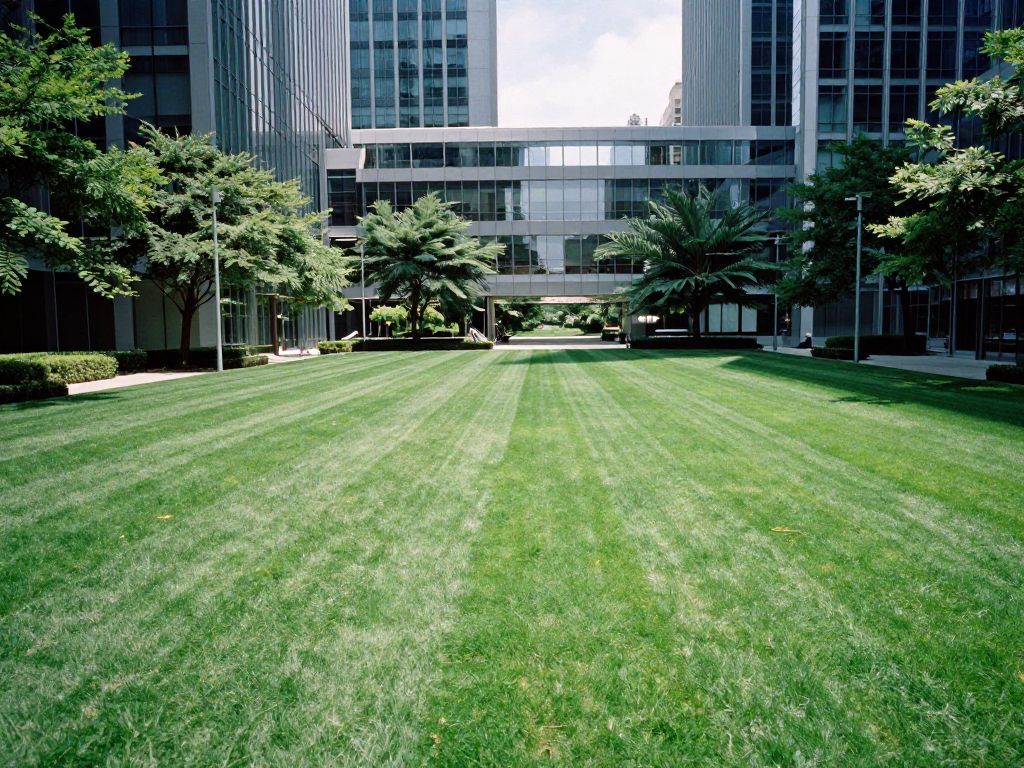
Low-Maintenance Turf for Businesses: The Fast Answer (Then the Deep Dive)
If you’re looking for low-maintenance landscaping for businesses—whether it’s an office park, retail center, industrial site, or HOA community—here’s the core idea up front:
**Low-maintenance turf for businesses = a lawn system that drastically cuts water, mowing, labor, and headache, while still looking clean, safe, and professional year-round.
In practice, that usually means a mix of:
- Smart turf choices (drought-friendly grasses or commercial turf alternatives)
- Simple, automated irrigation
- Strategic design that minimizes “high-maintenance” zones
- A maintenance plan focused on prevention, not constant reaction
From there, you can layer in aesthetics, safety, and sustainability—but the foundation is: reduced inputs, consistent appearance, predictable costs.
In the rest of this article, we’ll unpack what that actually looks like for:
- Commercial properties
- Office parks and business campuses
- Retail and mixed-use centers
- HOAs and multifamily communities
…and how low-maintenance landscaping for businesses can be implemented without sacrificing curb appeal, tenant satisfaction, or brand perception.
Why Low-Maintenance Turf for Businesses Matters Right Now
Low-maintenance landscaping isn’t just a “nice to have” anymore; it’s becoming the default expectation for commercial and HOA properties.
Here’s why it’s so relevant today:
-
Water costs and restrictions are rising
Many regions face drought cycles and watering limits. Turf that needs constant irrigation is becoming a liability, not an asset. -
Labor is harder (and more expensive) to secure
Landscapers and facility teams are stretched thin. Fewer mowings, edges, and repairs = more sustainable operations. -
Tenants and residents expect consistent, not perfect
People want spaces that look clean, safe, and cared for—not necessarily golf-course pristine. Low-maintenance turf hits that mark reliably. -
Sustainability goals are now part of property strategy
Lower water use, fewer chemicals, and less fuel use fits into ESG reporting, corporate policies, and community expectations. -
First impressions still matter
Even in a digital-first world, the outside of your property is still a silent pitch: to prospective tenants, residents, investors, and customers.
Low-maintenance turf for businesses is about aligning appearance, cost, and sustainability so the landscape works for you—not the other way around.
What “Low-Maintenance Landscaping for Businesses” Actually Looks Like
When companies or HOAs ask about low-maintenance landscaping for businesses, they’re usually trying to solve one of these problems:
- “We’re spending too much on lawn care and irrigation.”
- “The turf looks tired or patchy most of the year.”
- “We don’t have the staff to baby this landscape.”
- “Our property has water restrictions and we keep getting cited.”
The solution is less about a single product and more about a system:
- The type of turf (natural or synthetic, drought-tolerant or traditional)
- The layout (how much turf, where, and why)
- The infrastructure (irrigation, drainage, edging, access)
- The maintenance plan (what’s done weekly, seasonally, and yearly)
When these parts align, you get:
- Fewer emergency repairs
- Fewer complaints
- More predictable budgets
- Better-looking grounds with less effort
Key Benefits of Low-Maintenance Turf for Commercial & HOA Properties
1. Lower Ongoing Costs
Low-maintenance turf cuts down on:
- Mowing frequency
- Edging and trimming
- Irrigation water use
- Fertilizer and chemical applications
- Repairs from wear, bare spots, and mud damage
Over time, that can stabilize or reduce:
- HOA dues allocated to landscaping
- CAM (Common Area Maintenance) fees for tenants
- Operating budgets for facility management
2. Consistently Clean, Professional Appearance
Instead of swinging between “just mowed” and “visibly neglected,” low-maintenance systems aim for a steady baseline:
- Turf areas that don’t brown out dramatically in heat
- Edges that are defined with hardscape or plantings, not just string trimmers
- Surfaces designed for foot traffic, so they don’t turn to dust or mud
This matters for:
- Leasing and renewal conversations
- Retail customer impressions
- Resident satisfaction scores and reviews
3. Reduced Risk and Liability
Poorly maintained turf can create:
- Trip hazards (ruts, holes, unexpected bare spots)
- Mud and debris tracked into buildings
- Poor visibility around driveways, signage, and parking
Low-maintenance doesn’t mean “do nothing”; it means designing a system where safety and usability are baked in with minimal effort.
4. Easier to Align with Drought & Sustainability Requirements
A turf strategy built for low maintenance is usually also:
- More drought-friendly
- Less chemically dependent
- More compatible with local regulations
If you’re in a region where water is a concern, it’s worth exploring how low-maintenance turf fits into a broader drought-tolerant approach to your grounds. (For example, pairing turf with other strategies like drought-friendly commercial turf and water-wise planting designs.)
Where Low-Maintenance Turf Makes the Biggest Impact
Not every square foot of your property should be turf. Low-maintenance landscaping for businesses is strategic about where grass-like surfaces are truly needed.
Ideal Areas for Low-Maintenance Turf
-
Entryways and frontages
- Corporate headquarters
- HOA entrances and monuments
- Retail storefront edges
-
Common lawns and gathering spaces
- HOA parks, greens, and central lawns
- Office campus courtyards
- Multi-family common areas
-
High-visibility corridors
- Along main drives
- Around amenities like pools, clubhouses, and leasing offices
Areas Better Suited to Alternatives
To truly reduce maintenance, many properties convert some turf to other low-input surfaces:
-
Parking lot islands and medians
- Often hot, dry, and hard to irrigate
- Ideal for drought-tolerant plantings or decorative rock
-
Steep slopes and hard-to-mow banks
- Erosion-control plantings, groundcovers, or terraces
- Synthetic turf or no-mow solutions in select zones
-
Low-use back-of-house areas
- Utility yards
- Service corridors
- Mechanical and delivery zones
Thinking this way helps you reserve turf for high-impact, high-visibility locations and reduce or eliminate it where it does little for your property’s value.
Types of Low-Maintenance Turf Solutions for Businesses & HOAs
There is no one-size-fits-all approach, but most commercial & HOA properties end up considering a blend of these options.
1. Drought-Tolerant Natural Grasses
These are living lawns selected or bred to need less:
- Water
- Fertilizer
- Mowing
Common features:
- Deeper roots for better drought resilience
- Slower growth rates
- Regional suitability (warm-season vs. cool-season options)
Pros:
- Natural look and feel
- Cooler surface temperatures than pavement
- Familiar for residents and visitors
Cons:
- Still require mowing and seasonal care
- Vulnerable to heavy foot traffic and compaction
- Can struggle in deep shade or severely compacted soils
2. Commercial-Grade Synthetic Turf
Modern commercial and HOA synthetic turf is very different from older “astro turf”:
- Designed for high traffic and varied uses
- Engineered for drainage and durability
- Available in multiple blade shapes, colors, and pile heights
Pros:
- No mowing, fertilizing, or regular irrigation
- Resilient under consistent foot traffic
- Always-green appearance (with proper care)
Cons:
- Higher upfront installation cost
- Requires periodic cleaning and grooming
- Can run warmer in direct sun than natural grass
Synthetic turf is often considered where:
- Water restrictions are tight
- Maintenance access is difficult
- Appearance needs to be “always on,” like hotel entries or shared HOA lawns
3. Hybrid Approaches (Turf + Low-Water Planting + Hardscape)
The most effective low-maintenance landscaping for businesses is often hybrid:
- Turf where people gather or see it most
- Low-water plantings in medians, slopes, and edges
- Hardscape (paths, plazas, seating areas) to direct circulation
Benefits of this approach:
- Less turf overall = lower water and maintenance
- Visual variety without more complexity
- Easier to align with drought and sustainability goals
This is where many properties blend low-maintenance turf with strategies you’d find in a drought-friendly commercial turf plan—focusing water and care where it actually matters.
Design Principles for Low-Maintenance Landscaping for Businesses
Choosing the right turf is important, but design decisions determine whether your landscape is truly low-maintenance.
1. Simplify Shapes and Edges
Complex curves and tiny turf “islands” drive up costs:
- They take longer to mow and edge
- Irrigation coverage can be tricky
- They tend to brown out or get damaged
Low-maintenance design favors:
- Larger, simpler shapes
- Clear transitions (turf to mulch, turf to hardscape)
- Curves and corners that can be mowed efficiently
2. Plan for Foot Traffic, Not Against It
Anywhere people cut corners or take “desire paths” will show wear:
- Dirt or mud spots
- Compaction and thinning
- Ongoing repairs
Design around real use by:
- Adding paths where people naturally walk
- Using tougher turf or synthetic options in high-wear zones
- Avoiding fragile plantings along high-traffic routes
3. Match Irrigation to Turf Type and Layout
Even drought-tolerant turf fails if irrigated poorly:
- Overspray onto hardscape wastes water and causes staining
- Under-watering or uneven coverage leads to patches
- Complex valve and zone layouts increase maintenance
Look for:
- Zoned irrigation by sun/shade and use patterns
- Smart controllers that adjust for weather
- Systems designed specifically for your turf strategy, especially in arid or drought-prone regions
If you’re considering a more drought-driven strategy, it may be worth exploring how your low-maintenance plan aligns with a broader drought-friendly commercial turf approach.
4. Make Maintenance Access Easy
Low-maintenance doesn’t mean “no maintenance.” It does mean:
- Crews can reach turf areas without damaging beds
- Mowers have turning space and access points
- Irrigation components are accessible without digging through roots or hardscape
Thoughtful access planning upfront prevents recurring headaches later.
What Low-Maintenance Turf Looks Like for Different Property Types
Office Parks & Business Campuses
Goals:
- Professional, consistent visuals for clients and staff
- Predictable costs for facilities and asset managers
- Alignment with corporate sustainability goals
Common strategies:
- Reduce turf to entry zones, campus quads, and key sightlines
- Use drought-tolerant or commercial turf solutions in high-visibility spaces
- Convert low-use edges and back-of-house strips to low-water plantings
Retail Centers & Mixed-Use Developments
Goals:
- Attractive, inviting environments that support spending
- Minimal disruption from maintenance crews during business hours
- Safety and cleanliness in high-foot-traffic zones
Common strategies:
- Durable turf or synthetic turf around plazas and seating
- Hardscape-heavy designs with strategic turf accents
- Low-growing, low-water planting in parking islands and medians
HOAs & Multifamily Communities
Goals:
- Resident satisfaction and property value stability
- Fair, predictable dues or fees
- Compliance with water and landscape regulations
Common strategies:
- Central community lawns that can withstand regular use
- Reduced turf along fence lines, slopes, and narrow side yards
- Combining turf with shade trees and seating to create usable, not just decorative, spaces
How to Get Started with Low-Maintenance Turf for Your Property
If you’re just beginning to rethink low-maintenance landscaping for businesses, here’s a practical way to start without overhauling everything at once.
Step 1: Audit Your Existing Turf
Walk the property (or review with your landscaper/facility team):
- Where is turf thriving with minimal intervention?
- Where is it constantly failing, muddy, or patchy?
- Where is turf present but rarely used or even seen?
Step 2: Rank Areas by Impact
Prioritize in this order:
- High-visibility, high-use areas (entries, main lawns)
- High-visibility, low-use areas (front edges, road frontages)
- Low-visibility, low-use areas (back-of-house, side strips)
Your early investments should focus on high-visibility zones and chronic problem areas.
Step 3: Decide What to Keep, Upgrade, or Replace
For each turf area, ask:
- Keep and manage better?
- Upgrade turf type for lower maintenance?
- Replace with synthetic turf or low-water planting?
- Remove turf entirely and redesign?
Step 4: Align Turf Choices with Water & Maintenance Realities
- Choose drought-tolerant or synthetic solutions where water is limited
- Simplify shapes and layouts where maintenance access is difficult
- Integrate your turf plan with any broader drought-friendly commercial turf strategy you’re developing
Step 5: Build a Simple, Forward-Looking Maintenance Plan
Work with your landscape provider or internal team to define:
- Mowing or grooming schedules
- Seasonal checks (irrigation audits, fertilization if applicable)
- High-traffic monitoring and rapid repair protocols
The tighter the plan, the more “low-maintenance” your turf becomes in practice.
FAQ: Low-Maintenance Turf for Businesses & HOAs
| Question | Answer |
|---|---|
| What makes turf “low-maintenance” for commercial properties? | Turf is considered low-maintenance when it: Requires fewer mowings per month Uses significantly less water Needs minimal fertilization and chemical inputs Holds up under regular foot traffic without constant repair Can be managed predictably by a small crew or contractor |
| Is synthetic turf always the best low-maintenance option? | Not always. Synthetic turf: Eliminates mowing and regular irrigation Can handle heavy use and look consistently green But it also: Has higher upfront installation costs Requires periodic cleaning and grooming Can feel warmer than natural grass in full sun It’s often best for high-visibility or high-wear areas, not necessarily every part of a property. |
| Can we still have attractive landscaping with less turf? | Yes. Many commercial and HOA landscapes look better after reducing turf: Turf is focused in key places where it has the most visual impact Low-water plantings add color, texture, and seasonal interest Paths and gathering spaces become more intentional and usable |
| How does low-maintenance turf relate to drought-friendly landscaping? | The two often go together. Low-maintenance turf: Typically uses less water than traditional lawns Pairs well with drought-tolerant plants and efficient irrigation Can support broader drought strategies like those used in drought-friendly commercial turf plans Many properties treat low-maintenance turf as one component of a larger water-wise design. |
| Will residents or tenants notice if we change to low-maintenance turf? | They usually notice in positive ways: Fewer brown or muddy areas Less noise and disruption from constant mowing Spaces that look more intentional and usable Clear communication about the “why” (cost control, water savings, sustainability) can further build support. |
| How long does it take to see cost savings? | It depends on: The current condition and size of your turf areas Labor and water costs in your region The type of low-maintenance solution you implement Many properties see reductions in water and routine maintenance costs within the first 1–3 years, especially when combining low-maintenance turf with broader efficiency upgrades. |
| Do we need to change our irrigation system for low-maintenance turf? | Often, yes or at least adjust it. To get full benefits: Irrigation zones should match new turf and planting layouts Spray heads may need to be updated or relocated Smart controllers can optimize watering for drought and cost control Even minor adjustments can improve performance and reduce waste. |
By approaching low-maintenance landscaping for businesses as a system—turf choice, layout, irrigation, and maintenance—you can create commercial and HOA landscapes that look professional, support sustainability, and demand less from your budget and your team.
Explore Related Turf Resources
Related Turf Guides
- Apartment Patio Turf Solutions: How to Transform Small Spaces Fast
If you’re searching for apartment patio turf solutions, you’re likely asking one core question:
- Commercial Environmental Compliance for Turf: What It Is and Why It Matters Right Now
If you manage or influence any commercial property with turf—corporate campuses, schools, sports fields, HOAs, retail centers—**commercial environmental compliance for turf** is no longer “nice to ...
- Commercial Rooftop Turf: The Fastest Way to Turn Unused Roof Space into Usable Square Footage
If you’re wondering how to transform a bare, hot rooftop into something people actually want to use, commercial rooftop turf solutions are often the most practical starting point.
- Commercial Turf Cost: What You Should Really Expect to Pay
If you’re looking for a fast, realistic answer on **commercial turf cost**, here it is:
- Cool Turf for Play Areas: How to Keep Playground Surfaces Safer and More Comfortable
If you’re searching for **cooler turf for child play areas**, you’re probably worried about one thing first: **heat**.