
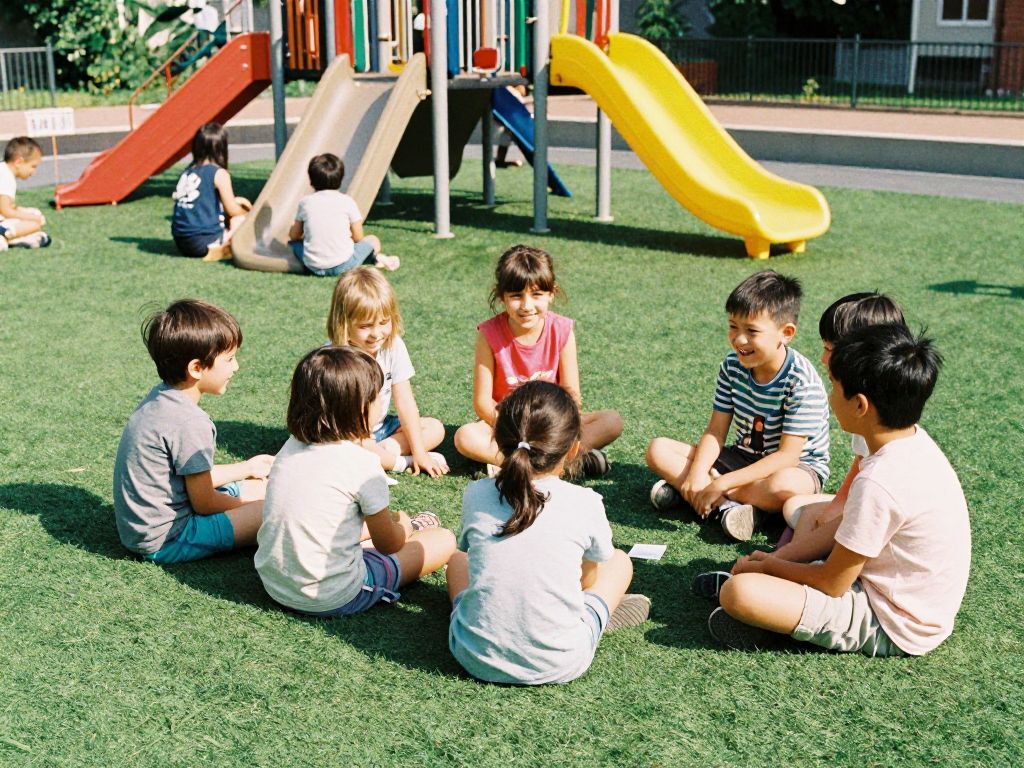
Playground Accessibility: What ADA-Friendly Playground Turf Really Means
If you’re wondering whether your playground is truly accessible—and what “ADA-friendly playground turf” actually requires—here’s the short answer:
- Accessible playgrounds must provide safe, stable routes for kids and caregivers with mobility challenges (including wheelchairs and walkers).
- Playground surfacing is the #1 factor that determines whether your space is usable for everyone—or off-limits.
- ADA-friendly playground turf is designed and installed so it’s firm, stable, slip-resistant, impact-attenuating, and usable year-round with routine maintenance.
Once you understand that, the rest of playground accessibility becomes much clearer: it’s about making sure every child can reach, explore, and enjoy as many play elements as possible—without the surface getting in the way.
Why Playground Accessibility Matters Right Now
Playgrounds are no longer “nice-to-have” amenities; they’re essential health, learning, and community spaces. Accessibility is urgent today because:
- Legal expectations are higher: The Americans with Disabilities Act (ADA) and related standards are increasingly enforced and scrutinized for public and commercial playgrounds.
- Communities are more vocal: Parents, caregivers, and advocacy groups expect inclusive play, not just minimum compliance.
- Surfaces age and fail: Wood chips, loose fill, and aging rubber can quickly turn accessible designs into practically inaccessible spaces.
- Liability is real: Inaccessible routes, non-compliant surfacing, and trip hazards can increase risk, injuries, and legal exposure.
Accessible design is no longer a “special feature”—it’s a baseline expectation for modern playgrounds.
What Does an Accessible Playground Actually Need?
Think of accessibility as three layers, all of which depend heavily on the surface underfoot:
- Getting In: Can kids and caregivers with mobility devices get from parking/sidewalks to the play area?
- Getting Around: Once inside, can they move smoothly between play zones and equipment?
- Getting On & Participating: Can they reach, transfer to, or use a meaningful variety of play features?
Playground turf directly affects all three.
Key accessibility goals include:
- Continuous accessible routes from entry points to and through the play area
- Transition-free movement (no big lips, potholes, or deep ruts)
- Firm and stable footing for wheelchairs, strollers, and mobility aids
- Consistent safety surfacing under and around equipment to reduce fall injuries
- Access to a variety of play experiences, not just one “token” inclusive feature
Why Surfacing Is the Make-or-Break Factor for ADA Accessibility
You can design the most inclusive playground layout on paper—but if the surface is uneven, loose, or muddy, many kids can’t even reach the fun.
Common surfacing issues that damage accessibility:
- Loose mulch or wood chips that shift under wheels
- Deep ruts or low spots from heavy use or rain
- Heaving or settling that creates gaps and lips between surfaces
- Worn-out rubber that peels, chunks, or loses resilience
- Poor drainage leading to muddy, slick, or icy areas
This is where ADA-friendly playground turf comes in as a powerful solution.
What Is ADA-Friendly Playground Turf?
“ADA-friendly playground turf” is not just regular fake grass. It’s a designed system created to meet accessibility and safety standards when properly installed and maintained.
At a high level, ADA-friendly playground turf typically includes:
- Engineered base: A stable, well-graded, compacted base that doesn’t shift or rut
- Impact layer (underlayment): Padding or shock-absorbing layer for fall safety
- Specialized turf: Durable, low-pile turf designed for high traffic and mobility devices
- Infill (if used): Carefully selected and installed to support firmness and stability
- Secure edging and transitions: To create smooth entries from walks, ramps, and other surfaces
When designed correctly, this type of playground turf aims to be:
- Firm and stable: Wheelchairs can roll without sinking or getting stuck
- Slip-resistant: Even when damp, the surface supports safe movement
- Impact-attenuating: Helps meet head injury criteria (HIC) and critical fall height requirements
- Low-maintenance vs. loose-fill: Less raking, topping off, and leveling
- Consistent across seasons: Designed to perform through heat, rain, and cold
ADA Compliance and Playground Turf: What You Should Know
The ADA doesn’t “approve” specific products, but it does outline performance expectations for accessible routes and play areas. For playground turf, that translates into:
-
Accessibility Standards (e.g., ADA & ASTM):
- Surfaces must be firm, stable, and slip-resistant.
- Routes must support wheelchairs and mobility devices without excessive resistance.
- Impact attenuation must meet safety standards (such as ASTM F1292).
-
Consistency Over Time:
A surface may test well on day one, but still fail accessibility tests months or years later if it’s poorly installed or maintained. -
Accessible Routes Through the Play Area:
ADA-conscious playground turf design considers:- Approach to transfers and ramps
- Circulation paths between different play zones
- Clear space around inclusive equipment
Because of these factors, many organizations look not only at initial specs, but also at:
- Installation methods (is the base built for stability and drainage?)
- Warranty coverage & conditions
- Maintenance expectations (how much work is required to stay compliant?)
For a deeper look at how long-term performance and coverage can affect accessibility, many decision makers study resources like a dedicated playground turf warranty overview. Ensuring that warranties explicitly address surface performance, impact attenuation, and ADA-related criteria over time helps guard against future compliance and usability issues. You can learn more about long-term protection for systems designed with accessibility in mind on the playground turf warranty page.
How Kid-Safe Turf Supports Accessible Play
Playground accessibility isn’t only about wheelchairs. It’s also about making the space safer and more navigable for:
- Toddlers who are still unsteady on their feet
- Kids with sensory processing differences
- Children with visual impairments
- Caregivers with mobility or balance challenges
Kid-safe playground turf, when designed with ADA accessibility in mind, contributes to:
- Gentle, predictable footing: Less tripping, catching, or slipping
- Cushioned landings: Reduced severity of injuries from falls
- Clear visual contrast: Borders and zones can be defined with color changes
- Reduced debris: No splinters, mud, or loose rocks to navigate
- Year-round usability: Surfaces that stay more consistent across seasons
Accessible Design: How Playground Turf Fits Into the Big Picture
Think of ADA-friendly playground turf as the foundation of inclusive design, and then build outward:
-
Accessible Routes & Ramps
- Continuous, turf-based routes to ramps and elevated play structures
- Smooth transitions from paths, parking, or sidewalks onto turf
-
Inclusive Zones
- Turf under and around swings, spinners, and sensory panels
- Surface-level access to ground-based play events (e.g., musical elements, playhouses, interactive panels)
-
Transfer & Participation
- Turf that supports safe positioning for transfers from mobility devices
- Stable, grippy footing around transfer stations and entry points
-
Caregiver Accessibility
- Routes that let caregivers move freely alongside children
- Stable, comfortable surfaces for adults to walk, push strollers, or use mobility aids
Common Myths About Playground Accessibility and Turf
-
Myth 1: “If it’s soft, it’s accessible.”
Softness alone doesn’t equal accessibility. A surface can be soft but too squishy or uneven for wheelchairs. ADA-friendly playground turf focuses on both impact safety and firmness. -
Myth 2: “Once installed, it’s always compliant.”
Weather, heavy use, and poor drainage can all impact long-term performance. Maintenance and inspections are essential to keep surfaces accessible. -
Myth 3: “Any synthetic turf is ADA-friendly.”
Not all turf systems are designed for playground-specific safety and accessibility standards. Playground turf systems are engineered for fall zones, mobility devices, and kid-heavy traffic. -
Myth 4: “Loose-fill is cheaper, so it’s better overall.”
Upfront costs can be lower, but ongoing raking, topping up, and accessibility failures often raise the total cost of ownership—especially when ADA compliance and user satisfaction are priorities.
Key Elements of an ADA-Friendly Playground Turf System
When evaluating any potential playground surfacing, keep these elements in mind:
- 1. Base Construction
-
Proper grading and compaction
-
Engineered for drainage to avoid standing water
-
Stable enough to prevent rutting and settling
- 2. Shock-Absorbing Layer
-
Designed to meet or exceed fall height requirements
-
Tested for impact attenuation (ASTM F1292 or equivalent)
-
Consistent thickness across critical fall zones
- 3. Turf Material
-
Durable fibers suitable for high traffic
-
Shorter, dense pile for accessibility and mobility device use
-
UV-resistant and weather-tolerant
- 4. Edging & Transitions
-
Secure edge restraints to prevent lifting or curling
-
Smooth transitions between turf and adjacent surfaces
-
Minimal thresholds that won’t catch wheels or toes
- 5. Maintenance Plan
-
Routine inspection schedule
-
Cleaning and grooming guidance
-
Clear process for addressing damage or wear
- 6. Documentation & Warranty
-
Written performance expectations
-
Coverage for premature wear, separation, or failure
-
Understanding how the warranty relates to impact safety and ADA performance; more details are often outlined in a dedicated playground turf warranty resource.
Making Playground Accessibility a Priority From Day One
Accessibility is easiest, most cost-effective, and more impactful when it’s built into the project from the start—not bolted on later.
As you plan or renovate a playground:
- Start with routes, not just equipment. Map how a child using a wheelchair or walker would enter, explore, and participate.
- Choose surfacing with long-term performance in mind. ADA-friendly playground turf should stay firm, consistent, and safe over years, not just the first season.
- Consider all users, not only kids. Caregivers, siblings, grandparents, and staff all benefit from accessible surfaces.
- Document assumptions. Keep records of specs, tests, and warranty terms, especially around impact and accessibility performance.
The result: a playground that feels open, welcoming, and usable for more people, more often.
FAQ: Playground Accessibility & ADA-Friendly Playground Turf
| Question | Answer |
|---|---|
| What makes playground turf “ADA-friendly”? | ADA-friendly playground turf is part of a surfacing system designed to be firm, stable, slip-resistant, and impact-attenuating , supporting wheelchairs and mobility devices while also meeting playground safety standards when properly installed and maintained. |
| Is all synthetic turf automatically ADA compliant? | No. Many turf products are made for landscaping or sports fields. Playground-specific turf systems include engineered bases, padding, and design details to support fall safety and mobility device use. |
| How does ADA-friendly playground turf compare to wood chips? | Loose-fill like wood chips can shift, rut, and compact, which may reduce accessibility over time. Properly designed turf systems provide a more consistent, firm, and stable surface , reducing the need for constant raking and replenishing. |
| Will accessible turf still protect kids if they fall? | Yes—when it includes an appropriate impact layer and is tested to playground safety standards. Accessible playground turf is designed to support both mobility and fall protection . |
| Does ADA compliance only matter for public playgrounds? | ADA applies broadly to many public spaces and certain private facilities. Even when it’s not legally mandated, accessibility is increasingly seen as a best practice and community expectation for schools, faith centers, HOAs, and residential developments. |
| How long will ADA-friendly playground turf stay accessible? | Longevity depends on product quality, installation, use patterns, and maintenance . Reviewing documentation—like the playground turf warranty —helps clarify how long performance is expected to last and what’s covered. |
| Does playground turf require special maintenance to stay compliant? | Yes, but usually less than loose-fill surfaces. Tasks may include periodic inspection, grooming, cleaning, and seam/edge checks . A clear maintenance plan helps preserve safety and accessibility over time. |
| Can ADA-friendly playground turf be used on slopes or mounds? | Often, yes—within design limits. Slopes must be carefully planned to meet maximum allowable gradients for accessible routes, with turf installed over a stable, well-drained base to prevent slipping or sliding. |
| How can I tell if my existing surfacing is still accessible? | Look for signs like deep ruts, standing water, loose areas, or large gaps . Accessibility audits, surface testing, and professional inspections can provide a clearer assessment of compliance and user experience. |
| Is accessibility only about wheelchairs? | No. Accessibility also supports kids and adults with limited mobility, balance challenges, sensory differences, and visual impairments . ADA-friendly playground turf helps many users move more safely and confidently. |
By prioritizing playground accessibility and choosing ADA-friendly playground turf thoughtfully, you help create spaces where more children and caregivers can show up, move freely, and join the play—today and for years to come.
Explore Related Turf Resources
Related Turf Guides
- Apartment Patio Turf Solutions: How to Transform Small Spaces Fast
If you’re searching for apartment patio turf solutions, you’re likely asking one core question:
- Commercial Environmental Compliance for Turf: What It Is and Why It Matters Right Now
If you manage or influence any commercial property with turf—corporate campuses, schools, sports fields, HOAs, retail centers—**commercial environmental compliance for turf** is no longer “nice to ...
- Commercial Rooftop Turf: The Fastest Way to Turn Unused Roof Space into Usable Square Footage
If you’re wondering how to transform a bare, hot rooftop into something people actually want to use, commercial rooftop turf solutions are often the most practical starting point.
- Commercial Turf Cost: What You Should Really Expect to Pay
If you’re looking for a fast, realistic answer on **commercial turf cost**, here it is:
- Cool Turf for Play Areas: How to Keep Playground Surfaces Safer and More Comfortable
If you’re searching for **cooler turf for child play areas**, you’re probably worried about one thing first: **heat**.