
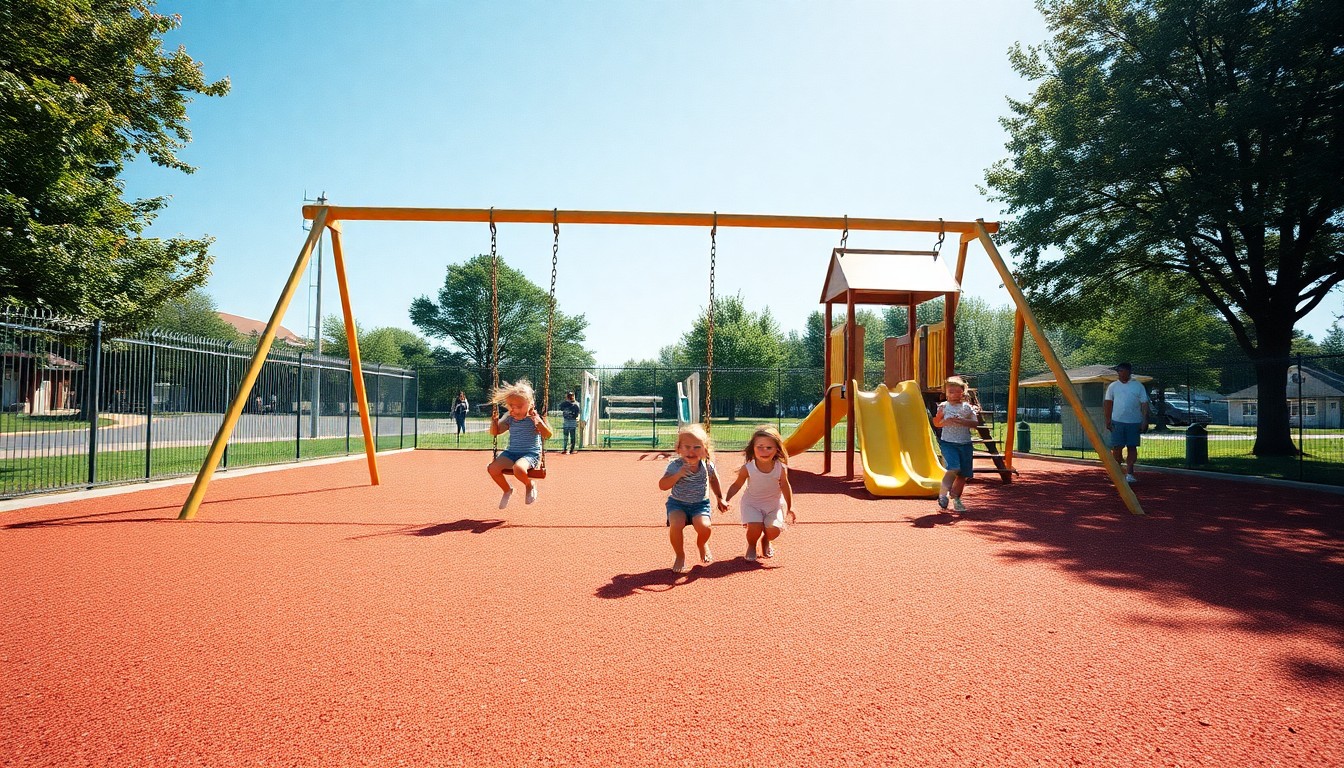
Playground Safety Standards Overview: What You Need to Know About Kid-Safe Turf Right Now
If you’re wondering, “Is this playground surface actually safe for kids?”, you’re already asking the right question.
Here’s the short answer:
- Yes, there ARE clear playground safety standards that cover surfacing, fall protection, and accessibility.
- Kid-safe turf can meet those standards—but only if it’s designed, installed, and maintained to specific guidelines.
- Ignoring standards increases risk of injuries, liability, and future repair costs.
This playground safety standards overview will walk you through the essentials, with a special focus on playground & kid-safe turf, so you can quickly understand what “safe” should look like—and what to ask for from designers, installers, or decision-makers.
Why Playground Safety Standards Matter More Than Ever
Playgrounds are meant to encourage play, movement, and independence—but they’re also one of the most common locations for childhood injuries.
Playground safety standards exist to:
- Reduce the severity of injuries, especially from falls
- Create consistency across parks, schools, and community spaces
- Support inclusion and accessibility for kids of all abilities
- Provide a framework for liability protection for schools, cities, and organizations
- Guide material selection, including kid-safe turf systems
When you’re evaluating or planning a playground—and especially when choosing surfacing—understanding these standards is your first layer of protection.
The Core Playground Safety Standards You Should Know
Several key standards and guidelines shape how safe playgrounds are designed and built. While the exact codes can vary by country or region, these are the most commonly referenced in North America:
- ASTM F1292 – Impact attenuation of playground surfacing materials (fall protection)
- ASTM F1951 – Accessibility of surface systems under and around playground equipment
- ASTM F2049 – Fencing for protection of children
- ASTM F1487 – Safety performance specification for playground equipment
- CPSC Public Playground Safety Handbook (U.S.) – Design and maintenance best practices
- Accessibility guidelines (e.g., ADA in the U.S.) – Address inclusive access to and through the play area
You don’t have to memorize codes—but you do need to know:
Any playground surfacing marketed as “kid-safe” should be tested and documented to meet these relevant standards.
How Safety Standards Apply to Playground & Kid-Safe Turf
Artificial turf designed for playgrounds is very different from sports turf or decorative lawn turf. Playground & kid-safe turf systems are engineered specifically to:
- Soften falls
- Resist wear in high-traffic play zones
- Drain water efficiently
- Avoid trip hazards
- Provide consistent, stable footing—including for mobility devices
To align with safety standards, a kid-safe turf system typically includes:
- Top layer: Synthetic grass-style fibers (often polyethylene)
- Infill: Rubber, sand, coated granules, or alternative materials for cushioning and stability
- Shock pad or foam underlayment: Provides impact attenuation and fall protection
- Base layer: Compacted aggregate for drainage and structural stability
When properly specified, this layered system is tested as a complete unit—not just as individual parts—to ensure it meets ASTM and safety guidelines for falls and accessibility.
The Most Important Standard: Fall Protection Under Playground Equipment
Most serious playground injuries are from falls—especially from equipment like climbers, platforms, and swings. That’s why ASTM F1292 is central to any discussion of playground surfacing.
A playground safety standards overview would be incomplete without understanding these core concepts:
-
Critical fall height
- The maximum height from which a child can fall onto the surface without exceeding established thresholds for head injury risk.
- Your surfacing must be tested and rated for at least the height of the highest designated play surface.
-
Impact attenuation
- How well the surface absorbs and reduces the force of a fall.
- Measured using test drops that simulate a child’s head hitting the ground.
-
Head Injury Criteria (HIC)
- A numeric value used to estimate the likelihood of a serious head injury.
- Playground surfacing must keep HIC values below specific limits at the tested fall height.
For kid-safe turf, this means:
- The entire turf system—turf + infill + pad—must be tested.
- The system must be rated for the actual equipment heights in your playground.
- Over time, surfaces may compress or degrade, so ongoing maintenance and inspections matter.
Playground Accessibility and Safety: Two Sides of the Same Coin
Safety isn’t only about preventing injury. It’s also about providing equal and dignified access for all children, including those using wheelchairs, walkers, or other mobility devices.
That’s where surfacing standards like ASTM F1951 come in. They evaluate:
- Firmness – Can the surface support wheels and mobility aids without sinking or shifting?
- Stability – Does the surface resist slipping or displacement under normal use?
- Work required to move – Is it reasonably easy for a child or caregiver using a mobility device to cross the surface?
Well-designed playground turf can:
- Create continuous, navigable routes from paths to play zones
- Support transfer points and inclusive equipment areas
- Reduce barriers caused by loose-fill materials like sand or wood chips
To explore this in more detail, including ramps, routes, and inclusive design, see our dedicated page on
playground accessibility and how it connects to playground safety standards and surfacing choices.
What “Compliant” Kid-Safe Turf Should Deliver
When you look at a kid-safe turf system through the lens of playground safety standards, here’s what you should expect:
- Documented testing to ASTM F1292 for the installed system
- Verified fall height rating that matches or exceeds the highest play surface
- Testing to ASTM F1951 for accessibility where required
- Uniform surface with no gaps, tripping edges, or exposed seams
- Shock-absorbing underlayment (pad or similar) that’s appropriate for the equipment height
- Good drainage to prevent pooling water and slippery conditions
- UV and wear resistance to maintain safety performance over time
- Maintenance plan to uphold both safety and accessibility as the turf ages
If any of these pieces are missing, the turf might look clean and inviting—but it may not truly align with current playground safety standards.
Common Play Area Risks That Safety Standards Help You Avoid
Understanding standards helps you spot risks early—often before they become injuries or expensive fixes.
Some common issues:
-
Inadequate fall protection
- Turf without a proper shock pad or insufficient thickness for equipment height
- Compressed or degraded padding under high-use areas (swings, slide exits)
-
Trip and edge hazards
- Uneven transitions between turf and adjacent surfaces
- Seams lifting or curling over time
-
Poor drainage and surface stability
- Puddling after rain, leading to slipperiness or mold
- Soft spots where the base has settled or eroded
-
Accessibility breakdowns
- Turf that’s too soft, spongy, or irregular for wheelchairs
- Gaps or changes in level that make navigation difficult
Safety standards give you specific criteria for identifying and correcting these conditions before they turn into serious concerns.
Playground Safety Standards Overview Checklist for Turf Projects
Use this high-level checklist when evaluating existing turf or planning a new playground:
- 1. Design & Planning
-
Have you identified the highest equipment platform (critical fall height)?
-
Is the turf system rated and tested for that height?
-
Does the layout support accessible routes into and through the play area?
- 2. Product Evaluation
-
Can the provider show ASTM F1292 test reports for the complete system?
-
Is there testing for ASTM F1951 if accessibility is required?
-
Is the turf designed specifically for playground use, not just sports fields?
- 3. Installation
-
Is the base properly prepared for drainage and stability?
-
Are all seams, edges, and transitions secure and level?
-
Has the installed system been verified on-site for compliance (as applicable)?
- 4. Maintenance & Inspection
-
Is there a documented maintenance schedule?
-
Do you regularly check high-impact areas (swings, slide exits, spinner zones)?
-
Are repairs and replacements tracked to maintain compliance over time?
How Standards Influence Long-Term Costs and Liability
Playground safety standards aren’t just technical requirements—they directly affect your budget and risk over time.
-
Upfront investment vs. long-term cost
- Compliant kid-safe turf may cost more initially than basic surfaces.
- But reduced injuries, fewer lawsuits, and lower replacement frequency often make it more cost-efficient over the life of the playground.
-
Documentation and liability
- Being able to show that your surfacing complies with recognized standards is a powerful tool if incidents occur.
- Clear records of installation, testing, and maintenance demonstrate due diligence.
-
Future-proofing
- Choosing systems aligned with current standards positions your playground to adapt to updates, rather than requiring complete replacement.
Making Playground Safety Standards Feel Actionable—Not Overwhelming
You don’t need to become a standards expert. But you should be able to ask informed questions and recognize whether your playground & kid-safe turf is aligned with modern safety expectations.
Keep these core points in mind:
- Falls are the main risk → Focus on fall height and impact attenuation.
- Surfacing is a system → Turf, pad, infill, and base work together.
- Accessibility is part of safety → Surfaces must be safe and usable for all kids.
- Standards provide a roadmap → Use them as a guide for planning, purchasing, and maintaining.
When in doubt, refer back to this playground safety standards overview and verify:
- Is our surfacing tested and documented?
- Does it match the equipment heights and use patterns?
- Can all kids access and enjoy the space safely?
If you’d like to go deeper on the inclusive side of safety, visit our
playground accessibility resource for more detail on how safe surfacing and smart design work together.
FAQ: Playground Safety Standards & Kid-Safe Turf
| Question | Answer |
|---|---|
| What are playground safety standards in simple terms? | They’re a set of guidelines and test requirements that define how playgrounds and surfacing should be designed, built, and maintained to reduce injury risk and support accessibility. They cover things like fall protection, equipment design, spacing, fencing, and surfacing performance . |
| Is all artificial turf safe for playgrounds? | No. Sports or landscaping turf is not automatically safe for playgrounds. Only turf systems specifically designed and tested for playground use—meeting standards like ASTM F1292 for fall protection—should be used under and around play equipment. |
| What is the “critical fall height” of playground turf? | It’s the maximum height from which a child can fall onto the turf system without exceeding defined injury thresholds. The turf system is tested at specific heights, and that rating must at least match the highest designated play surface in your playground. |
| How do standards address accessibility for kids with disabilities? | Standards like ASTM F1951 and accessibility guidelines (such as ADA in the U.S.) specify that surfacing must be firm, stable, and slip-resistant so children using mobility devices can enter, move through, and use play spaces. This is why accessible surfacing is a key topic in any playground accessibility discussion. |
| How often should playground turf be inspected? | Visual checks should be done regularly (often weekly, depending on use), with more detailed inspections at least several times a year . High-impact areas like under swings and at slide exits should receive extra attention to ensure the turf and pad haven’t compressed or degraded. |
| Can playground safety standards change over time? | Yes. Standards are periodically reviewed and updated as new research and technologies emerge. It’s smart to confirm that your playground & kid-safe turf system aligns with the most current version of relevant standards, especially when planning new installations or major upgrades. |
| Do playground safety standards apply to small private play areas? | Many standards are written for public playgrounds , but they’re also widely used as best practice for private schools, childcare centers, and residential communities. Following them helps reduce risk, improve safety, and support inclusive play—even in smaller spaces. |
Explore Related Turf Resources
Related Turf Guides
- Apartment Patio Turf Solutions: How to Transform Small Spaces Fast
If you’re searching for apartment patio turf solutions, you’re likely asking one core question:
- Commercial Environmental Compliance for Turf: What It Is and Why It Matters Right Now
If you manage or influence any commercial property with turf—corporate campuses, schools, sports fields, HOAs, retail centers—**commercial environmental compliance for turf** is no longer “nice to ...
- Commercial Rooftop Turf: The Fastest Way to Turn Unused Roof Space into Usable Square Footage
If you’re wondering how to transform a bare, hot rooftop into something people actually want to use, commercial rooftop turf solutions are often the most practical starting point.
- Commercial Turf Cost: What You Should Really Expect to Pay
If you’re looking for a fast, realistic answer on **commercial turf cost**, here it is:
- Cool Turf for Play Areas: How to Keep Playground Surfaces Safer and More Comfortable
If you’re searching for **cooler turf for child play areas**, you’re probably worried about one thing first: **heat**.