
Rooftop Drainage Requirements: The Crucial Foundation for Long-Lasting Artificial Turf?
Effective drainage is the single most critical factor in successful rooftop artificial turf installation. It ensures the structural integrity and longevity of both the turf system and the building's roof membrane. This requires using permeable turf products alongside a dedicated sub-surface drainage layer—often a drainage grid or tile—to guarantee rapid water runoff, prevent pooling, and allow proper ventilation and curing beneath the turf.
2. Deep Dive (Detailed Why and How)
Why Drainage is Non-Negotiable on Rooftops
Unlike ground installations where water dissipates into the natural soil, rooftop turf sits on an impervious surface (the roof membrane). Without a specialized drainage system, water trapped between the turf and the roof surface will stagnate. This can lead to serious issues, including mold/algae growth, the premature deterioration of the turf’s backing, and increased thermal expansion/contraction of the synthetic grass, which compromises its shape.
The Role of the Drainage Grid
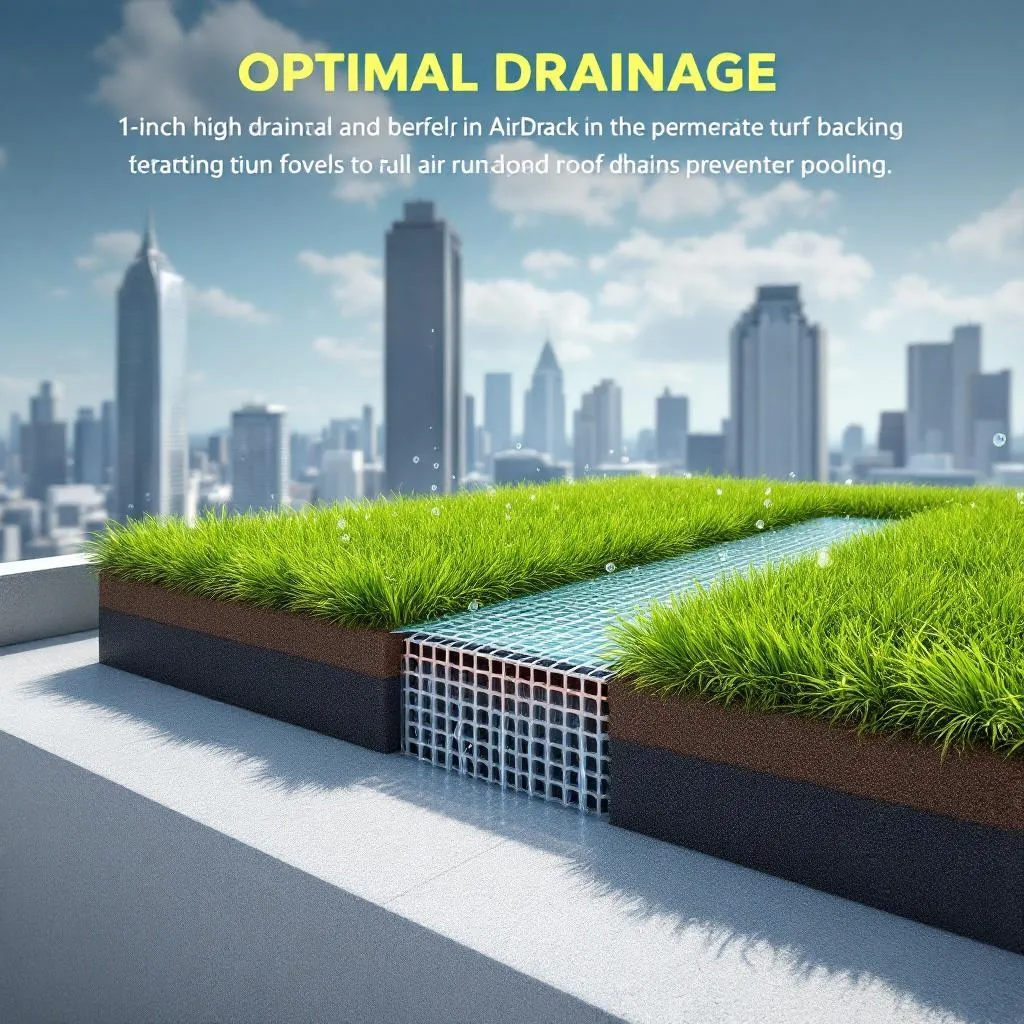
We strongly recommend installing a high-quality drainage grid, such as a Geocell product like AirDrain, below the synthetic turf. This grid is essential because it creates a dedicated gap—typically a 1-inch, 92% air void—that elevates the turf.
This elevation allows water to pass through the permeable turf backing and escape rapidly to the existing roof drains. Crucially, this void also permits air to circulate, which promotes quick drying and prevents the buildup of contaminants and moisture that shorten the turf’s lifespan.
Slope and Runoff
While the drainage grid manages water directly beneath the turf, the underlying roof deck must have a slight gradient. Assessing the existing rooftop slope is vital to ensure that water flows away from high-risk areas and towards the established perimeter or internal roof drains. Even with an efficient grid, the overall slope of the roof dictates the speed and direction of the water runoff.
Material Selection Matters
Beyond the grid, the artificial turf product itself must feature a permeable backing. Some non-permeable turf products require more complex and costly drainage solutions. Choosing turf with integrated flow-through capabilities is the first step in ensuring your drainage system functions seamlessly and efficiently.
3. Quick Reference (Bulleted Key Takeaways) * Drainage Grid Essential: Use a sub-surface drainage grid (like AirDrain or drainage tile) to create a void for ventilation and water flow.
- Prevent Contaminants: The air void prevents moisture buildup and contaminants that can deplete turf longevity.
- Check Roof Gradient: Verify the rooftop's existing slope encourages water flow toward existing drains.
- Permeable Turf: Always select artificial grass products designed with permeable backing for maximum water pass-through.
- Secure Edges: Ensure the system is contained, often using exterior nailer boards, to keep the turf secure against wind disruption.
4. Strategic Hyperlink
Selecting the right turf is equally important for rooftop success. To learn how material quality and UV protection factor into your overall investment and long-term maintenance strategy, be sure to review our guide on how to ensure proper water runoff for your UV-resistant turf.
Explore Related Turf Resources
Related Turf Guides
- Antimicrobial Turf Benefits: What It Is, Why It Matters, and How Infill & Materials Affect Performance
If you’re wondering whether antimicrobial turf is really worth paying attention to, here’s the short answer:
- Best Turf Materials For Pools
The Definitive Guide to Best Turf Materials for DFW Pool Areas1. Direct Answer Intro (Featured Snippet Optimized)The best artificial turf materials for pool surrounds are high-grade, flow-through ...
- Can artificial turf provide a safer, cleaner, and more durable playground surface for daycares?
Yes, artificial turf is widely recognized as the superior surfacing choice for daycare and educational playgrounds, providing a consistently safe, antimicrobial, and low-maintenance environment tha...
- Custom Putting Green Design: Transforming Your Backyard into a Personal Training Facility
Custom Putting Green Design: Transforming Your Backyard into a Personal Training Facility1. Direct Answer Intro (Featured Snippet Optimized)
- Diy Vs Professional Pet Turf Installation
The decision between a DIY pet turf installation and hiring a professional comes down to balancing cost savings against specialized expertise in drainage, base preparation, and selecting pet-specif...