
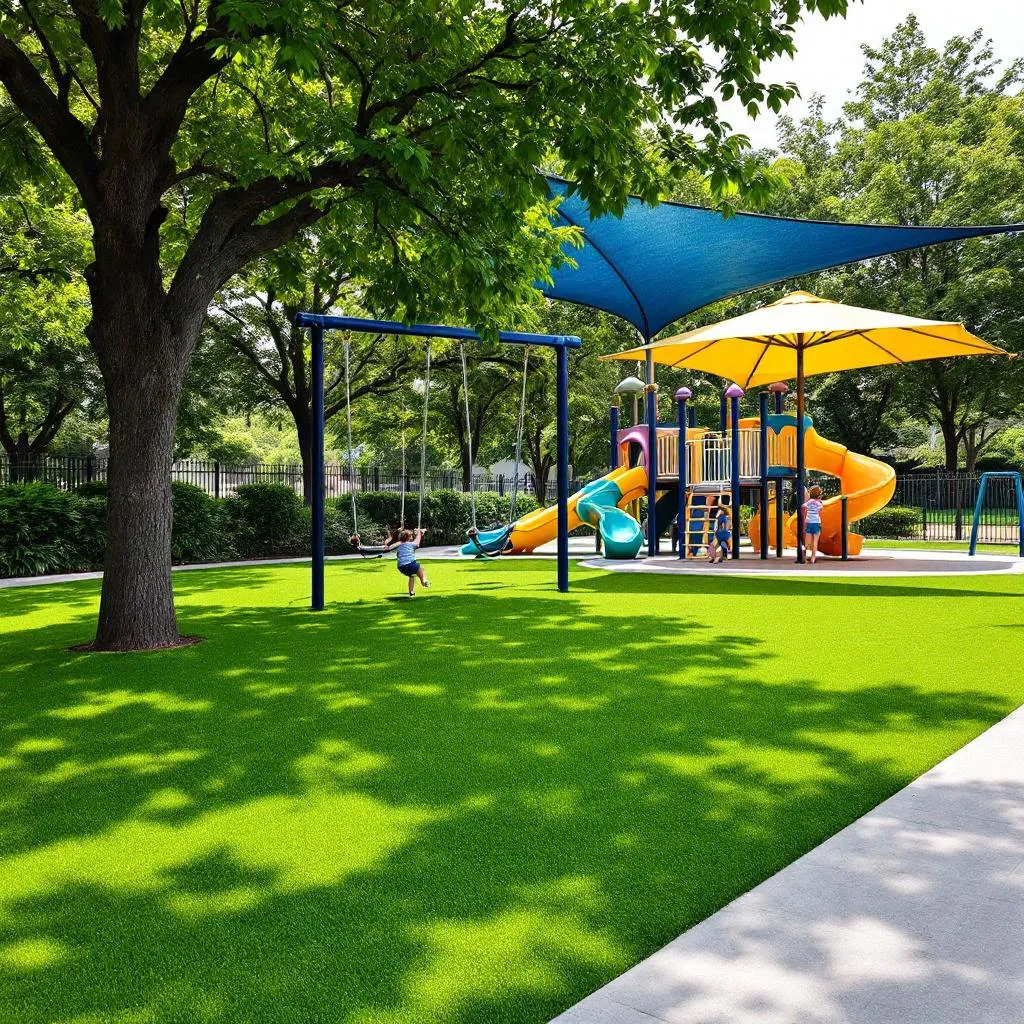
Shade-Friendly Playground Turf: What You Need to Know First
If you’re planning or upgrading a play area that doesn’t get much sun, here’s the main thing you need to know up front:
Not all playground turf works well in the shade.
To keep kids safe, surfaces soft, and the space clean and usable year-round, you need shade-friendly playground turf—materials, design, and drainage that are specifically chosen for low-sun, damp, or heavily tree-covered areas.
Everything else—mud, moss, slippery spots, smells, and maintenance headaches—usually comes from ignoring that one idea.
Below, we’ll unpack what shade-friendly turf really is, how it affects kid safety, comfort, and maintenance, and what to think through before you choose any surface for a shaded play space.
What Is Shade-Friendly Playground Turf?
Shade-friendly playground turf refers to surfacing systems (often synthetic turf, sometimes hybrid setups) that are:
- Designed to stay safe and grippy even when damp
- Built over drainage and padding that can handle low evaporation and frequent moisture
- Resistant to mold, mildew, and compacted, soggy spots that are common under trees or next to buildings
- Comfortable for bare hands, knees, and frequent falls in kid-focused play areas
It’s less about a single product and more about a strategy: picking the right turf fibers, infill, drainage, and underlayment to work with the shade instead of fighting it.
Why Shade-Friendly Turf Matters for Kid-Safe Play Areas
Shaded playgrounds feel cooler and more inviting—but they also create unique surface challenges. Choosing the wrong material under play equipment can lead to:
- Slippery, slick patches where moss or algae grow
- Hard, compacted soil that fails fall-safety standards
- Mud and standing water after rain
- Inconsistent surfaces (soft in some spots, dangerously solid in others)
Shade-friendly playground turf is about solving those problems early, so your play area stays:
- Safer – predictable impact absorption under swings, climbers, and slides
- Cleaner – less mud tracked indoors, fewer damp “dead zones” kids avoid
- Lower-maintenance – no constant patching, reseeding, raking, or re-leveling
- More usable – the play surface is inviting, even after rain or heavy use
How Shade Changes the Demands on Playground Turf
Shaded play areas behave differently from sunny ones. Understanding how makes it easier to choose the right surfacing.
1. More Moisture, Less Drying
Shade slows evaporation. That means:
- Rainwater lingers longer on the surface
- Dew and humidity stick around
- Organic debris (leaves, pollen, dirt) builds up faster
If drainage is poor or turf is too dense, this leads to slick areas and potential microbial growth.
2. More Organic Debris from Trees
Shaded areas often sit under or near trees:
- Leaves, needles, twigs, and seeds accumulate
- Organic material traps moisture and encourages algae and moss
- Surfaces may become uneven as debris compresses under foot traffic
Turf in these spaces must be easy to clean and resist matting or clogging.
3. Temperature Differences
Shade usually means:
- Cooler surfaces (great for kids and bare feet)
- Less thermal expansion and contraction vs. full sun
- But potentially more time staying damp and cold in winter or rainy seasons
The turf system should be built to remain grippy, flexible, and safe across those conditions.
Key Features of Shade-Friendly Playground Turf
When you hear “shade-friendly playground turf,” look for a combination of these design choices rather than just a label.
1. Engineered Drainage System
Good shade-friendly turf starts below the surface:
- Permeable backing that lets water pass through quickly
- Free-draining base layer (rock, gravel, or specialized panels)
- Slight grading so water doesn’t sit under high-traffic play zones
The goal: water moves down and away, not sideways and back up.
2. Shock-Absorbing Padding for Kid Safety
In play areas, turf is only part of the safety story. Underlying padding helps meet fall-height safety standards.
Look for:
- Impact-attenuating pads or layered bases designed for playgrounds
- Consistent thickness under swings, climbers, and slides
- Systems that maintain performance even as they age and get wet
This is what makes shade-friendly turf truly kid-safe, not just “green.”
3. Fibers Designed for High Wear and Low Sun
Turf fibers in shaded playgrounds should:
- Resist matting under heavy traffic
- Be non-abrasive for hands, knees, and falls
- Maintain color and integrity even in mixed light (partial shade/partial sun)
While UV stability is critical in sunny areas, in shade you’re also watching for fiber structure that stays upright and drains well.
4. Infill Choices That Work in Damp Conditions
Infill (the material between the blades, if used) can influence:
- Drainage speed
- Surface temperature
- Cleanliness and microbial growth
In shaded playgrounds, infill should be:
- Non-compacting – it doesn’t lock together and trap water
- Low-dust – better for air quality and cleanup
- Compatible with fall protection and cleanliness requirements
Comparing Common Playground Surfaces in Shade
| Surface Type | How It Behaves in Shade | Common Issues | Best For |
|---|---|---|---|
| Natural Grass | Struggles to grow in deep shade; often thins out. | Mud, bare spots, uneven hardness, slippery when wet. | Lightly used lawns, not primary fall zones. |
| Wood Chips / Mulch | Absorbs water; dries slowly with limited sun. | Decomposition, mold risk, migration, frequent top-ups. | Budget-conscious areas with good maintenance. |
| Rubber Tiles / Poured Rubber | Stable in shade, but seams and low spots can hold water. | Puddling, slippery algae film, costly repairs if damaged. | High-traffic zones where smooth surface is critical. |
| Shade-Friendly Playground Turf | Engineered drainage, cushioned base, consistent feel. | Requires thoughtful design and periodic cleaning. | Kid-focused areas needing safety, comfort, and durability. |
Design Considerations for Shaded Play Spaces
When planning shade-friendly playground turf, design choices matter as much as materials.
1. Map Shade Patterns Throughout the Day
- Observe where shade falls morning, midday, and afternoon
- Note areas of constant shade vs. partial shade
- Identify spots that tend to collect water (low points, near downspouts)
This helps you tailor turf type, padding thickness, and drainage to actual site conditions.
2. Prioritize High-Impact Play Zones
In shaded playgrounds, some zones see much more traffic:
- Under swings and climbing structures
- At the base of slides
- Along popular play routes (e.g., from sandbox to swings)
These areas benefit most from:
- Extra shock padding
- Reinforced turf backing
- Stronger drainage support
3. Plan for Leaf and Debris Management
Shade under trees is valuable—but debris is inevitable. Design with:
- Clear access for rakes, blowers, or gentle sweepers
- Edging that contains infill but lets leaves be removed easily
- Turf systems that won’t tear or shift during routine cleanup
A shade-friendly turf setup anticipates seasonal maintenance instead of fighting it.
Shade-Friendly Playground Turf and Surface Temperature
One unexpected benefit of shaded turf:
- Cooler surface temperatures compared with full-sun setups
- More comfortable for bare feet and seated play
- Less risk of heat-related discomfort on very hot days
For playgrounds where sun exposures vary, you may also want to understand how some turf systems are engineered to stay cooler, even in direct sunlight. If you’re considering mixed-sun and shaded areas together, it can help to learn about cool-playground-turf options to choose a surface that performs well across all light conditions.
Maintenance: Keeping Shade-Friendly Turf Kid-Safe Over Time
Shade-friendly doesn’t mean zero-maintenance—but it does mean predictable, manageable upkeep.
Key maintenance practices:
-
Regular debris removal
- Light blowing or brushing to remove leaves, needles, and pollen
- Prevents organic buildup that can trap moisture
-
Periodic surface grooming
- Brushing fibers to keep them upright and maintain drainage pathways
- Helps the surface stay soft, consistent, and visually inviting
-
Routine safety checks
- Inspect high-impact zones for any unusual hard spots
- Ensure drainage is functioning and no standing water lingers
-
Occasional cleaning
- Rinsing or spot-cleaning after spills or heavy soiling
- Addressing any signs of algae or slickness promptly
How to Evaluate Shade-Friendliness When You’re Not an Expert
When you’re not a turf specialist, focus on a few key questions to assess if a system is truly shade-friendly and kid-safe.
Ask about:
-
Drainage
- “How does water move through and away from this system?”
- “What happens after a heavy rain in a full-shade area?”
-
Safety and impact
- “What fall height is this system rated for, and how is that tested?”
- “How does performance change as the system ages?”
-
Moisture and microbes
- “What features help reduce mold, mildew, or algae in shade?”
- “Are there recommended cleaning routines for shaded installations?”
-
Maintenance
- “What does typical seasonal maintenance look like in a shaded playground?”
- “What tools and effort are needed to keep it kid-safe and clean?”
The answers will quickly reveal whether a solution is genuinely designed with shade-friendly playground turf principles in mind.
Frequently Asked Questions About Shade-Friendly Playground Turf
| Question | Answer |
|---|---|
| Is shade-friendly playground turf safe for kids to fall on? | Yes—when paired with the right underlayment. Shade-friendly turf systems for playgrounds are usually installed over impact-absorbing pads or engineered bases designed to meet specific fall-height safety standards. Always confirm fall-height ratings for your play equipment. |
| Will playground turf get slippery in shaded, damp areas? | Well-designed shade-friendly playground turf is built to reduce slipperiness through drainage, fiber structure, and surface texture. However, like any outdoor surface, it should be kept free of leaves and organic buildup to maintain traction. |
| How does shade-friendly turf compare to rubber mulch or wood chips? | In shade, wood chips and mulch tend to stay wetter, break down faster, and can develop mold or compacted areas. Shade-friendly turf offers a more consistent surface, better drainage (when properly installed), and reduced ongoing top-up needs—though it requires upfront planning and professional installation. |
| Can I install playground turf under trees? | Yes. Shade-friendly systems can work well under trees, but design details matter: planning for root zones, drainage, and leaf management is essential. The turf system should allow for easy debris removal and avoid damaging tree health. |
| Does shade-friendly turf stay cooler than turf in full sun? | Shade naturally helps keep surfaces cooler, so shaded turf is usually more comfortable to the touch than sun-exposed areas. For mixed or sunny zones, exploring dedicated cool-playground-turf options can further manage surface temperature. |
| How often does shade-friendly playground turf need maintenance? | Most shaded playground turf surfaces benefit from regular light cleaning (removing debris) and occasional grooming. The exact schedule depends on tree cover, climate, and usage, but maintenance is usually more predictable than with natural grass or loose-fill materials in shade. |
| Will turf in the shade grow mold or smell over time? | Modern shade-friendly playground turf is designed to resist mold and odors when installed correctly with good drainage and maintained as recommended. Routine debris removal and occasional rinsing help prevent conditions where mold or strong odors could develop. |
| Is shade-friendly turf appropriate for schools and childcare centers? | Yes. Many schools and childcare centers use shade-friendly playground turf in courtyards, under shade sails, and beneath structures surrounded by trees. The key is ensuring the system meets safety standards, is easy to clean, and is designed specifically for child play areas. |
In any shaded play area, the surface under kids’ feet is doing quiet, constant work: absorbing impact, draining water, and supporting everyday play. Focusing on shade-friendly playground turf—not just “any turf”—is what turns a damp, underused corner into a safe, inviting space where kids can run, fall, and get back up again with confidence.
Explore Related Turf Resources
Related Turf Guides
- Apartment Patio Turf Solutions: How to Transform Small Spaces Fast
If you’re searching for apartment patio turf solutions, you’re likely asking one core question:
- Commercial Environmental Compliance for Turf: What It Is and Why It Matters Right Now
If you manage or influence any commercial property with turf—corporate campuses, schools, sports fields, HOAs, retail centers—**commercial environmental compliance for turf** is no longer “nice to ...
- Commercial Rooftop Turf: The Fastest Way to Turn Unused Roof Space into Usable Square Footage
If you’re wondering how to transform a bare, hot rooftop into something people actually want to use, commercial rooftop turf solutions are often the most practical starting point.
- Commercial Turf Cost: What You Should Really Expect to Pay
If you’re looking for a fast, realistic answer on **commercial turf cost**, here it is:
- Cool Turf for Play Areas: How to Keep Playground Surfaces Safer and More Comfortable
If you’re searching for **cooler turf for child play areas**, you’re probably worried about one thing first: **heat**.