
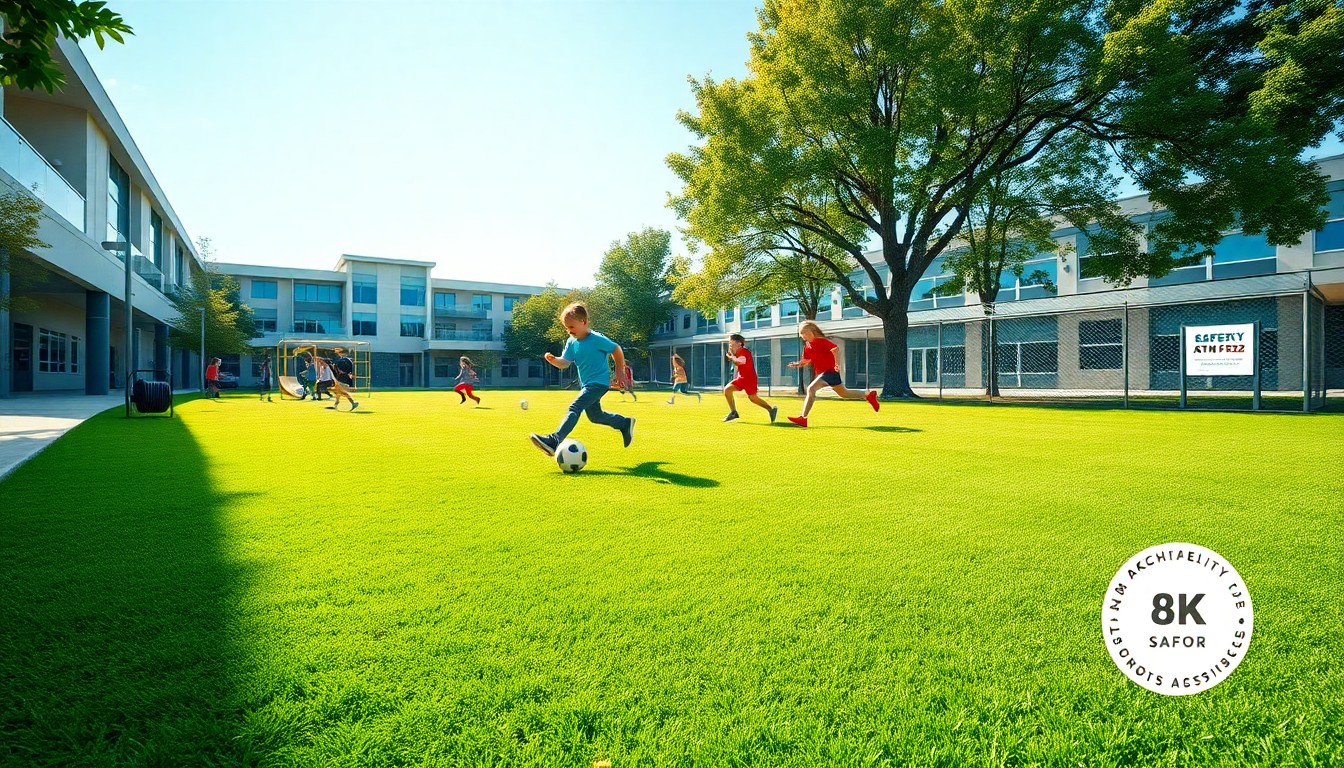
The Definitive Guide to Artificial Turf for Schools
##?
Artificial turf is the premier surfacing solution for school playgrounds, common areas, and athletic fields because it provides unmatched safety ratings (especially for fall height protection), drastically reduces ongoing maintenance costs, and ensures year-round, mud-free accessibility regardless of weather conditions. For administrators seeking a long-term infrastructure investment, synthetic turf maximizes field utility while minimizing liability risks.
2. Deep Dive (Detailed Why and How)
Addressing Safety and Liability
When evaluating school facilities, safety is the number one priority. Natural grass and wood mulch break down quickly, leading to uneven surfaces, standing water, and inconsistent shock absorption, increasing the risk of injuries.
Modern, high-quality school turf systems are installed over engineered base layers and certified padding that meet rigorous safety standards, including ASTM F1292 for critical fall height. This ensures a predictable, cushioned landing surface that significantly reduces the potential for serious injuries in playground and high-traffic areas.Eliminating Recurrent Budgetary Drain
School maintenance budgets are perpetually strained. Natural grass demands continuous spending on mowing services, irrigation, aeration, reseeding, fertilization, and pest control. These costs compound annually and absorb significant labor hours from facilities staff.
Switching to artificial turf virtually eliminates these recurring operational expenses. The turf requires only occasional rinsing and brushing. The immediate and quantifiable savings can then be redirected toward educational programs or other critical infrastructure needs.Maximizing Usability and Minimizing Downtime
In the DFW climate, school fields frequently become unusable after rain, turning into muddy pits that restrict physical education and recess. Artificial turf is engineered with high-flow drainage technology, meaning water passes through quickly and efficiently.
This superior drainage allows fields and playgrounds to be used immediately after heavy rain, maximizing the time students can spend outdoors and ensuring facility schedules are not interrupted by weather. It maintains a perfectly green, inviting appearance 365 days a year.Long-Term Durability for Heavy Use
School fields endure extreme wear from daily student foot traffic, organized sports practices, and public events. Unlike natural grass, which patches and dies under heavy use, synthetic turf is manufactured for exceptional resilience and can withstand constant activity without degradation. This durability guarantees the investment lasts for decades, outperforming and outlasting traditional surfaces.
3. Quick Reference (Bulleted Key Takeaways)
- Certified Safety: Meets critical fall height standards (ASTM F1292) for playgrounds.
- Massive Cost Savings: Eliminates water usage, mowing, fertilization, and pest control expenses.
- Zero Downtime: Superior drainage ensures immediate use after rain, preventing mud.
- Year-Round Aesthetics: Maintains a perfect, vibrant look regardless of traffic or season.
- Reduced Allergens: Eliminates pollen and grass-related allergens in play areas.
4. Strategic Hyperlink
Selecting the right turf is a crucial decision for your school's safety and budget. To explore additional solutions that prioritize student welfare and facility longevity, we invite you to review our guide on safe, durable turf solutions for educational facilities.
Explore Related Turf Resources
Related Turf Guides
- Apartment Patio Turf Solutions: How to Transform Small Spaces Fast
If you’re searching for apartment patio turf solutions, you’re likely asking one core question:
- Commercial Environmental Compliance for Turf: What It Is and Why It Matters Right Now
If you manage or influence any commercial property with turf—corporate campuses, schools, sports fields, HOAs, retail centers—**commercial environmental compliance for turf** is no longer “nice to ...
- Commercial Rooftop Turf: The Fastest Way to Turn Unused Roof Space into Usable Square Footage
If you’re wondering how to transform a bare, hot rooftop into something people actually want to use, commercial rooftop turf solutions are often the most practical starting point.
- Commercial Turf Cost: What You Should Really Expect to Pay
If you’re looking for a fast, realistic answer on **commercial turf cost**, here it is:
- Cool Turf for Play Areas: How to Keep Playground Surfaces Safer and More Comfortable
If you’re searching for **cooler turf for child play areas**, you’re probably worried about one thing first: **heat**.