
The Definitive Guide to Cleaning Pet Turf for DFW Homeowners
Maintaining clean and hygienic pet turf requires a simple, regular routine of debris removal, rinsing to flush liquid waste, and using enzymatic cleaners or specialized deodorizers to neutralize odor and prevent bacterial buildup. Consistent cleaning protects your investment, extends the turf’s lifespan, and ensures a safe, odor-free outdoor environment for your pets.
In-Depth Guide
The primary concern for pet turf owners is managing liquid waste and the resulting odors. While high-quality artificial grass has superior drainage, urine does not simply wash away completely; it accumulates in the turf fibers and the infill layer over time. This is why a simple rinse from a hose is not enough.
Daily and Weekly Maintenance
Solid waste (feces) should be removed immediately. Once removed, rinse the area thoroughly with a garden hose. This mechanical rinsing pushes the waste and any remaining liquid deeper into the drainage system, reducing buildup on the surface fibers.
Monthly Deep Cleaning: Neutralizing Odor
For deep cleaning, especially in high-use areas, you need to use an enzymatic cleaner. Enzymatic cleaners are non-toxic, pet-safe solutions that break down the organic compounds (like ammonia and proteins) found in urine, which are the source of the strong odors.
Simply mix the cleaner according to the manufacturer’s instructions and liberally apply it to the affected area. Let the solution soak for 10-15 minutes to allow the enzymes to work, then follow up with a thorough rinse. This process should be done monthly, or bi-weekly during periods of heavy pet use or intense summer heat, as warmth can amplify odors.
Dealing with Stubborn Stains and Gunk
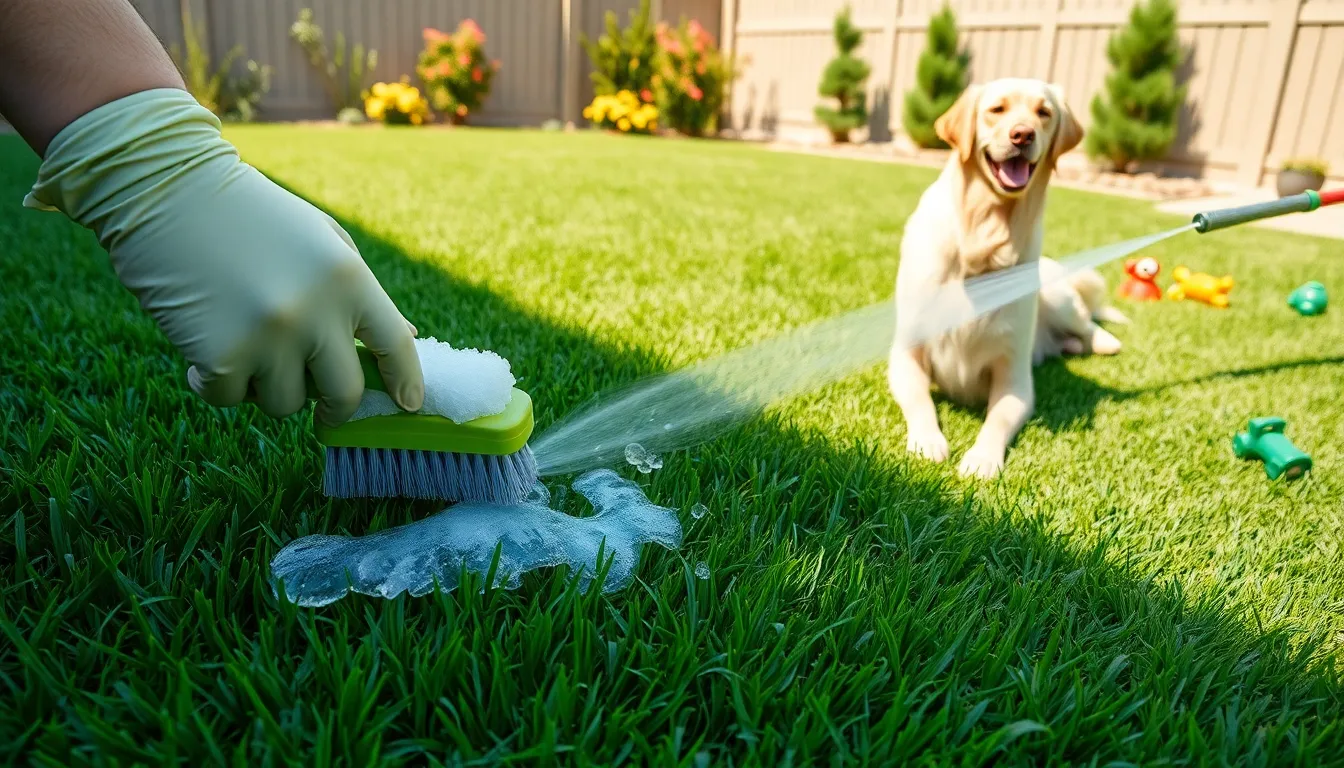
For occasional stains (like mud or spilled food), warm water and a mild, non-toxic detergent can be gently scrubbed into the area with a soft-bristled brush. Always brush against the grain of the turf to lift the fibers and restore their upright appearance. Never use harsh chemicals, bleach, or acidic cleaners, as these can damage the turf fibers or the backing material.
Preventative Measures: The Role of Infill
The choice of infill plays a crucial role in odor control. Standard infill (like silica sand) is porous and can retain pet waste odors. Specialized pet-friendly infills contain properties that inhibit ammonia from bonding, drastically improving hygiene and making the routine cleaning process significantly more effective.
Key Takeaways
- Remove Solids Promptly: Immediately pick up solid waste to prevent lingering residue.
- Rinse Daily: Flush liquid waste areas with a garden hose to push it through the drainage system.
- Use Enzymatic Cleaners: Apply specialized pet-friendly enzymatic cleaners monthly to neutralize odor-causing ammonia.
- Brush Against the Grain: Use a soft-bristled broom to revitalize the turf fibers after cleaning and maintain its appearance.
- Avoid Harsh Chemicals: Never use bleach, vinegar, or acidic solutions that can harm the turf material or pets.
The most effective maintenance strategy begins with the installation itself. To ensure your turf system is optimized from day one for hygiene and long-term odor control, learn more about the infill materials that complement your pet turf setup in our guide on how to properly clean pet turf after infill installation.
Explore Related Turf Resources
Related Turf Guides
- Antimicrobial Turf Benefits: What It Is, Why It Matters, and How Infill & Materials Affect Performance
If you’re wondering whether antimicrobial turf is really worth paying attention to, here’s the short answer:
- Best Turf Materials For Pools
The Definitive Guide to Best Turf Materials for DFW Pool Areas1. Direct Answer Intro (Featured Snippet Optimized)The best artificial turf materials for pool surrounds are high-grade, flow-through ...
- Can artificial turf provide a safer, cleaner, and more durable playground surface for daycares?
Yes, artificial turf is widely recognized as the superior surfacing choice for daycare and educational playgrounds, providing a consistently safe, antimicrobial, and low-maintenance environment tha...
- Custom Putting Green Design: Transforming Your Backyard into a Personal Training Facility
Custom Putting Green Design: Transforming Your Backyard into a Personal Training Facility1. Direct Answer Intro (Featured Snippet Optimized)
- Diy Vs Professional Pet Turf Installation
The decision between a DIY pet turf installation and hiring a professional comes down to balancing cost savings against specialized expertise in drainage, base preparation, and selecting pet-specif...