
The Definitive Guide to Maintaining Artificial Turf in Commercial & HOA Common Areas
##?
Maintaining artificial turf in common areas—such as HOA parks, medians, and commercial landscapes—primarily involves regular debris removal, periodic rinsing, and professional grooming to preserve aesthetic appeal, optimize drainage, and ensure the turf’s 15-25 year lifespan. For property managers and association boards, a proactive, low-frequency maintenance schedule ensures maximum utility and minimal expenditure compared to natural grass care.
2. Deep Dive (Detailed Why and How)
The primary advantage of commercial artificial turf is the drastic reduction in the intensity of maintenance, but it requires strategic consistency. Common areas often experience significantly higher traffic and use than residential yards, making durability and proactive care essential.
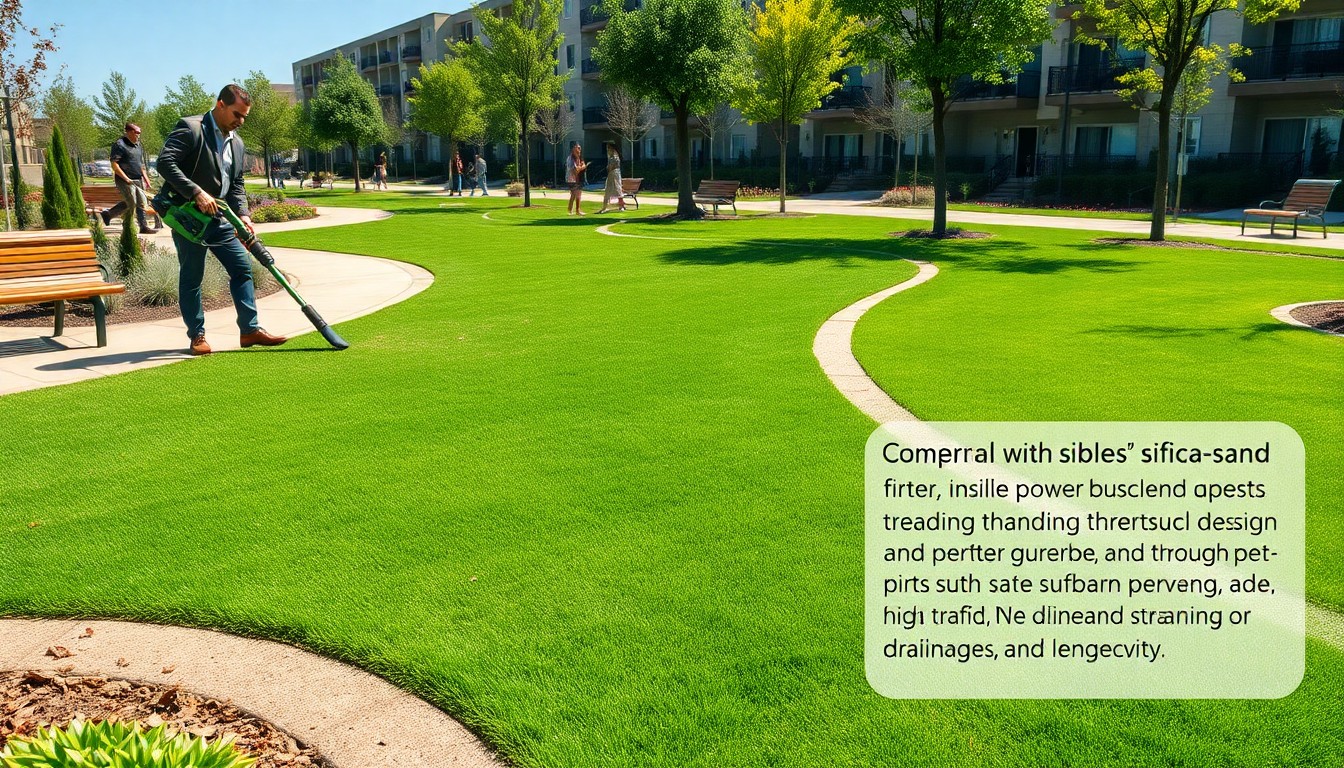
Routine Cleaning: Debris and Dust Management In high-traffic commercial settings, artificial turf accumulates more surface debris, including leaves, trash, and simple dirt/dust. Regular, light sweeping or using a leaf blower is typically sufficient. This action is crucial for preventing organic material buildup that can impede drainage and allow stray seeds to germinate in the infill.
Rinsing for Cleanliness and Odor Control Common areas, especially those used by pets or near communal dining spaces, require routine rinsing. This is not for hydration, but for hygiene. Water helps carry dust and pet waste residue down through the perforations in the turf backing into the prepared sub-base. Using a diluted, turf-safe enzyme cleaner may be necessary quarterly to neutralize organic odors and ensure a pristine environment for residents and customers.
Professional Grooming: Pile Restoration Foot traffic can cause the synthetic grass blades, or pile, to lean over time, leading to a matted look. Professional grooming—usually performed annually or semi-annually, depending on traffic volume—involves using specialized power brooms or stiff brushes to lift the turf fibers back upright. This process is vital for maintaining the turf’s aesthetic fullness and ensuring proper drainage functionality.
Infill Management and Replenishment The infill material (often sand or a specialized variant) provides weight and stability to the turf system and supports the grass blades. Over time, infill can shift or migrate due to weather and heavy use. Regular inspections are necessary to ensure infill levels are consistent across the area. Replenishing infill not only improves the look of the turf but is critical for performance and drainage.
3. Quick Reference (Bulleted Key Takeaways)
- Debris Removal: Use leaf blowers or stiff brooms weekly to prevent organic matter buildup.
- Rinsing: Rinse turf monthly, or more frequently for pet areas, to ensure sanitation and drainage.
- Grooming: Schedule professional power brushing 1–2 times per year to keep turf fibers standing upright.
- Infill Check: Monitor infill levels annually to maintain blade support and optimal performance.
- Chemical-Free: Avoid chemical herbicides and fertilizers entirely, which are unnecessary and potentially damaging to the synthetic fibers.
4. Strategic Hyperlink
By minimizing labor costs, eliminating water bills, and drastically reducing chemical expenditures, artificial turf offers unmatched financial predictability for property management. To see how these savings compound over the life of the product, review our article on long-term maintenance cost savings.
Explore Related Turf Resources
Related Turf Guides
- Apartment Patio Turf Solutions: How to Transform Small Spaces Fast
If you’re searching for apartment patio turf solutions, you’re likely asking one core question:
- Commercial Environmental Compliance for Turf: What It Is and Why It Matters Right Now
If you manage or influence any commercial property with turf—corporate campuses, schools, sports fields, HOAs, retail centers—**commercial environmental compliance for turf** is no longer “nice to ...
- Commercial Rooftop Turf: The Fastest Way to Turn Unused Roof Space into Usable Square Footage
If you’re wondering how to transform a bare, hot rooftop into something people actually want to use, commercial rooftop turf solutions are often the most practical starting point.
- Commercial Turf Cost: What You Should Really Expect to Pay
If you’re looking for a fast, realistic answer on **commercial turf cost**, here it is:
- Cool Turf for Play Areas: How to Keep Playground Surfaces Safer and More Comfortable
If you’re searching for **cooler turf for child play areas**, you’re probably worried about one thing first: **heat**.