
The Definitive Guide to Playground Fall Height Standards for Safe Artificial Turf Installation
##?
Fall height standards for artificial playground turf are legally mandated safety specifications that ensure the surface material can adequately absorb impact when a child falls from the highest designated point of playground equipment. This critical metric, often referred to as Critical Fall Height (CFH), determines the necessary thickness and shock-absorbing properties of the turf system to prevent severe head injuries according to regulatory bodies like the ASTM (American Society for Testing and Materials).
2. Deep Dive (Detailed Why and How)
Understanding Critical Fall Height (CFH)
Critical Fall Height is not a guideline; it is a critical measurement. CFH is the maximum height from which a child can fall onto a specific safety surfacing material and have a high probability of surviving without sustaining a life-threatening head injury.
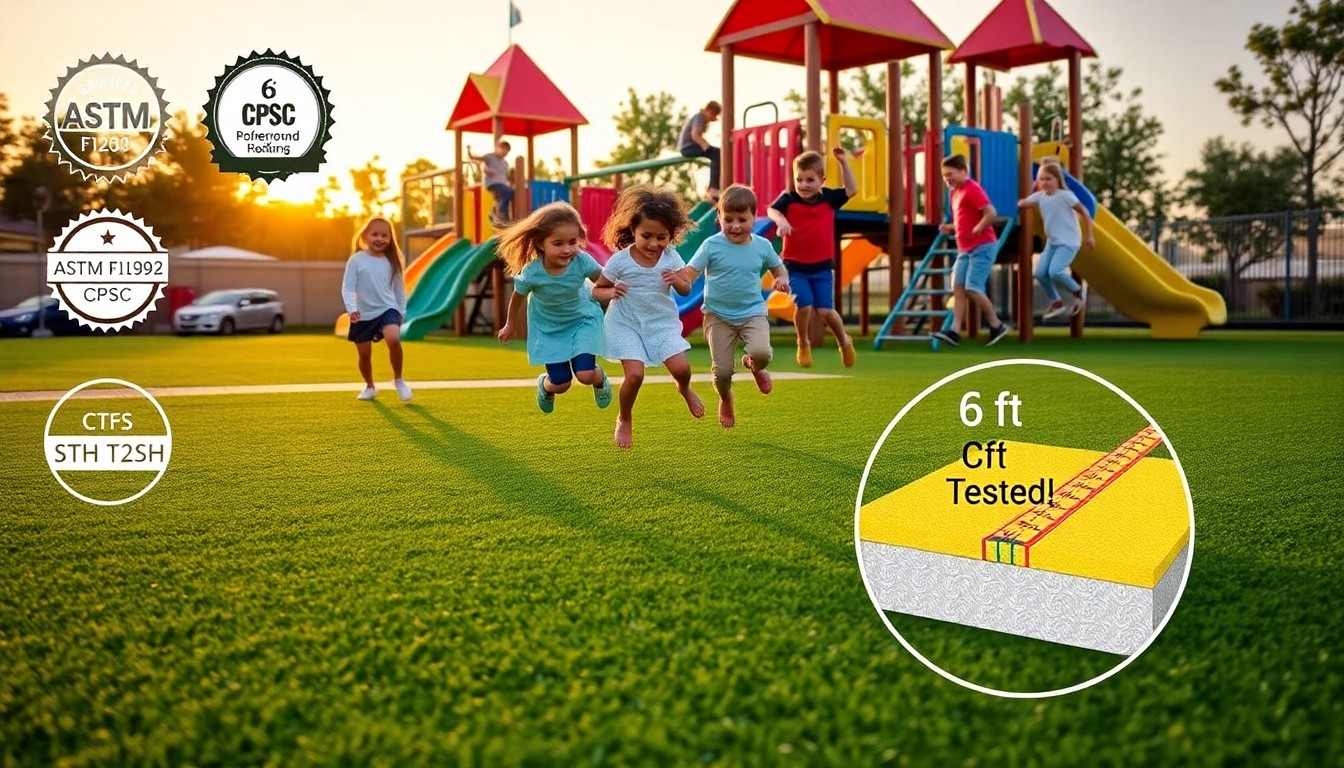
For artificial turf, achieving the required CFH involves installing a shock-absorbent padding layer beneath the synthetic grass. This padding, often foam or rubber, must be rated to meet or exceed the fall height of the tallest piece of equipment on the playground. If the highest point of equipment is 6 feet, the turf system must be certified for a minimum of a 6-foot fall height.
Regulatory Compliance and Your Liability
In the DFW area, professional playground installation must adhere to standards set by the Consumer Product Safety Commission (CPSC) and ASTM F1292. Choosing a turf supplier that provides comprehensive testing data and uses certified padding systems is essential for meeting compliance and mitigating liability risks. A non-compliant playground surface can void insurance and pose a significant legal risk.
The Role of Turf Density and Infill
While the sub-surface padding handles the primary impact absorption for CFH, the quality of the turf itself contributes to overall safety. Dense, high-quality polyethylene turf fibers offer better cushioning than low-quality materials. Additionally, the infill material used in the turf (often sand or specialized rubber granules) provides stability and supplementary impact resilience.
A proper installation ensures zero exposure of hard surfaces beneath the turf, especially near equipment, guaranteeing a consistent safety cushion across the entire play area.
3. Quick Reference (Bulleted Key Takeaways)
- CFH Definition: The maximum height from which a fall is survivable without severe head injury onto the safety surface.
- Safety Layer: Artificial turf achieves CFH via a dedicated shock-absorbent pad installed beneath the grass layer.
- Requirement: The CFH rating of the surface must be equal to or greater than the highest accessible part of the playground equipment.
- Standards: Compliance is based on CPSC guidelines and ASTM F1292 testing.
- Consequence: Failure to meet CFH requirements results in an unsafe play environment and liability exposure.
4. Strategic Hyperlink
Safety shouldn't stop at impact absorption. For a complete solution that protects children from both falls and chemical exposure, it’s vital to consider the materials used in the turf system. Read our detailed guide on how to connect low-chemical turf to fall height standards.
Explore Related Turf Resources
Related Turf Guides
- Apartment Patio Turf Solutions: How to Transform Small Spaces Fast
If you’re searching for apartment patio turf solutions, you’re likely asking one core question:
- Commercial Environmental Compliance for Turf: What It Is and Why It Matters Right Now
If you manage or influence any commercial property with turf—corporate campuses, schools, sports fields, HOAs, retail centers—**commercial environmental compliance for turf** is no longer “nice to ...
- Commercial Rooftop Turf: The Fastest Way to Turn Unused Roof Space into Usable Square Footage
If you’re wondering how to transform a bare, hot rooftop into something people actually want to use, commercial rooftop turf solutions are often the most practical starting point.
- Commercial Turf Cost: What You Should Really Expect to Pay
If you’re looking for a fast, realistic answer on **commercial turf cost**, here it is:
- Cool Turf for Play Areas: How to Keep Playground Surfaces Safer and More Comfortable
If you’re searching for **cooler turf for child play areas**, you’re probably worried about one thing first: **heat**.