
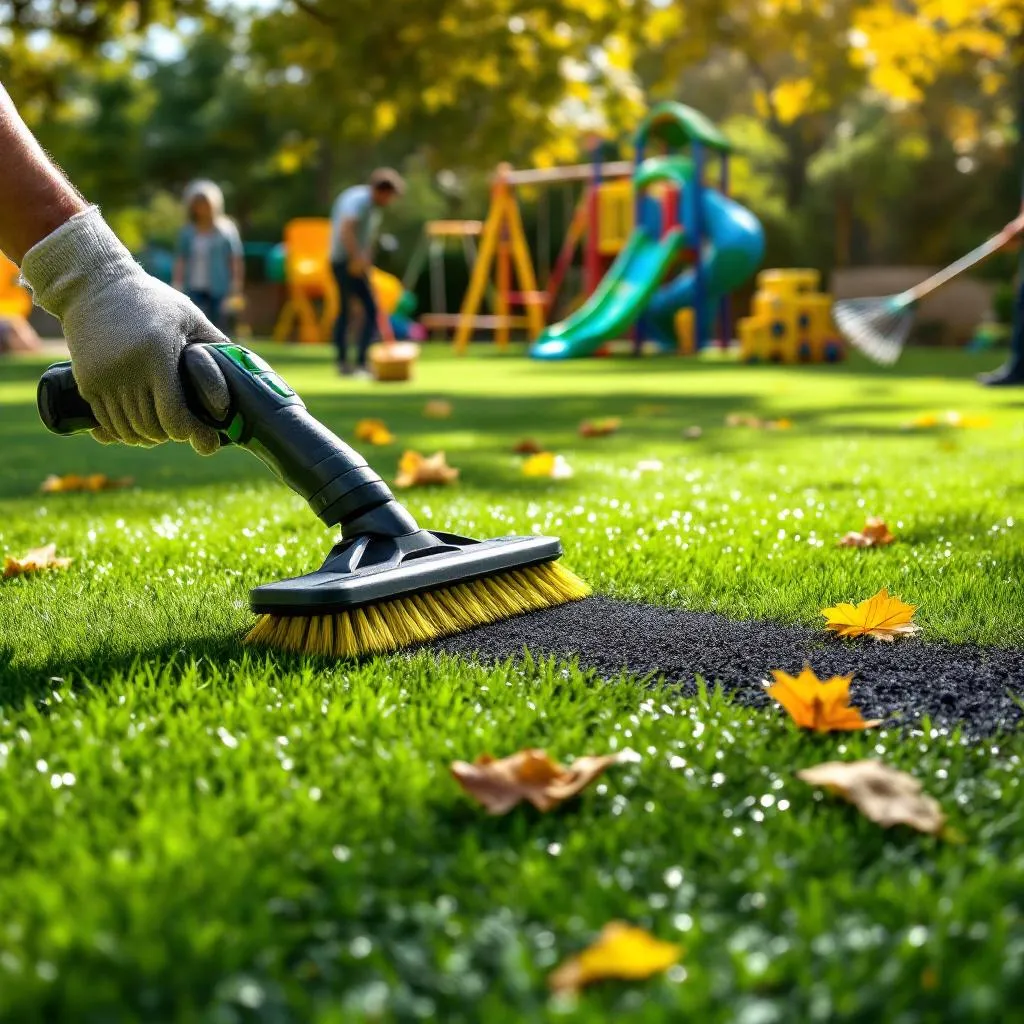
The Definitive Guide to Playground Turf Maintenance
##?
Maintaining artificial playground turf involves a simple, routine schedule focused on keeping the surface debris-free, clean, and the infill consistently leveled. Regular brushing prevents fiber matting, rinsing flushes out spills and contaminants, and prompt upkeep ensures the longevity, safety rating, and aesthetic appeal of the play area.
2. Deep Dive (Detailed Why and How)
Artificial turf is famously low-maintenance, but when installed in high-traffic playground environments, it requires consistent care to uphold safety standards and extend its lifespan. Neglecting the turf leads to matting, poor drainage, and potential bacteria buildup—all of which compromise the integrity of the play space.
The two main components of playground turf maintenance are fiber care and cleanliness.
A. Fiber and Infill Care
Matting occurs when the turf fibers are continually compressed by foot traffic and heavy play equipment. This not only makes the area look worn but can also reduce the protective cushioning.
To combat this, schedule regular power brushing using a mechanical brush or a rake with stiff nylon bristles. Brushing restores the pile height, keeping the surface looking lush and functional. At the same time, this process helps redistribute the infill material (like rubber crumb or silica sand), which is vital for ballast, cushioning, and maintaining the surface's critical fall height rating. Periodically adding new infill may be necessary, especially in high-wear zones like swing sets or slide exits.
B. Surface Cleaning and Hygiene
For kid-safe areas, cleanliness is paramount. While turf allows liquids to drain quickly, organic debris, food spills, and pet waste need active removal.
Daily or weekly cleaning should involve removing large debris (leaves, sticks, wrappers). Light rinsing with a garden hose is recommended weekly to remove dust and dirt. For tougher messes, use mild soap and water or specialized turf cleaning products. Never use harsh chemicals, as these can damage the turf backing or fibers.
For areas prone to liquid spills or pet use, a solution of water and white vinegar or specialized enzymatic cleaner should be used monthly to neutralize bacteria and prevent odors, ensuring a consistently hygienic environment for children.
3. Quick Reference (Bulleted Key Takeaways)
- Routine Brushing: Use a power brush or nylon-bristled broom monthly to stand up fibers and redistribute infill.
- Daily Debris Removal: Clear sticks, leaves, and trash to prevent damage and microbial growth.
- Weekly Rinsing: Flush the area with water to remove dust, dirt, and minor contaminants.
- Sanitize Spills: Use enzymatic cleaners immediately on food, drinks, or pet waste.
- Check Infill Levels: Ensure infill material is adequately dispersed to maintain critical fall cushioning.
4. Strategic Hyperlink
Consistent maintenance efforts are pointless if the turf foundation cannot handle the demands of a play area. To ensure the safety and longevity of your investment, especially in the DFW climate, understanding the sub-base is critical. Learn more about the specialized sub-base layers and permeability designed for high-use play areas in our guide on the proper playground turf care.
Explore Related Turf Resources
Related Turf Guides
- Apartment Patio Turf Solutions: How to Transform Small Spaces Fast
If you’re searching for apartment patio turf solutions, you’re likely asking one core question:
- Commercial Environmental Compliance for Turf: What It Is and Why It Matters Right Now
If you manage or influence any commercial property with turf—corporate campuses, schools, sports fields, HOAs, retail centers—**commercial environmental compliance for turf** is no longer “nice to ...
- Commercial Rooftop Turf: The Fastest Way to Turn Unused Roof Space into Usable Square Footage
If you’re wondering how to transform a bare, hot rooftop into something people actually want to use, commercial rooftop turf solutions are often the most practical starting point.
- Commercial Turf Cost: What You Should Really Expect to Pay
If you’re looking for a fast, realistic answer on **commercial turf cost**, here it is:
- Cool Turf for Play Areas: How to Keep Playground Surfaces Safer and More Comfortable
If you’re searching for **cooler turf for child play areas**, you’re probably worried about one thing first: **heat**.