
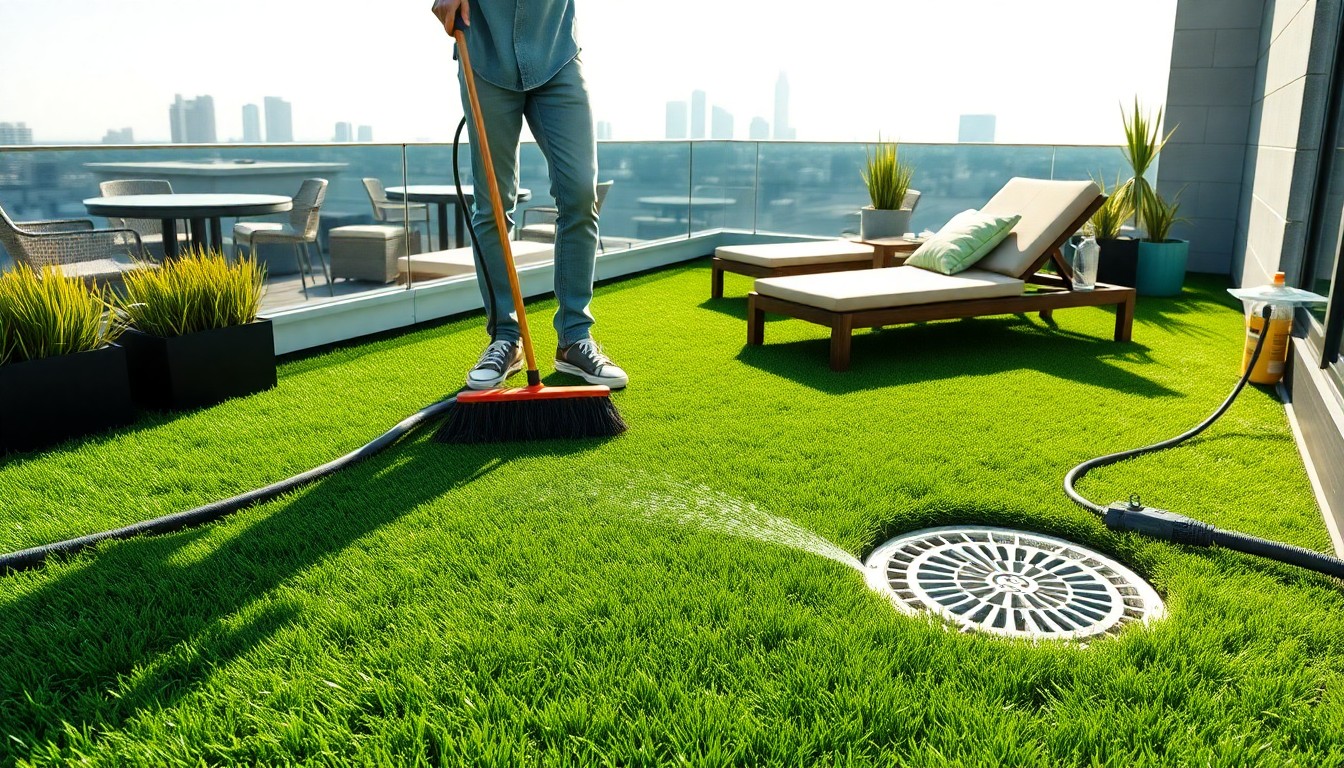
The Definitive Guide to Rooftop Turf Maintenance for DFW Homeowners
##?
Effective rooftop turf maintenance primarily involves regular debris removal, consistent rinsing to manage dust and pollutants, and periodic brushing to prevent matting and ensure proper drainage. Unlike ground-level turf, rooftop installations require specific attention to drainage systems and environmental factors (like high winds and intense sun) to maintain aesthetics and extend the 15-25 year lifespan of the synthetic grass.
2. Deep Dive (Detailed Why and How)
The Unique Challenges of Rooftop Maintenance
Artificial turf installed on balconies, patios, or rooftop decks faces different challenges than ground installations. Rooftops are often exposed to higher winds, collecting more non-organic debris (like paper, plastic, and general city dust). Crucially, the infill (if used) is more prone to displacement, and drainage systems must be kept meticulously clear to prevent water backup, which can affect the underlying structure.Essential Routine: Debris and Rinse
Your weekly maintenance should focus on two simple steps:1.
- Remove Debris: Use a leaf blower or a stiff, synthetic-bristled broom to clear all leaves, dirt, and litter. Preventing organic material from decomposing on the turf is vital, as it can encourage mold or moss growth.
- Rinse Regularly: Due to high exposure to city air and dust, rooftop turf benefits greatly from a thorough hose-down at least once a month. This flushes out fine particles and helps keep the fibers clean. Ensure your rooftop's drainage system (e.g., scuppers or drains) is working efficiently after rinsing.Maintaining Fiber Integrity (Grooming)
Foot traffic, sun exposure, and wind can cause the synthetic fibers to lean or flatten, known as matting. To restore the turf’s lush, upright appearance, use a specialized power broom or a stiff, non-metallic push broom. Brushing against the grain of the fibers, particularly in high-traffic lounge or dining areas, is essential to keep the turf springy and realistic. For maximum longevity, this should be done seasonally or quarterly, depending on usage.Odor and Stain Management
While rooftop turf usually doesn't face the same volume of pet waste as dedicated pet runs, spills from entertaining (food, drinks) and bird droppings are common. Treat stains immediately using a mild solution of dish soap and water, scrubbing gently. For stubborn issues or general sanitization, a mix of equal parts white vinegar and water can be sprayed and rinsed thoroughly.
3. Quick Reference (Bulleted Key Takeaways)
- Weekly: Use a leaf blower or stiff broom to remove all loose debris.
- Monthly: Rinse the entire surface to clear dust, pollutants, and fine dirt.
- Quarterly: Groom the turf with a stiff broom or power broom to de-matt the fibers, especially in heavily used spots.
- Safety Check: Regularly inspect and clear the rooftop drains to prevent water pooling beneath the turf.
- Stain Treatment: Use mild soap and water or vinegar solution for spills, followed by a thorough rinse.
4. Strategic Hyperlink
A common concern with rooftop installations is dealing with extreme weather. Understanding the specialized installation techniques is key to successfully maintaining your wind-resistant rooftop turf.
Explore Related Turf Resources
Related Turf Guides
- Apartment Patio Turf Solutions: How to Transform Small Spaces Fast
If you’re searching for apartment patio turf solutions, you’re likely asking one core question:
- Commercial Environmental Compliance for Turf: What It Is and Why It Matters Right Now
If you manage or influence any commercial property with turf—corporate campuses, schools, sports fields, HOAs, retail centers—**commercial environmental compliance for turf** is no longer “nice to ...
- Commercial Rooftop Turf: The Fastest Way to Turn Unused Roof Space into Usable Square Footage
If you’re wondering how to transform a bare, hot rooftop into something people actually want to use, commercial rooftop turf solutions are often the most practical starting point.
- Commercial Turf Cost: What You Should Really Expect to Pay
If you’re looking for a fast, realistic answer on **commercial turf cost**, here it is:
- Cool Turf for Play Areas: How to Keep Playground Surfaces Safer and More Comfortable
If you’re searching for **cooler turf for child play areas**, you’re probably worried about one thing first: **heat**.