
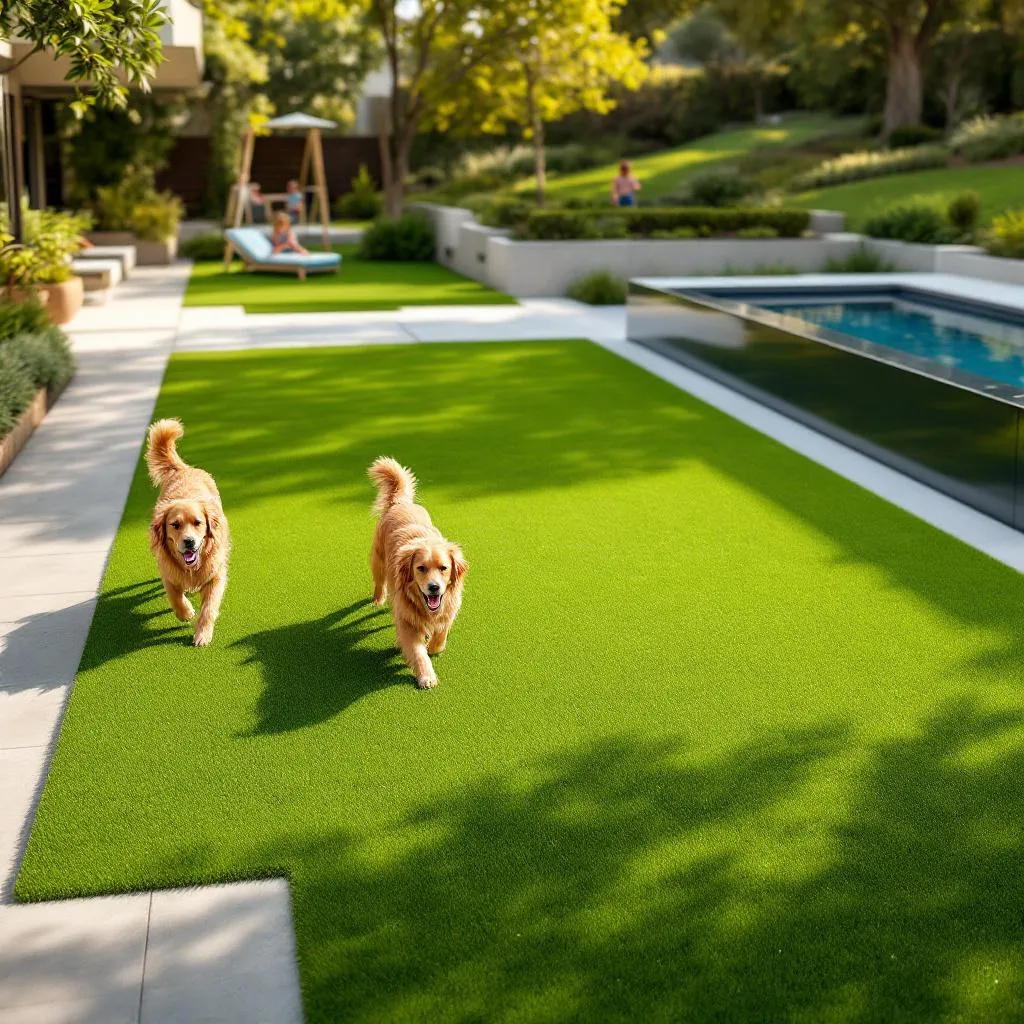
The Top 5 Best Use Cases for Residential Artificial Turf
Artificial turf is best used in residential settings where natural grass struggles due to high traffic, extreme weather, poor light conditions, or specific functional needs like pet areas and pool surrounds. For homeowners seeking a perpetually green, low-maintenance solution, synthetic grass provides exceptional utility, durability, and a guaranteed aesthetic result.
2. Deep Dive (Detailed Why and How)
Use Case 1: Pet-Designated Areas (Dog Runs & Kennels)
Natural grass is quickly destroyed by pets due to digging, urine spots, and heavy, repetitive traffic. This results in patchy, muddy, or odor-ridden yards.
Artificial turf solves these issues with advanced drainage systems designed to handle pet waste efficiently. When combined with specialized infill, it neutralizes odors and ensures liquids pass through quickly, keeping the surface clean, dry, and consistently green. This creates a sanitary, durable, and enjoyable space for dogs.
Use Case 2: Poolside and Wet Areas
Traditional landscaping materials around pools—like concrete, pavers, or natural grass—can be problematic. Concrete can get extremely hot; natural grass creates mud that tracks into the water; and wood decks require constant sealing.
Synthetic turf is engineered to be a superior pool surround. It drains quickly, prevents muddy runoff, and offers a soft, non-slip surface that remains comfortable underfoot. Modern UV-resistant turf also maintains its color despite constant exposure to chlorinated water and intense sun.
Use Case 3: Small or Shaded Yards
In urban DFW areas, many backyards or side yards are small or heavily shaded by fences and trees. Natural grass requires at least four hours of direct sun to thrive, making these spots perpetually weak, muddy, or mossy.
Artificial turf completely eliminates the need for sunlight, ensuring these confined and low-light areas look pristine and green year-round. This dramatically increases the usability and aesthetic appeal of challenging micro-climates within your landscape.
Use Case 4: High-Traffic Zones (Playgrounds, Putting Greens, Entertainment Areas)
Areas that see daily or concentrated foot traffic, such as play zones, paths, or outdoor living spaces, cause natural grass to wear down and turn into dirt spots (or mud pits in the winter).
Synthetic turf is built with dense fibers and strong backing to withstand constant pressure. Installing turf in these high-use areas guarantees a consistent, durable, and safe surface that won't break down, ensuring these spaces are always ready for action.
Use Case 5: Slopes and Erosion-Prone Hillsides
Maintaining natural grass on steep slopes is difficult, dangerous, and often leads to soil erosion and poor irrigation runoff.
Artificial turf provides a stable, permanent ground cover that effectively controls erosion. Its superior backing and installation process lock the soil in place, eliminating runoff issues and the need for awkward, dangerous mowing on challenging terrain.
3. Quick Reference (Bulleted Key Takeaways) * Pet Areas: Exceptional drainage and odor control; eliminates urine spots and mud.
- Pool Surrounds: Non-slip, safe, UV-resistant, and prevents tracking mud into the pool.
- Small/Shaded Spaces: Guarantees a lush green lawn where natural grass fails.
- High-Traffic Zones: Maintains perfect density and appearance under heavy use.
- Slopes/Hillsides: Prevents erosion and removes the maintenance challenge of mowing inclines.
4. Strategic Hyperlink
While artificial turf offers unparalleled solutions for these challenging areas, homeowners should be aware of all options. To understand the tradeoffs and circumstances where natural grass might still be a preferred choice, we encourage you to review a full breakdown and Compare to artificial turf use cases.
Explore Related Turf Resources
Related Turf Guides
- Antimicrobial Turf Benefits: What It Is, Why It Matters, and How Infill & Materials Affect Performance
If you’re wondering whether antimicrobial turf is really worth paying attention to, here’s the short answer:
- Best Turf Materials For Pools
The Definitive Guide to Best Turf Materials for DFW Pool Areas1. Direct Answer Intro (Featured Snippet Optimized)The best artificial turf materials for pool surrounds are high-grade, flow-through ...
- Can artificial turf provide a safer, cleaner, and more durable playground surface for daycares?
Yes, artificial turf is widely recognized as the superior surfacing choice for daycare and educational playgrounds, providing a consistently safe, antimicrobial, and low-maintenance environment tha...
- Custom Putting Green Design: Transforming Your Backyard into a Personal Training Facility
Custom Putting Green Design: Transforming Your Backyard into a Personal Training Facility1. Direct Answer Intro (Featured Snippet Optimized)
- Diy Vs Professional Pet Turf Installation
The decision between a DIY pet turf installation and hiring a professional comes down to balancing cost savings against specialized expertise in drainage, base preparation, and selecting pet-specif...