
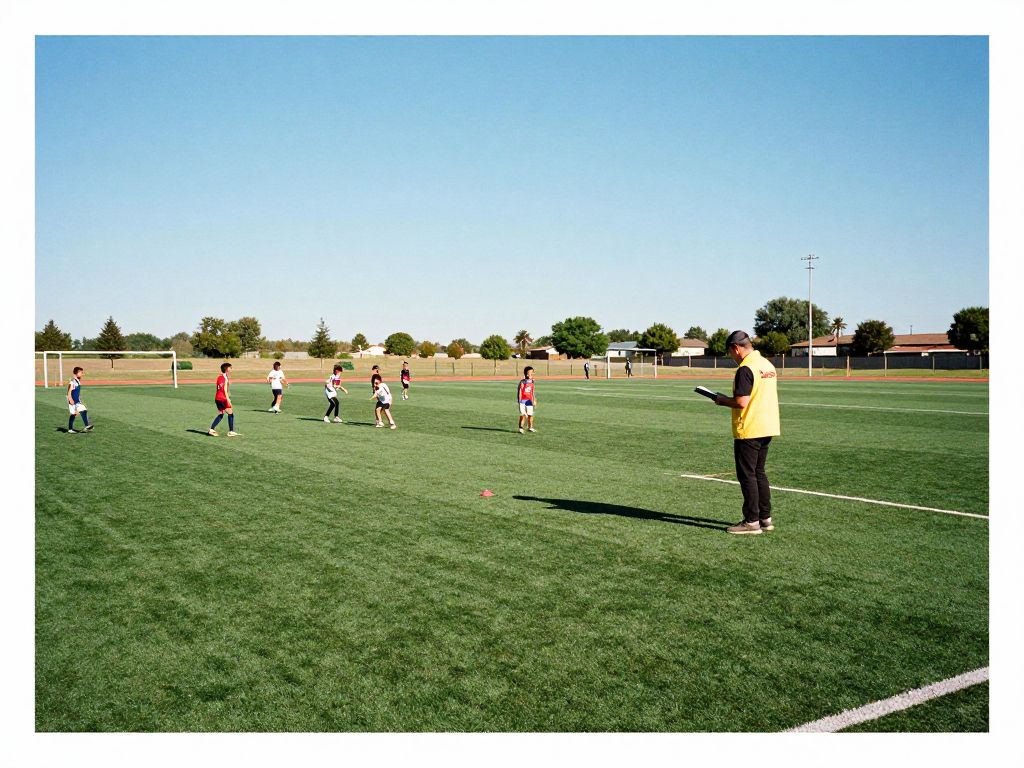
Understanding Gmax Safety Ratings for Sports Turf: What DFW Owners Need to Know
##?
Gmax is the essential measurement for quantifying the impact attenuation (shock absorption) of a sports turf surface. It determines how hard a surface is upon impact, directly correlating with the risk of concussions and severe head injuries. For safety-conscious sports facility owners, maintaining a Gmax score below 200 g's is mandatory, as this is the internationally accepted threshold for dangerous or life-threatening impact conditions.
2. Deep Dive (Detailed Why and How)
What Exactly is Gmax?
Gmax is a unit of deceleration measured when an impact testing device (simulating a human head) hits the playing surface. The deceleration is measured in "g's" (gravitational units). When an athlete falls, the surface must absorb enough of the kinetic energy to decelerate the body safely. If the surface is too hard, the deceleration is rapid, resulting in a high Gmax score and increased injury risk.
A high Gmax score indicates that the playing field is not soft enough to absorb the impact force adequately. Surfaces that test at 200 g's or higher are universally considered unsafe for athletic play, as impacts at this level are associated with severe trauma.The Role of Testing and Certification
Gmax testing uses standardized procedures, primarily following the ASTM F1936 specification, where a weighted projectile is dropped onto the field. This test measures the surface's ability to cushion the fall across various spots on the field.
Because artificial turf surfaces naturally compact over time and with heavy use—which can cause Gmax scores to rise—routine testing is crucial. Compacted infill or worn turf fibers reduce shock absorption, making the field harder and more dangerous.Why DFW Facilities Prioritize Low Gmax
For sports facilities in the DFW area, ensuring a low Gmax score is a non-negotiable step in risk management and liability reduction. It confirms that the surface provides a necessary level of cushioning to protect athletes during high-impact activities, such as football, soccer, or lacrosse.
Regular Gmax monitoring helps facility managers proactively address safety issues by identifying areas that need additional infill, brushing, or maintenance before they exceed safety limits.
3. Quick Reference (Bulleted Key Takeaways)
- Definition: Gmax measures the maximum deceleration (hardness) of a surface during impact.
- Safety Threshold: Any Gmax reading of 200 g's or greater is considered dangerous and life-threatening.
- Maintenance Indicator: Rising Gmax scores signal surface compaction and a need for immediate maintenance or infill replenishment.
- Injury Correlation: Lower Gmax scores directly correlate with a reduced risk of head and spinal injuries.
4. Strategic Hyperlink
To ensure your sports surface consistently adheres to protective standards, it’s vital to understand the compliance process. Learn more about turf testing and certification by reviewing the full guide on Gmax safety standards.
Explore Related Turf Resources
Related Turf Guides
- Apartment Patio Turf Solutions: How to Transform Small Spaces Fast
If you’re searching for apartment patio turf solutions, you’re likely asking one core question:
- Commercial Environmental Compliance for Turf: What It Is and Why It Matters Right Now
If you manage or influence any commercial property with turf—corporate campuses, schools, sports fields, HOAs, retail centers—**commercial environmental compliance for turf** is no longer “nice to ...
- Commercial Rooftop Turf: The Fastest Way to Turn Unused Roof Space into Usable Square Footage
If you’re wondering how to transform a bare, hot rooftop into something people actually want to use, commercial rooftop turf solutions are often the most practical starting point.
- Commercial Turf Cost: What You Should Really Expect to Pay
If you’re looking for a fast, realistic answer on **commercial turf cost**, here it is:
- Cool Turf for Play Areas: How to Keep Playground Surfaces Safer and More Comfortable
If you’re searching for **cooler turf for child play areas**, you’re probably worried about one thing first: **heat**.