
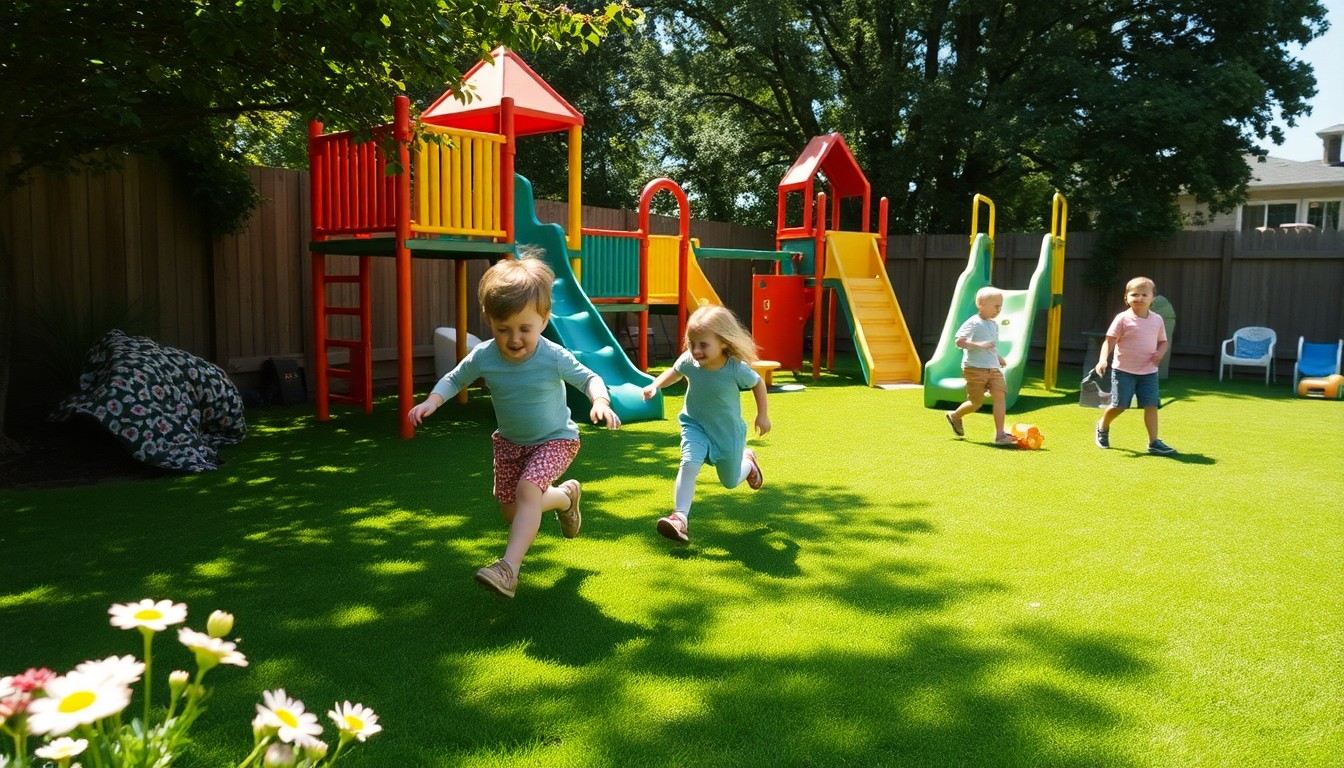
What Is Shock-Absorbing Playground Turf (And Why It Matters More Than You Think)
If you’re searching for shock-absorbing playground turf, you’re really asking one core question:
“Will this surface actually help protect kids when they fall?”
Here’s the short answer:
Yes—when the right shock-absorbing turf is installed at the correct depth for your playground and fall heights, it can significantly reduce the risk and severity of injuries from trips, slips, and falls.
Now, let’s go deeper into what that really means, how it works, and how to think about kid-safe, shock-absorbing turf in a practical, non-technical way.
How Shock-Absorbing Playground Turf Protects Kids in Real Life
Playgrounds are supposed to be fun, not stressful. But falls happen—off slides, from climbing structures, while running or chasing friends.
- Shock-absorbing playground turf is designed to:
- Soften impact when a child hits the ground
- Spread out the force of a fall over a wider area
- Reduce the chance of serious injury, especially head injuries
- Support active play without feeling squishy or unstable
Instead of landing on packed dirt, concrete, or thin grass, kids land on a layered safety system designed to manage impact.
The Simple Anatomy of Shock-Absorbing Playground Turf
Underneath the green surface you see, there’s more going on than meets the eye. Most shock-absorbing playground turf systems include several layers working together:
-
Turf layer (top):
- Synthetic fibers that look like grass
- Perforated backing for drainage
- Sometimes infill material (small particles) to support the blades
-
Shock pad or cushion layer (middle):
- The impact-absorbing heart of the system
- Usually foam, rubber, or engineered padding
- Thickness can be adjusted for different “maximum fall heights”
-
Base layer (bottom):
- Compacted stone or other stable material
- Helps with drainage, stability, and long-term performance
These layers are calibrated so when a child falls, the surface compresses in a controlled way, absorbing and dispersing energy rather than sending it directly into the body.
Why “Maximum Fall Height” Is the Concept That Really Matters
You don’t have to be an engineer to understand safety surfacing—but there is one idea worth remembering:
Maximum fall height is the tallest point a child might fall from onto the playground surface.
For example:
- Top of a slide platform
- Highest rung of a climbing frame
- Edge of a balance structure
Shock-absorbing turf systems are typically tested and engineered to protect up to a specific fall height. The higher the potential fall, the more shock absorption and depth you may need under the turf.
If you’re trying to understand how much protection your play area needs, it’s worth learning about playground depth and fall height requirements so your shock-absorbing turf is actually matched to real-world risk. You can explore this in more detail on our dedicated page about playground depth requirements and maximum fall height protection.
Why Shock-Absorbing Turf Is Popular for Playgrounds and Kid-Focused Spaces
Beyond pure safety, shock-absorbing playground turf solves several practical problems for schools, parks, and parents.
1. Consistent, Predictable Cushioning
Unlike natural grass or loose mulch, turf tends to be:
- Even and stable – fewer surprise hard spots
- Less affected by weather – no mud pits after rain
- Easier to maintain consistency across the whole play area
This makes it easier to trust that the surface under a swing or slide is still doing its job months or years later.
2. Cleaner Play Environments
Kids roll, crawl, tumble, and sit on the ground. Shock-absorbing turf helps:
- Reduce mud and dust
- Limit grass stains
- Create a fresher-looking play area over time
For caregivers, this often means fewer ruined clothes and less dirt tracked inside.
3. Accessibility and Inclusion
Properly installed, kid-safe turf can support wheels, walkers, and strollers far better than loose-fill materials like wood chips:
- Smoother transitions
- Fewer ruts and holes
- More predictable footing for all ages and abilities
This can be especially important in inclusive playground design where children with different mobility needs share the same play space.
4. Year-Round Use
Traditional grass fields can turn into:
- Dust bowls in dry seasons
- Muddy, unsafe areas in wet seasons
Shock-absorbing turf helps keep the surface more usable throughout the year, supporting outdoor activity without long shut-down periods.
Key Considerations When You’re Thinking About Shock-Absorbing Turf
Even if you’re just at the “research” stage, a few high-level concepts can help you think more clearly about what you may need.
1. Location and Type of Play
Different areas within the same playground may have different needs:
-
High-impact zones
- Under swings
- Below climbers, monkey bars, and overhead equipment
- At slide exits
-
General play zones
- Open running and tag areas
- Seating or gathering spaces
You may want extra shock absorption in high-fall-risk areas and standard cushioning elsewhere.
2. Age Group and Activity Level
The way toddlers play is not the same as older kids:
-
Toddler areas (2–5 years):
- Lower equipment
- More crawling, sitting, and slower exploration
- Still require impact absorption, but from lower heights
-
School-age kids (5–12 years):
- Higher platforms and climbing structures
- Faster running and more daring play
- Typically need protection rated for higher fall heights
Matching the shock-absorbing playground turf system to the age range helps make safety feel proportional to actual risk.
3. Climate and Drainage
For outdoor play spaces, think about:
- Rain and snow – Does the turf system drain well so it doesn’t hold water?
- Heat – Some surfaces retain more heat; shade and color can matter.
- Freeze–thaw cycles – A good base and installation help maintain performance.
Shock-absorbing turf is about long-term playability and safety, not just day-one softness.
How Shock-Absorbing Turf Compares to Other Playground Surfaces
Below is a general comparison to help place shock-absorbing playground turf in context with other common surfaces.
| Surface Type | Shock Absorption | Maintenance | Cleanliness & Accessibility |
|---|---|---|---|
| Shock-Absorbing Turf | High, consistent when properly designed and installed | Low to moderate (periodic grooming and inspection) | Clean, wheelchair-friendly, minimal mud/dust |
| Wood Chips / Mulch | Good when at correct depth; can degrade over time | High (topping up, raking, leveling) | Can shift, scatter, and create uneven surfaces |
| Rubber Mulch | Good impact performance at proper depth | Moderate (contains scatter, monitor depth) | Loose material; may migrate outside play zones |
| Poured-in-Place Rubber | High, can be precisely engineered | Low to moderate (inspections, repairs as needed) | Smooth, accessible, but can get hot in sun |
| Natural Grass / Soil | Highly variable; often poor once compacted | Moderate to high (mowing, watering, re-seeding) | Mud, bare spots, inconsistent footing |
Making Shock-Absorbing Turf Feel Relevant Right Now
If you’re involved with a playground, school, childcare center, or community space, shock-absorbing playground turf is about more than checking a safety box. It’s about:
- Encouraging confident play instead of nervous hovering
- Offering a surface that respects how kids really move
- Reducing the gap between “what looks safe” and “what actually protects”
Today, many organizations are revisiting older playgrounds and asking:
- Is the surface still doing what we think it is?
- Has it compacted, washed away, or broken down?
- Is the protection appropriate for the height and type of equipment we have?
Those questions all point back to the same core idea:
Matching the surfacing—especially shock-absorbing turf—to the playground’s maximum fall heights and usage.
If you want to understand how depth, layers, and height protection interact, the next logical step is to explore the basics of playground depth requirements. That’s where concepts like maximum fall height protection and critical fall height connect directly to how thick your shock-absorbing turf system should be. You can explore that in more detail here: playground depth requirements for shock-absorbing turf systems.
Frequently Asked Questions About Shock-Absorbing Playground Turf
| Question | Answer |
|---|---|
| What makes turf “shock-absorbing” for playgrounds? | It’s not just the green turf you see on top. A playground system becomes “shock-absorbing” when it includes a cushion or pad layer underneath, engineered to reduce impact from a specific maximum fall height. The full system—turf, pad, and base—is what provides protection. |
| Is shock-absorbing playground turf safer than regular grass? | In most cases, yes. Natural grass often becomes compacted, bare, or slippery, especially in high-traffic areas under equipment. Properly designed shock-absorbing playground turf offers more consistent and predictable impact reduction than typical grass and soil. |
| How do I know if the turf is deep enough for my playground? | Depth and cushion thickness should be matched to your maximum fall height. Surfacing systems are usually tested to specific standards for certain heights. To better understand how depth and height interact, review basic guidelines on playground depth requirements and maximum fall height protection . |
| Does playground turf require a lot of maintenance? | Compared to loose materials like mulch, maintenance is typically lower and more predictable. You’ll still want periodic inspections, brushing or grooming, and checks around high-use zones, but you won’t be constantly raking or replenishing displaced material. |
| Is shock-absorbing turf good for all ages? | Yes, but the design may vary by age group. Areas for toddlers may focus on comfort and small falls, while older kids’ areas may be engineered for higher fall heights. The same overall concept—shock absorption—applies across age groups, just tuned differently. |
| Can shock-absorbing turf be used indoors as well as outdoors? | Yes. Many kid-focused indoor spaces—such as early learning centers or indoor playgrounds—use turf systems with built-in cushioning. Outdoor systems place additional emphasis on drainage, UV stability, and weather resistance. |
| Does shock-absorbing turf eliminate all injuries? | No surface can eliminate every injury. What shock-absorbing playground turf is designed to do is reduce the severity of injuries—especially from falls—by softening the impact and helping manage head injury risk. It complements, but doesn’t replace, supervision and thoughtful playground design. |
By understanding how shock-absorbing playground turf works—and how it connects to concepts like maximum fall height and depth—you’ll be better equipped to evaluate surfaces, ask smarter questions, and support safer, more confident play wherever kids gather.
Explore Related Turf Resources
Related Turf Guides
- Apartment Patio Turf Solutions: How to Transform Small Spaces Fast
If you’re searching for apartment patio turf solutions, you’re likely asking one core question:
- Commercial Environmental Compliance for Turf: What It Is and Why It Matters Right Now
If you manage or influence any commercial property with turf—corporate campuses, schools, sports fields, HOAs, retail centers—**commercial environmental compliance for turf** is no longer “nice to ...
- Commercial Rooftop Turf: The Fastest Way to Turn Unused Roof Space into Usable Square Footage
If you’re wondering how to transform a bare, hot rooftop into something people actually want to use, commercial rooftop turf solutions are often the most practical starting point.
- Commercial Turf Cost: What You Should Really Expect to Pay
If you’re looking for a fast, realistic answer on **commercial turf cost**, here it is:
- Cool Turf for Play Areas: How to Keep Playground Surfaces Safer and More Comfortable
If you’re searching for **cooler turf for child play areas**, you’re probably worried about one thing first: **heat**.