
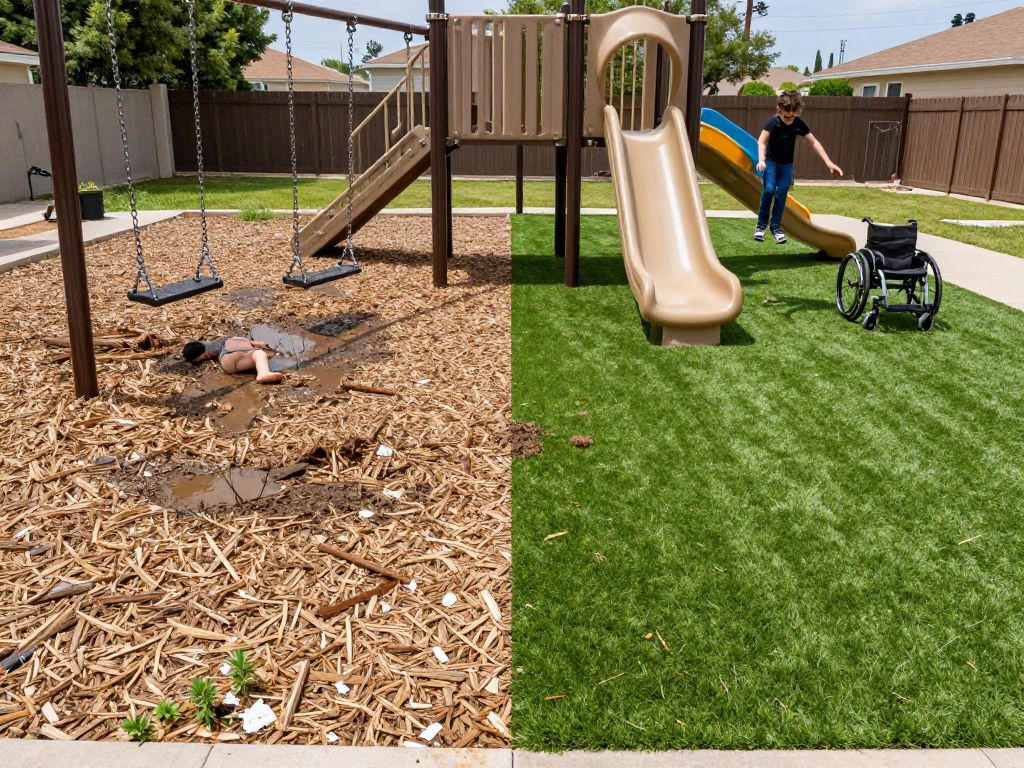
The Definitive Guide: Choosing Between Artificial Turf and Wood Chips for DFW Playgrounds
##?
For DFW playgrounds, artificial turf offers superior, long-term safety, durability, and maintenance benefits over traditional wood chips. While wood chips may have a lower initial cost, synthetic turf provides a consistent, cushioned fall height protection, eliminates annual material replacement, prevents splinters and displacement, and ensures a cleaner, accessible play surface year-round, making it a strategic investment for safety-conscious homeowners.
2. Deep Dive (Detailed Why and How)
Safety and Compliance
The primary concern for any playground surface is safety, specifically the ability to absorb impact from falls. Artificial turf is installed over a precisely engineered shock-absorption pad, guaranteeing a consistent fall height rating that complies with rigorous playground safety standards.
Wood chips, conversely, are highly susceptible to displacement. High-traffic areas, swings, and slides quickly create shallow spots where the impact protection is severely compromised. This inconsistency means the surface beneath the equipment often fails to meet the necessary safety ratings when it matters most.Maintenance and Longevity
The maintenance required for wood chips drastically outweighs the effort needed for synthetic turf. Wood chips require annual replenishment to maintain proper depth, constant raking to redistribute material in high-traffic zones, and ongoing weeding or debris removal. Over time, they decompose, attract insects, and often harbor moisture.
Artificial turf, particularly pet and kid-safe varieties, requires minimal maintenance—primarily occasional rinsing and brushing. Its integrated drainage system manages water quickly, and its durability means no material is lost, moved, or needs replacing for decades. This eliminates recurring material and labor costs associated with wood chips.Cleanliness and Accessibility
Wood chips are notoriously messy. They stick to shoes, get tracked into the house, and cause splinters. Furthermore, they quickly become muddy after rain, limiting playground access. For children with mobility challenges, wood chips create an uneven, difficult-to-navigate surface.
Synthetic turf provides a uniform, non-abrasive surface that is instantly accessible, regardless of weather. High-quality turf materials are non-toxic, lead-free, and designed to stay clean, offering a pristine, mud-free environment that supports inclusive play.
3. Quick Reference (Bulleted Key Takeaways)
- Safety Consistency: Turf maintains a consistent, certified fall-height rating; wood chips shift, creating unsafe thin spots.
- Maintenance: Turf requires minimal upkeep (rinsing/brushing); wood chips require constant raking, replenishing, and weeding.
- Cleanliness: Turf eliminates mud and splinters, keeping feet and clothes clean.
- Accessibility: Turf offers a smooth, ADA-compliant surface suitable for all children.
- Longevity: Turf lasts 15-25 years; wood chips require annual material top-offs.
4. Strategic Hyperlink
To ensure your chosen material adheres to the necessary compliance requirements for DFW homes, review our comprehensive guide comparing turf to wood chips for playground safety.
Explore Related Turf Resources
Related Turf Guides
- Apartment Patio Turf Solutions: How to Transform Small Spaces Fast
If you’re searching for apartment patio turf solutions, you’re likely asking one core question:
- Commercial Environmental Compliance for Turf: What It Is and Why It Matters Right Now
If you manage or influence any commercial property with turf—corporate campuses, schools, sports fields, HOAs, retail centers—**commercial environmental compliance for turf** is no longer “nice to ...
- Commercial Rooftop Turf: The Fastest Way to Turn Unused Roof Space into Usable Square Footage
If you’re wondering how to transform a bare, hot rooftop into something people actually want to use, commercial rooftop turf solutions are often the most practical starting point.
- Commercial Turf Cost: What You Should Really Expect to Pay
If you’re looking for a fast, realistic answer on **commercial turf cost**, here it is:
- Cool Turf for Play Areas: How to Keep Playground Surfaces Safer and More Comfortable
If you’re searching for **cooler turf for child play areas**, you’re probably worried about one thing first: **heat**.