
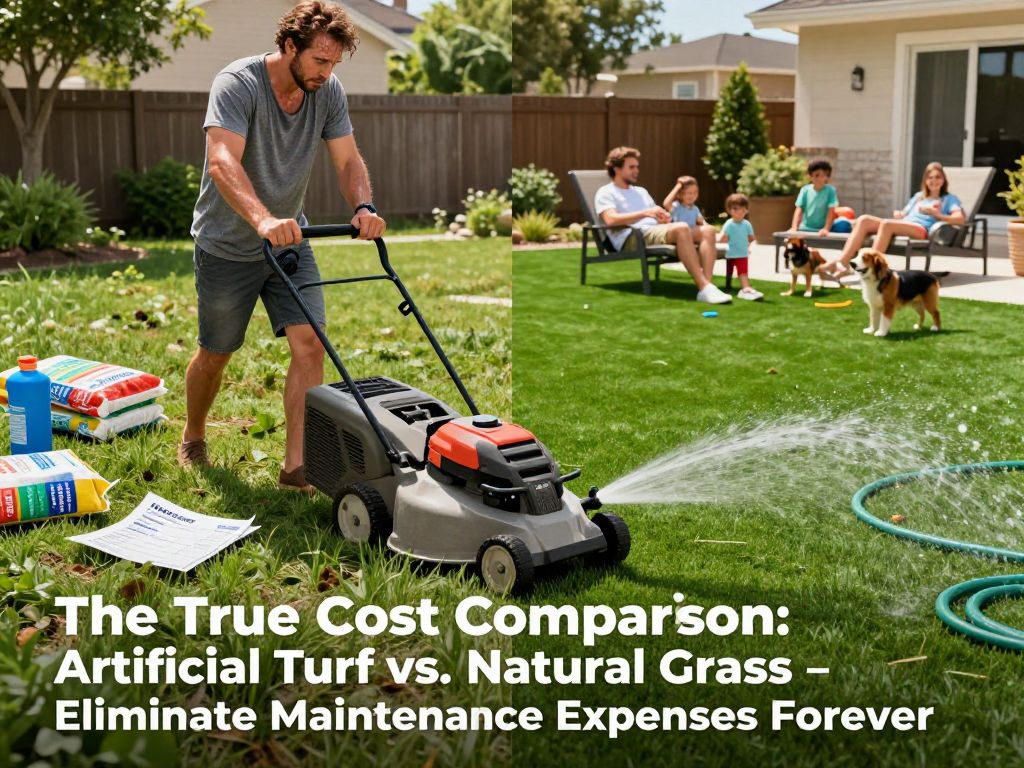
The True Cost Comparison: How Artificial Turf Eliminates Natural Grass Maintenance Expenses
##?
Switching from natural grass to artificial turf results in substantial, long-term savings by eliminating nearly all recurring maintenance costs, including water, mowing, fertilization, and pest control. While natural grass incurs continuous expense and labor, synthetic turf provides a predictable, one-time investment that delivers a significant return through reduced monthly bills and maximized free time.
2. Deep Dive (Detailed Why and How)
For bottom-of-funnel homeowners considering artificial turf, the key financial benefit moves beyond the simple installation price: it lies in the permanent elimination of the natural lawn's high operational expenses.
Mowing and Equipment: The most immediate saving comes from removing the need for weekly mowing. This cuts out the cost of gas, oil, equipment purchase/maintenance, and, if you use a lawn service, recurring monthly fees that typically range from hundreds to thousands of dollars per year.
Water Consumption: Especially in drought-prone areas like DFW, water is the largest variable cost of natural grass. A healthy, traditional lawn can require hundreds of gallons of water per week in the peak summer months. Synthetic turf eliminates this consumption entirely, leading to immediate and dramatic reductions in your water utility bill.
Chemicals and Treatments: Maintaining a green, pest-free natural lawn requires seasonal fertilization, herbicides for weeds, and pesticides for insects. These chemicals are costly, time-consuming to apply, and can pose environmental risks through runoff. Artificial turf requires none of these products, eliminating their cost and environmental impact.
Longevity and Durability: Natural grass often needs reseeding or sod replacement in high-traffic areas due to pets or children, adding unexpected expenses. High-quality artificial turf is designed for superior durability and resilience, maintaining its appearance and structural integrity for 15-25 years with minimal wear. This prevents repeated costly repairs or aesthetic corrections common with traditional lawns.
3. Quick Reference (Bulleted Key Takeaways)
- Zero Recurring Labor: Eliminates weekly mowing, edging, and weeding labor.
- No Water Costs: Removes the largest monthly utility expense associated with lawn care.
- Chemical Independence: Saves money by avoiding fertilizers, pesticides, and weed killers.
- Equipment Cost Avoidance: No need to purchase, fuel, or maintain mowers, trimmers, or aerators.
- Predictable Expenses: Converts fluctuating monthly maintenance fees into a stable, one-time investment cost.
4. Strategic Hyperlink
To fully assess the long-term financial payoff of transitioning to synthetic turf and quantify your exact savings, review our detailed analysis on how to calculate your turf maintenance cost savings.
Explore Related Turf Resources
Related Turf Guides
- Budget Turf Options for DFW Homes: Affordable Backyard Turf Options That Still Look Great
If you’re a Dallas–Fort Worth homeowner looking for **affordable backyard turf options**, here’s the bottom line:
- Budget Turf Options for Seniors: Simple, Safe, and Affordable
If you’re looking for **budget-friendly turf ideas for seniors**, you’re probably asking one simple question:
- Cutting & Shaping Turf Correctly: The Step You Can’t Afford to Rush
Learn about Cutting & Shaping Turf Correctly: The Step You Can’t Afford to Rush with practical guidance from All American Turf in Dallas-Fort Worth.
- DFW Turf Cost Expectations: Understanding the Investment
**?
- DFW Turf Cost Overview: Average DFW Turf Cost Explained & What Impacts ROI
If you’re just trying to get a realistic number fast, here’s the short version most DFW homeowners are searching for: