
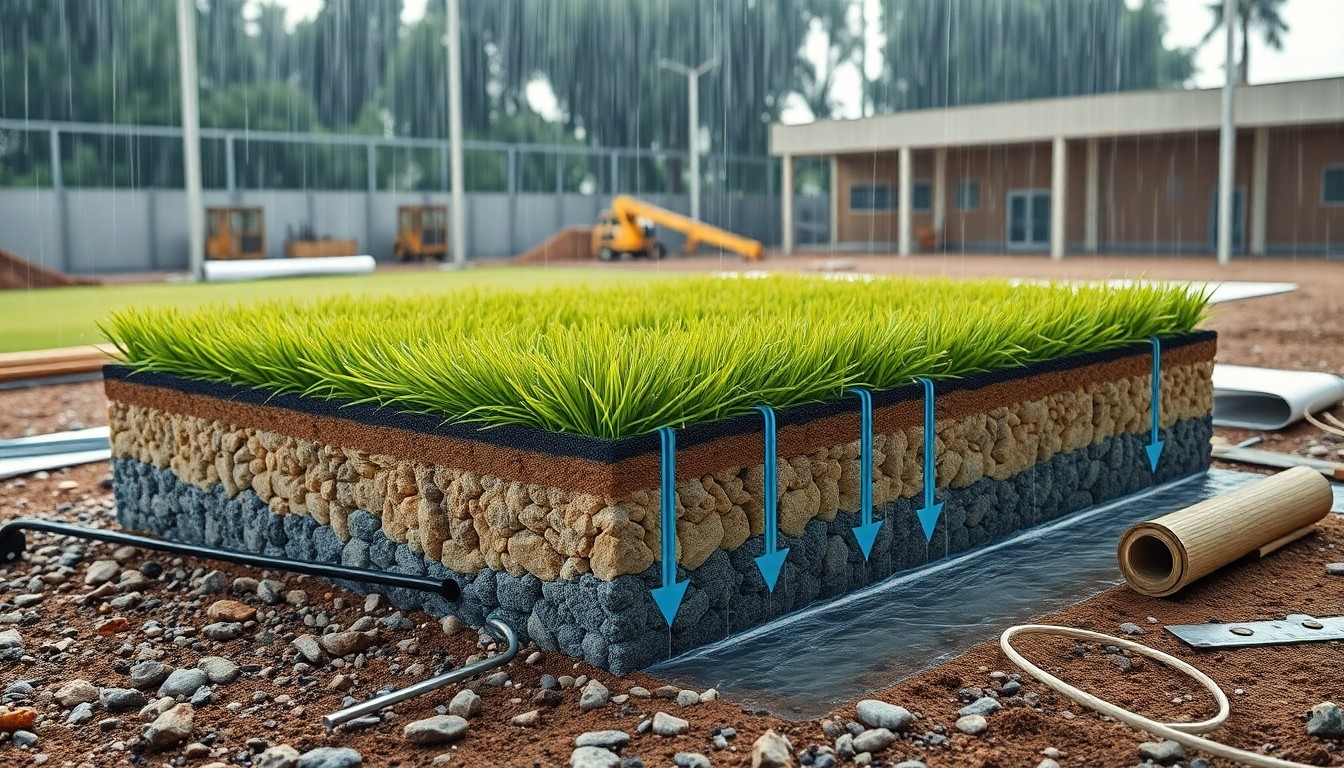
What is the most critical element of high-performance synthetic sports field construction?
The most critical element of a high-performance synthetic sports field is a flawlessly engineered drainage system, which ensures rapid water evacuation, maintains field consistency, and directly influences player safety, field longevity, and usability immediately following heavy rainfall. For clients ready to invest, understanding the technical specifications of the drainage system is key to guaranteeing a durable, reliable, and safe playing surface.
The Hidden Importance of Subsurface Drainage
A sports field is only as good as the foundation beneath it. While the synthetic turf fibers receive the focus, it is the underlying drainage system that determines the field’s true usability, especially in areas prone to sudden, heavy precipitation. Without adequate drainage, water pools, field consistency degrades, and player safety is compromised due to slick surfaces and uneven footing.
Modern sports field drainage starts with a highly permeable turf backing, but relies heavily on the sub-base layers for water management. These layers—which typically consist of crushed stone or angular aggregate—must be meticulously graded to direct water flow toward the perimeter collection systems or internal French drains. This prevents hydrostatic pressure buildup and ensures the field remains firm and playable.
Rapid drainage is not just a matter of convenience; it’s an economic necessity. Effective water management minimizes field downtime, allowing practices and games to resume almost immediately after a storm. This maximizes the return on investment for the facility owner, eliminating costly cancellations and scheduling delays.
Furthermore, proper drainage helps prevent the migration of infill materials and reduces the risk of mold or mildew forming within the turf system, significantly extending the overall lifespan of the costly synthetic installation.
Quick Reference (Bulleted Key Takeaways) * Safety First: Prevents standing water and slick, inconsistent surfaces that lead to player injury.
- Maximized Playability: Ensures fields are usable almost immediately after rain, eliminating downtime.
- Structural Integrity: Controls water flow to prevent sub-base erosion and maintain the field's grade.
- Longevity: Reduces internal moisture buildup, which protects infill stability and turf backing from premature degradation.
- Required Foundation: Drainage relies entirely on the quality and design of the engineered sub-base.To ensure your investment provides peak performance and rapid recovery, it is vital to begin with an unyielding foundation. Learn more about The vital role of proper base construction for effective sports field drainage.
Explore Related Turf Resources
Related Turf Guides
- Apartment Patio Turf Solutions: How to Transform Small Spaces Fast
If you’re searching for apartment patio turf solutions, you’re likely asking one core question:
- Commercial Environmental Compliance for Turf: What It Is and Why It Matters Right Now
If you manage or influence any commercial property with turf—corporate campuses, schools, sports fields, HOAs, retail centers—**commercial environmental compliance for turf** is no longer “nice to ...
- Commercial Rooftop Turf: The Fastest Way to Turn Unused Roof Space into Usable Square Footage
If you’re wondering how to transform a bare, hot rooftop into something people actually want to use, commercial rooftop turf solutions are often the most practical starting point.
- Commercial Turf Cost: What You Should Really Expect to Pay
If you’re looking for a fast, realistic answer on **commercial turf cost**, here it is:
- Cool Turf for Play Areas: How to Keep Playground Surfaces Safer and More Comfortable
If you’re searching for **cooler turf for child play areas**, you’re probably worried about one thing first: **heat**.