
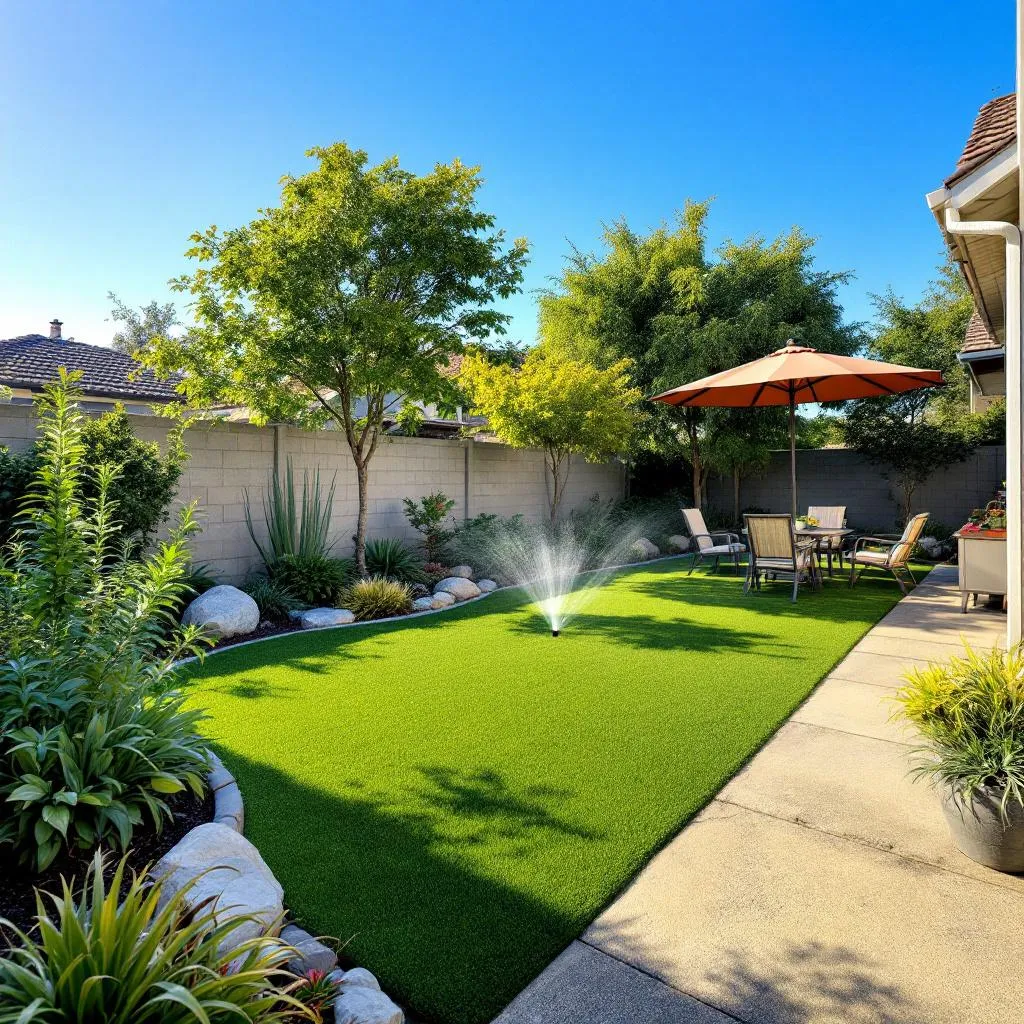
How Artificial Turf Saves Water and Protects the Environment
If you’re wondering how artificial turf saves water and whether it actually helps the environment, the short answer is: it can dramatically reduce outdoor water use, lower your bills, and lessen your household’s environmental footprint—especially in dry or drought-prone regions.
Below, we’ll unpack exactly how much water is at stake, what the environmental trade-offs look like, and how water savings connect to a bigger picture of sustainability, including reduced chemicals and maintenance.
How Artificial Turf Saves Water (In Plain Numbers)
Traditional lawns are thirsty. Maintaining that bright green look often requires thousands of gallons of water every year.
Typical Water Use: Natural Grass vs. Artificial Turf
- Natural grass lawns often require:
- 20–60 gallons of water per square foot per year, depending on climate and grass type
- Frequent watering during hot months to avoid brown patches
- Artificial turf lawns require:
- No regular irrigation to stay green
- Only occasional rinsing to remove dust, debris, or pet waste
Simple Example: A 1,000-Square-Foot Lawn
For a modest 1,000-square-foot yard:
- Natural grass can use:
- 20,000–60,000 gallons of water per year
- Artificial turf can cut that down to:
- A fraction of that—mainly from occasional rinsing or cooling
Over a decade, that’s potentially hundreds of thousands of gallons saved, just from one yard.
Why Water Savings Matter Right Now
Water-saving benefits aren’t just about a lower utility bill—they’re directly tied to environmental impact and regional resilience.
Growing Pressure on Water Supplies
Many communities face:
- More frequent droughts
- Restrictions on outdoor watering
- Rising water rates to manage stressed infrastructure
In this context, outdoor landscaping is a major lever:
- In some regions, up to 50–70% of household water use goes to outdoor irrigation.
- Reducing or eliminating lawn watering can help neighborhoods:
- Use less water during peak demand
- Reduce strain on local reservoirs and groundwater
Environmental Impact of Water Overuse
Excess lawn irrigation contributes to:
- Depleted aquifers and reservoirs
- Higher energy use to pump and treat water
- Runoff that can carry fertilizers and pesticides into local streams and rivers
By drastically cutting irrigation, artificial turf reduces the need for both water and the energy required to move and treat it.
Environmental Benefits Beyond Water Savings
Water conservation is the starting point—but it’s not the only environmental benefit.
Reduced Chemical Use and Cleaner Runoff
Real grass often depends on:
- Chemical fertilizers
- Herbicides
- Pesticides
- Weed-control treatments
When you reduce or replace traditional grass areas, you’re also reducing chemical inputs. This helps:
- Limit chemical runoff into local waterways
- Protect soil health and micro-ecosystems
- Create safer outdoor spaces for:
- Children
- Pets
- Pollinators in planted beds surrounding turf areas
You can explore how lowering water use often goes hand in hand with reducing yard chemicals in more depth on the chemical reduction turf page, where the focus is specifically on how less irrigation and synthetic turf systems can lead to cleaner, healthier landscapes.
Lower Mowing and Maintenance Emissions
With artificial turf, there’s:
- No mowing
- No gas-powered trimmers or blowers for routine maintenance
- Fewer deliveries of lawn products (fertilizers, seeds, etc.)
This can help reduce:
- Greenhouse gas emissions from small engines
- Air pollution from fuel combustion and spilled fuel
- Noise pollution in your neighborhood
Reduced Soil Erosion and Mud
While artificial turf doesn’t replace all the ecological functions of natural groundcover, it can:
- Stabilize surfaces that would otherwise be:
- Dusty
- Muddy
- Prone to erosion
- Combat runoff in high-traffic areas like:
- Playgrounds
- Sports areas
- Heavily used backyards
Where Water-Saving Turf Makes the Most Sense
Artificial turf’s water-saving benefits are especially relevant in certain conditions.
Best-Fit Scenarios
Artificial turf tends to offer the biggest environmental upside when:
- You live in a drought-prone or arid region
- Lawn irrigation is already heavily restricted
- Your natural grass yard:
- Struggles to thrive
- Requires constant watering to stay green
- You have high-traffic areas where grass dies easily, like:
- Play zones
- Dog runs
- Sports spaces
In these cases, the water and chemical savings can clearly outweigh the resource use involved in manufacturing, installing, and maintaining turf.
Complementing Native and Drought-Tolerant Landscaping
Artificial turf doesn’t have to replace all living plants. Many environmentally conscious homeowners and designers now:
- Pair artificial turf with:
- Native plants
- Drought-tolerant shrubs and trees
- Drip-irrigated flower beds
- Use turf only where:
- A clean, durable, green surface is needed (e.g., play space or path)
- Natural grass would be too water-intensive
This “hybrid” approach:
- Preserves biodiversity
- Supports pollinators
- Maintains shade and habitat
- Still cuts overall landscape water use dramatically
How Water Savings Translate to Cost and Carbon Reductions
Artificial turf’s water-saving benefits ripple into other forms of savings.
Lower Water Bills Over Time
Reducing or eliminating regular irrigation can:
- Cut monthly water costs, especially in summer
- Stabilize household expenses in areas where water rates are rising
- Provide a predictable landscaping cost instead of seasonal spikes
While turf installation has a higher upfront cost, many homeowners find:
- The long-term water and maintenance savings help balance or offset that investment, particularly in dry regions.
Lower Indirect Energy Use
Every gallon of water that flows to your yard has already required:
- Pumping
- Treatment
- Distribution
These processes use energy and generate emissions. When you use less water, you’re indirectly:
- Lowering the energy footprint of your household
- Supporting grid resilience during peak demand periods
This is a subtle but meaningful way that water-saving choices contribute to climate goals.
Addressing Common Concerns About Artificial Turf and the Environment
Water-saving benefits are clear, but they’re not the only factor in sustainable decision-making. These are some of the most frequent concerns people have.
Concern 1: “Isn’t Artificial Turf Made of Plastic?”
Artificial turf is typically made from synthetic materials, often plastics like polyethylene or polypropylene. This raises valid questions about:
- Resource use in manufacturing
- End-of-life disposal and recyclability
However, when evaluating environmental impact, it’s important to compare:
- Total lifecycle of a turf system
vs. - Ongoing water, chemical, and energy use of a natural grass lawn
In dry regions where grass requires heavy irrigation and intense chemical treatment to survive, artificial turf’s water and chemical savings can be significant enough to justify its material footprint—especially when paired with:
- Responsible installation
- Thoughtful design
- Cooling strategies (shade trees, lighter infill, etc.)
Concern 2: “Does Artificial Turf Overheat?”
Artificial surfaces can get warmer than natural grass, particularly in direct sun. You can:
- Mitigate heat buildup by:
- Adding shade (trees, pergolas, shade sails)
- Choosing lighter-colored or specialized infill options
- Using turf primarily in areas where people wear shoes (e.g., sports areas)
- Reduce occasional rinsing water use by prioritizing shade and smart design from the start
Balancing comfort, safety, and water savings is part of making an informed choice.
Concern 3: “What About Local Ecosystems?”
A natural lawn can provide some habitat, though often limited if it’s heavily treated with chemicals and mowed frequently. A more holistic strategy is to:
- Use artificial turf where:
- Durability is critical
- Water is scarce
- Surround turf with:
- Native shrubs
- Trees
- Pollinator-friendly plants
- Mulched beds
This approach:
- Maintains ecological function where it matters most
- Still leverages how artificial turf saves water in key high-use zones
Connecting Water Savings with Chemical Reduction
The more you reduce lawn irrigation and conventional turf areas, the less incentive—and often the less necessity—you have to use:
- Fertilizers to “boost” growth
- Herbicides to manage weeds in struggling grass
- Pesticides for lawn pests that thrive in lush, overwatered environments
This means that saving water often goes hand in hand with using fewer chemicals. If you’re especially concerned about:
- Kids or pets playing outdoors
- Chemical runoff into local waterways
- Long-term soil and plant health
It’s worth exploring how water-conscious landscapes and artificial turf can help you both conserve water and reduce your reliance on lawn chemicals. You can dive deeper into this angle on the chemical reduction turf page, where the link between turf choices, reduced chemical use, and overall environmental impact is explored in more detail.
Practical Ways to Maximize Water-Saving Benefits
If you’re considering turf primarily to conserve water, you can design your space to get the most environmental benefit.
Design Strategies
- Right-size the turf area
- Use turf where you need a durable, green surface
- Leave room for native plants, trees, and mulch elsewhere
- Prioritize shade
- Plant trees or add structures to reduce heat buildup
- Decrease the need for cooling rinses
- Optimize drainage
- Ensure turf is installed over a base that manages stormwater well
- Consider integrating permeable layers to minimize runoff
Care and Cleaning with Conservation in Mind
- Spot-clean rather than rinsing large areas
- Use a leaf blower or broom for debris instead of hosing
- Reserve hosing for:
- Pet areas
- Occasional refresh during dusty seasons
FAQ: Water-Saving Benefits and Environmental Impact of Artificial Turf
| Question | Answer |
|---|---|
| How exactly does artificial turf save water? | It eliminates the need for regular lawn irrigation. Natural grass can use 20–60 gallons of water per square foot per year, while artificial turf only needs occasional rinsing, dramatically reducing total water consumption. |
| Is artificial turf environmentally friendly? | It can be, especially in areas where natural grass requires heavy irrigation and chemicals to survive. Water savings, reduced chemical use, and less mowing can offset some of the environmental costs of manufacturing turf. |
| How much water can a typical homeowner save? | A 1,000-square-foot natural lawn can require 20,000–60,000 gallons of water per year. Replacing high-use, high-water areas with artificial turf can save tens of thousands of gallons annually. |
| Does artificial turf require chemicals? | It doesn’t need fertilizers, herbicides, or pesticides to stay green. This can significantly reduce chemical runoff into local waterways and create a safer play surface. For more on this, see the chemical reduction turf resources. |
| Will I still need to hose down artificial turf? | Occasionally, yes—for dust, debris, or pet waste. But this water use is typically far lower than regular lawn irrigation, especially during hot seasons. |
| Does artificial turf get hotter than natural grass? | Yes, it can be warmer in direct sun. Heat can be mitigated by adding shade, using specific infill types, and limiting its use in areas where people are likely to be barefoot for long periods. |
| What about wildlife and pollinators? | Turf itself doesn’t offer the same ecological benefits as diverse plantings. The most sustainable approach is to combine artificial turf in high-use areas with native plants, trees, and pollinator-friendly beds elsewhere in the yard. |
| Is artificial turf a good idea in wet climates? | In very wet regions where grass grows easily without much irrigation, the water-saving benefits may be smaller. In those cases, focusing on native, low-maintenance landscapes might provide similar environmental benefits. |
| How does artificial turf impact my water bill? | By dramatically reducing outdoor water use, it can lower monthly bills and protect you from spikes in cost during summer or drought-related rate increases. |
The Takeaway: Thinking Holistically About Water, Turf, and the Environment
Understanding how artificial turf saves water is one piece of a bigger environmental puzzle. For many homeowners—especially in dry or drought-prone areas—artificial turf can:
- Cut outdoor water use by tens of thousands of gallons per year
- Reduce reliance on lawn chemicals
- Minimize mowing and maintenance emissions
- Provide durable, usable green space year-round
The most sustainable choice often combines:
- Targeted use of artificial turf in high-traffic, high-water-demand areas
- Native and drought-tolerant planting elsewhere
- Thoughtful design that considers shade, drainage, and comfort
By focusing on water savings as a central goal, you can design a landscape that is not only easier to maintain, but also more aligned with long-term environmental health.
Explore Related Turf Resources
Related Turf Guides
- Accessible Drainage Solutions for Turf: The Key to Truly Senior-Friendly Outdoor Spaces
If you’re exploring senior-friendly turf, accessible drainage solutions for turf are just as important as the turf itself.
- Aesthetic Comparison: Turf vs. Grass (and What Actually Looks Better Long-Term)
If you’re weighing turf pros and cons, the **aesthetic differences between turf and grass** are probably at the top of your list.
- Annual Turf Care Calendar: Your Simple, Seasonal Guide to a Healthier Lawn
If you’re wondering, “What should I be doing for my lawn right now?” the answer lives inside an **annual turf care calendar**.
- Are luxury artificial turf options worth the investment for DFW homeowners?
Yes, upgrading to luxury artificial grass offers unmatched aesthetics, superior durability, and a premium feel that significantly elevates your home’s outdoor living experience and long-term value.
- Are you tired of staring at a dull, high-maintenance patch of grass?
**Yes, you can absolutely transform your yard into a stunning, functional space with a backyard landscaping makeover, and synthetic turf is often the key ingredient for DFW homeowners.**