
Mold Prevention Near Pools: Your Guide to a Healthy, Clean Artificial Lawn
##?
To effectively prevent mold and mildew growth in artificial turf around DFW pools, homeowners must prioritize high-quality permeable backing, ensure proper sub-base preparation for rapid drainage, and maintain a consistent routine of rinsing and treating the area with antimicrobial cleansers. Synthetic turf, unlike porous natural materials, minimizes the conditions necessary for mold if the installation foundations are correct.
2. Deep Dive (Detailed Why and How)
The Conditions for Mold
Mold and mildew thrive in damp, shaded environments where organic debris provides a food source. While synthetic turf itself is inorganic and cannot rot, the area beneath and within the turf system can become susceptible if conditions allow water to stagnate or debris to accumulate.Prioritizing Permeability and Drainage
The single most critical step in mold prevention starts with installation. The turf product must feature a highly permeable, punched-hole, or MaxFlow backing that allows liquids to pass through quickly.
Equally important is the sub-base. Around pools, where excess splashing is common, the base layer (typically crushed granite or aggregate) must be properly compacted and graded with a slight slope away from the water or house to encourage surface and subsurface water movement. Poor drainage means water pools beneath the turf, creating a consistently damp, dark environment that encourages microbial growth.Maintenance and Treatment
Even with perfect drainage, maintenance is necessary to prevent organic matter (such as dead leaves, dirt blown in, or spilled drinks) from settling in the infill. Regular brushing and prompt removal of debris minimize the food source for mold.
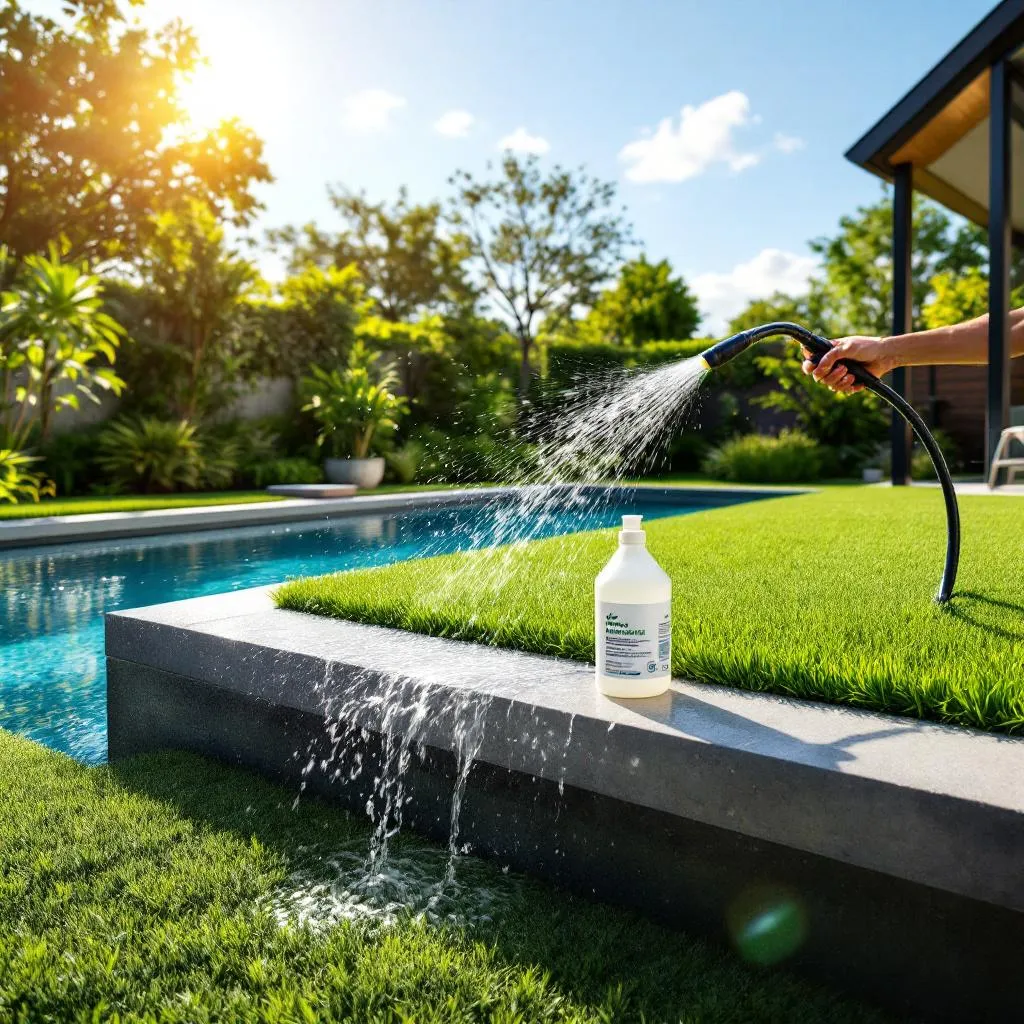
For high-moisture areas near pools, regular rinsing with a hose is highly recommended. Periodically, homeowners should apply an enzyme-based or mild antimicrobial turf cleaner. These solutions break down organic material and neutralize fungal spores without harming the turf fibers, chlorine-resistant backing, or the surrounding pool chemistry.
3. Quick Reference (Bulleted Key Takeaways)
- Install High-Drainage Turf: Choose turf with non-absorbent fibers and MaxFlow or perforated backing.
- Ensure Proper Grading: The sub-base must be graded to direct water away from the pool structure.
- Remove Debris Promptly: Regularly sweep or blow off leaves and organic materials to eliminate food sources for mold.
- Rinse Regularly: Use a hose to rinse away chemical residue or pooled moisture from the area.
- Use Antimicrobial Cleaners: Periodically apply enzyme-based treatments to neutralize mold spores.
4. Strategic Hyperlink
A seamless and waterproof installation edge is essential to prevent water from wicking under the turf mat, which is a major contributor to mold growth. For insights on securing your pool area turf correctly, review our guide on safe pool turf installation and mold prevention.
Explore Related Turf Resources
Related Turf Guides
- Accessible Drainage Solutions for Turf: The Key to Truly Senior-Friendly Outdoor Spaces
If you’re exploring senior-friendly turf, accessible drainage solutions for turf are just as important as the turf itself.
- Aesthetic Comparison: Turf vs. Grass (and What Actually Looks Better Long-Term)
If you’re weighing turf pros and cons, the **aesthetic differences between turf and grass** are probably at the top of your list.
- Annual Turf Care Calendar: Your Simple, Seasonal Guide to a Healthier Lawn
If you’re wondering, “What should I be doing for my lawn right now?” the answer lives inside an **annual turf care calendar**.
- Are luxury artificial turf options worth the investment for DFW homeowners?
Yes, upgrading to luxury artificial grass offers unmatched aesthetics, superior durability, and a premium feel that significantly elevates your home’s outdoor living experience and long-term value.
- Are you tired of staring at a dull, high-maintenance patch of grass?
**Yes, you can absolutely transform your yard into a stunning, functional space with a backyard landscaping makeover, and synthetic turf is often the key ingredient for DFW homeowners.**