
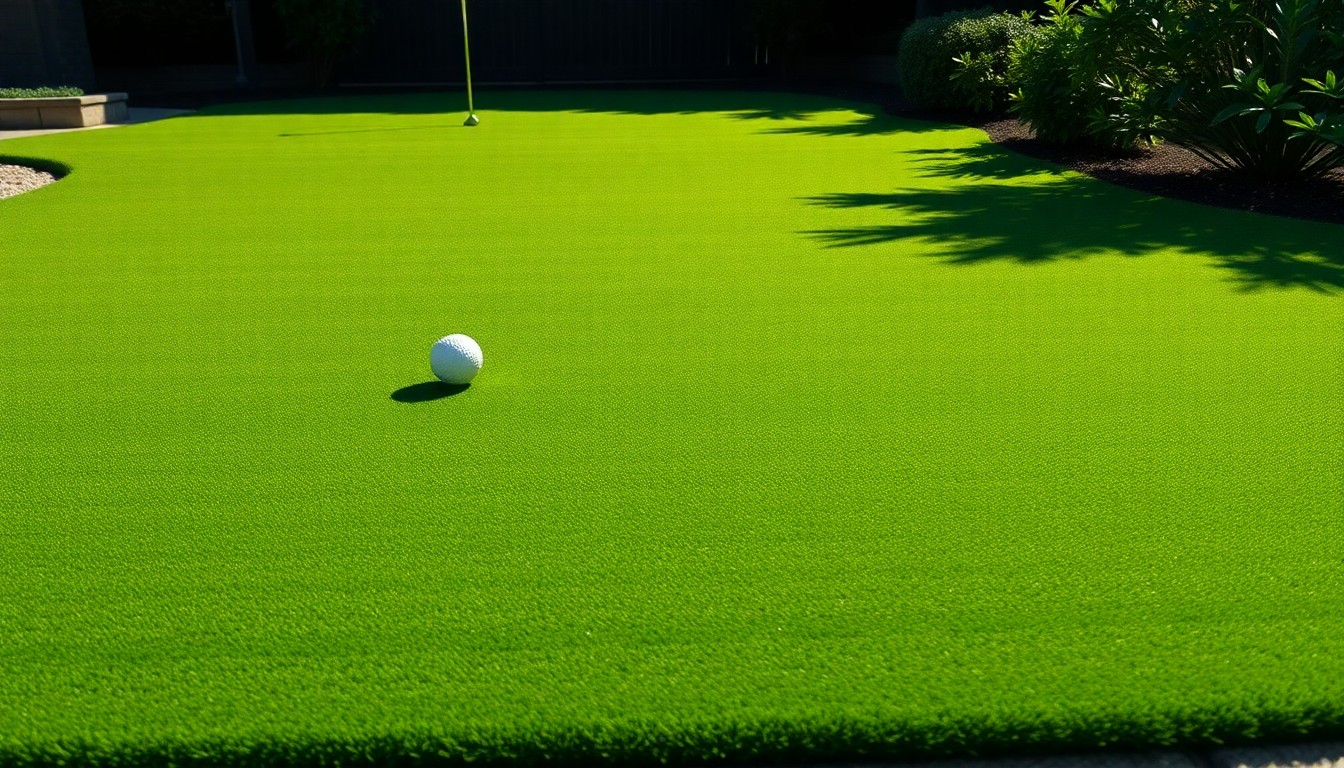
Putting Green Contours & Slopes: Mastering the Break on Your DFW Synthetic Turf
##?
The performance and challenge of a synthetic putting green are primarily defined by its contours and slopes, which dictate the speed and break of the golf ball. Professional-grade turf installations achieve realistic, complex movement by carefully sculpting the sub-base with varying elevation changes and undulations, ensuring the green provides a consistent, true roll while testing the golfer’s reading and stroke accuracy.
2. Deep Dive (Detailed Why and How)
The Crucial Role of Slope in Playability
Simply installing flat artificial turf results in a repetitive and dull putting experience. The true value of a custom putting green comes from integrating slopes—the measurable elevation change across the surface—that mimic those found on world-class natural courses. Slopes create the "break," or the sideways movement of the ball, forcing the golfer to account for gravity and speed.
For DFW homeowners, designing these slopes requires a balance. They must be challenging enough to improve your short game but not so extreme that they make practice frustrating. Our design process ensures that slopes are both realistic and playable for every skill level.Contours vs. Slopes: Understanding the Nuance
While the slope is the overall tilt of the entire green (e.g., draining from back to front), contours are the subtle, rolling features (or undulations) within the green surface itself. Contours create small breaks, ridges, and valleys that add complexity.
These features are engineered into the base layers beneath the turf before installation. By using crushed aggregate or specialized foam panels, we can sculpt smooth, transitionary features that prevent unnatural jumps or bumps in the roll. This granular attention to the sub-base ensures that the synthetic turf surface translates the underlying topography perfectly.Consistency is Key
One major advantage of synthetic turf is the consistency of the ball break. Unlike natural greens that change based on mowing height, aeration, and time of day, a quality synthetic green maintains its slopes and contours exactly as designed. This consistency allows for predictable practice, helping golfers better learn how to read greens without the variable interference of natural grass.
For maximum speed and trueness in the DFW heat, we ensure proper compaction of the contours during construction. This prevents settling and guarantees that the green remains level and firm for years of focused practice.
3. Quick Reference (Bulleted Key Takeaways)
- Slopes (Overall Tilt): Define the primary direction and severity of the ball's break, essential for challenging putts.
- Contours (Undulations): Introduce subtle, localized breaks, ridges, and complex rolls for maximum realism.
- Sub-Base Foundation: Contours are built into the foundational layer (crushed rock/foam) beneath the turf for permanent shape.
- Design Balance: Designs aim for challenging but playable breaks, suitable for practice across various distances and pin placements.
- Practice Consistency: Synthetic contours maintain shape and speed, offering a reliable surface for honing your putting skills.
4. Strategic Hyperlink
Ready to turn your backyard into a golfing sanctuary? Learn how to incorporate these professional design elements into your space by designing the slopes and contours of your putting green.
Explore Related Turf Resources
Related Turf Guides
- Backyard Golf Ideas: How to Turn Your Yard into a Personal Putting Playground
If you’re looking for backyard golf course ideas that feel fun, low-maintenance, and actually help your game, start with this simple principle:
- Backyard Putting Green Cost Estimate
The cost of an expertly installed artificial turf putting green for a DFW home typically ranges based on size, complexity, turf quality, and necessary ground preparation. Homeowners should anticipa...
- Ball Roll Speed Optimization: The Definitive Guide to Achieving Tournament-Grade Consistency on Your Artificial Putting Green
Ball Roll Speed Optimization: The Definitive Guide to Achieving Tournament-Grade Consistency on Your Artificial Putting Green
- Best Home Chipping Practice Turf
The ideal artificial turf for a home chipping practice area is a densely packed, short-pile synthetic grass designed to replicate the tight lie of a professional fairway or fringe, ensuring clubs interact cleanly with the "ground" for consistent ball striking and realistic performance.
- Can I install artificial turf directly over a concrete patio or slab?
Yes, absolutely! Installing artificial turf over concrete is an excellent way for DFW homeowners to transform drab, hard surfaces into beautiful, soft, and functional green spaces.