
Backyard Golf Ideas: How to Turn Your Yard into a Personal Putting Playground
If you’re looking for backyard golf course ideas that feel fun, low-maintenance, and actually help your game, start with this simple principle:
Answer first:
The easiest, most effective way to build backyard golf into your life is to design around a small, smart putting green turf area—then layer on creative practice zones (chipping, short-game challenges, and “mini-holes”) as your space and budget allow.
Everything else is an extension of that core idea:
Backyard golf works best when your putting green turf is the heartbeat of your design.
Why Backyard Golf Is Worth Thinking About Right Now
Backyard golf ideas are more relevant than ever because they solve multiple lifestyle needs at once:
- Convenience: Practice real shots in seconds—no driving to the course.
- Stress relief: Short, focused putting sessions are surprisingly meditative.
- Family time: Kid-friendly games instead of screen time.
- Property appeal: A well-designed putting area looks more like landscaping than “sports gear.”
- Year-round skill building: Especially when paired with indoor putting greens for bad weather days.
When you design with putting green turf as your anchor, you’re not just installing a practice spot—you’re creating a space you’ll actually want to use and show off.
Backyard Golf Ideas: Start with the Putting Green Turf
Think of your backyard putting green as your “home hole.” Everything else—targets, tee boxes, chipping zones—orbit around it.
- Key decisions to make up front:
-
Size:
- Small: 6' x 10' – basic putting, one or two cups.
- Medium: 10' x 15' – multiple breaks, chips from the fringe.
- Large: 15' x 25'+ – multiple cups, true “mini-green” feel.
-
Shape:
- Organic kidney shape for a natural look.
- Long and narrow for straight-putt practice.
- L-shaped or irregular for variety and interest.
-
Speed & feel:
- Faster turf (stimpmeter 9–11) for stroke precision.
- Slightly slower for casual family play and confidence-building.
-
Placement:
- Visible from the house to invite use.
- Away from heavy foot-traffic paths.
- Oriented to avoid direct, harsh afternoon sun if possible.
Design your putting green first; then build your backyard golf course ideas around it.
Simple Backyard Golf Course Ideas for Any Space
You don’t need a huge yard to create something fun and functional. Here’s how to think in layers.
Tier 1: The Minimalist Putting Setup
Perfect for small yards, patios, or townhomes.
- Core elements:
- A single, well-placed putting green turf area.
- 1–3 cups at different locations.
- Subtle undulations or slopes (even small changes matter).
- Practice you can get:
- Start-line drills and short putts (3–6 feet).
- Lag putting (15–20 feet if your space allows).
- Pre-shot routine and confidence building.
- Design ideas:
- Integrate the green into existing landscaping beds.
- Use pavers or decorative stone as a “border” to make it feel intentional.
- Add a bench or small seating area next to the green.
Tier 2: Backyard Short-Game Zone
Step up from a simple green to a mini short-game practice area.
- Add these around your putting turf:
-
Chipping pads:
- Small turf or natural grass spots 10–30 yards away.
- Different lies: tight, semi-rough, light rough.
-
Fringe ring:
- Slightly longer turf bordering your putting green.
- Forces you to practice controlling rollout and spin.
-
Multiple cup positions:
- 3–5 flags or cup locations.
- Some on slopes, some fairly flat.
- Types of shots you can practice:
- Bump-and-run shots.
- Lofted chips over a small obstacle.
- Low spinners vs. high soft-landing shots (depending on surface).
This setup still centers on your putting green turf but mimics what you face around real greens.
Tier 3: Backyard “Par-3 Course” Feel
For bigger yards or golf-obsessed households.
- Layer on these ideas:
-
Multiple tee boxes:
- Design “holes” that start from different corners of the yard.
- Aim to the same green from 20, 40, 60+ yards.
-
Alternate targets:
- Pop-up chipping nets.
- Flagsticks set at different elevation points.
- Ground-level markers for landing zones.
-
Natural “hazards” for fun:
- A dry creek bed of stones as a lateral hazard.
- A small bunker (if you’re OK with sand).
- Shrubs, trees, or garden beds to shape shot selection.
You’re still anchored by your central putting green, but your yard starts to feel like an actual course.
Backyard Golf Ideas by Space Type
Small Yards & Patios
Focus on efficiency and multipurpose design:
- Narrow “putting lane” down one side of the yard.
- L-shaped green tucked around a patio corner.
- Turf strip with removable cups for flexible layout.
- Portable chipping mat that stores easily.
Medium Yards
Balance beauty and utility:
- 2–3 chipping zones feeding into one green.
- Garden beds or stonework framing the putting green.
- A firepit or seating area overlooking the “course.”
Large Yards
Lean into full-course creativity:
- Multiple greens or one main green with satellite targets.
- Walking paths that double as “cart paths.”
- Elevated tees for downhill wedge shots.
- Family-friendly loop of 3–6 “holes” with simple rules.
Using Putting Green Turf as Landscaping, Not Just Practice Space
One reason backyard golf ideas sometimes get vetoed at home: people imagine a range mat jammed in a bare yard.
Putting green turf can actually look like high-end landscaping:
- Soft, flowing edges that blend into natural grass or gravel.
- Contrasting textures: shorter turf for the green, longer for “rough.”
- Integrated lighting around the perimeter for evening putting.
- Border plantings (low shrubs, ornamental grasses) that frame the space.
Think of your backyard golf area as a garden that happens to be playable.
Backyard Golf + Indoor Putting: A Year-Round Strategy
One of the smartest ways to make your backyard golf ideas pay off is to connect them to your indoor practice.
On bad-weather days or in winter, an indoor putting green lets you:
- Groove stroke mechanics (path, face angle, tempo).
- Run drills that don’t require space (gate drills, straight-line putts).
- Keep your feel sharp when you can’t be outside.
Then, when conditions are good, your backyard putting green turf becomes the “real-world test lab”:
- Take the stroke you refined indoors and see how it holds up with breaks and distances.
- Practice pressure putts in a more game-like environment.
- Combine indoor and outdoor sessions for consistent improvement.
Designing your yard with this in mind means:
- Matching or approximating indoor/outdoor turf speeds.
- Designing at least one straight, indoor-style putt on your backyard green.
- Creating a few “transition drills” you do inside, then outside.
Creative Backyard Golf Games and Challenges
Once the physical space is set, make it fun and engaging so you actually use it.
Solo Practice Games
-
Around the World:
- Place tees in a circle, 3–6 feet from a hole.
- Putt from each spot; start over if you miss.
-
Up-and-Down Challenge:
- Drop 5 balls in a chipping zone.
- Score 2 points for an up-and-down, 1 for two-putt, 0 for three-putt+.
-
Ladder Lag Putting:
- Set targets at 10, 20, 30 feet.
- Putt 3 balls to each, trying to stop within a 3-foot “circle.”
Family & Friends Games
-
Backyard Scramble:
- Teams alternate chips and putts to each hole.
- Lowest combined score wins a mini “match.”
-
HORSE – Golf Edition:
- One player calls a shot (chip from X spot to Y hole).
- Others must match or get a letter.
-
Obstacle Putting:
- Add cones, garden tools, or toys as obstacles.
- Create fun “crazy golf” style routes.
Fun is a design feature. If your backyard golf space invites games, you’ll practice more, without it feeling like work.
Design Considerations: Keeping It Practical
Maintenance
-
Putting green turf:
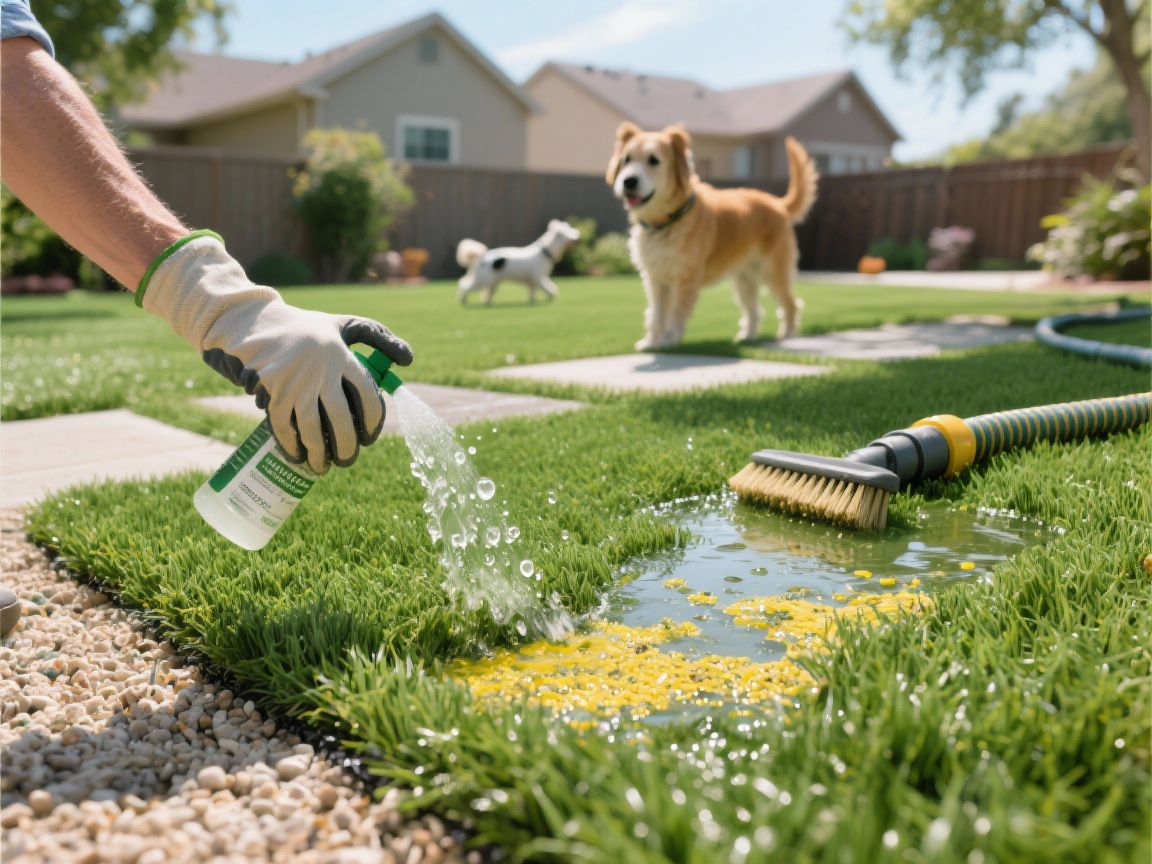
- Brush occasionally to keep fibers upright.
- Rinse debris and dust as needed.
- Check infill levels where applicable.
-
Surrounds:
- Choose low-maintenance plants and groundcovers.
- Use edging to keep natural grass from creeping into turf.
- Plan drainage so water doesn’t pool on the green.
Safety
- Aim shots away from windows, play areas, or neighbors’ yards.
- Choose practice balls (foam, almost-golf, wiffle) for closer shots.
- Make sure surfaces near the green are non-slip, especially if wet.
Budget Friendliness
You can scale backyard golf course ideas to almost any budget:
- Start with a small putting pad and one chipping mat.
- Add more cups, fringe, and tee areas over time.
- Use DIY elements (pallet tee boxes, simple flags, inexpensive markers).
Think of it as a modular project: the core is your putting green turf; everything else can be phased in.
FAQ: Backyard Golf Ideas & Putting Green Turf
| Question | Answer |
|---|---|
| How much space do I need for a backyard putting green? | Even a 6' x 10' area can work for basic putting. For multiple cups and chipping, aim for 10' x 15' or larger. The key is a clear, level-ish area that you can access easily. |
| Is putting green turf better than natural grass for backyard golf? | For most people, yes. Putting green turf offers consistent speed , much lower maintenance , and stays usable year-round in many climates. Natural grass can be great, but it’s time- and water-intensive to keep at “green” quality. |
| Can I practice real golf shots in my yard safely? | Yes, with planning. Use shorter shots (chips and pitches) , choose safe practice balls for tight spaces, and design shot direction away from windows and neighbors. Larger yards can handle full wedges with more care. |
| How do indoor putting greens connect with backyard golf designs? | Indoor greens help you refine your stroke mechanics regardless of weather. Your backyard putting green then becomes the place to test that stroke under more realistic conditions—breaks, slopes, and distance control. Aligning turf speed and layout between the two makes practice seamless. |
| Do I need multiple holes in my backyard putting green? | No, but it helps. A single cup is enough for basic drills, while 3–5 holes let you vary putt lengths, angles, and slopes, making practice more engaging and realistic. |
| Can backyard golf increase my home’s value? | It can enhance curb appeal and perceived lifestyle value , especially when the putting green turf is integrated as attractive landscaping. It’s typically seen as a nice bonus rather than a primary value driver. |
| What’s an easy first step if I’m unsure where to start? | Begin with a small, dedicated putting area in part of your yard you already use or see often. Once that’s in place, you can add chipping spots, games, and design details over time as your backyard golf ideas evolve. |
By centering your backyard golf plans around a well-thought-out putting green turf area, then slowly layering in chipping zones, creative games, and even complementary indoor putting greens, you create more than a novelty—you build a practical, inviting space that keeps you connected to the game every day.
Explore Related Turf Resources
Related Turf Guides
- Backyard Putting Green Cost Estimate
The cost of an expertly installed artificial turf putting green for a DFW home typically ranges based on size, complexity, turf quality, and necessary ground preparation. Homeowners should anticipa...
- Ball Roll Speed Optimization: The Definitive Guide to Achieving Tournament-Grade Consistency on Your Artificial Putting Green
Ball Roll Speed Optimization: The Definitive Guide to Achieving Tournament-Grade Consistency on Your Artificial Putting Green
- Best Home Chipping Practice Turf
The ideal artificial turf for a home chipping practice area is a densely packed, short-pile synthetic grass designed to replicate the tight lie of a professional fairway or fringe, ensuring clubs interact cleanly with the "ground" for consistent ball striking and realistic performance.
- Can I install artificial turf directly over a concrete patio or slab?
Yes, absolutely! Installing artificial turf over concrete is an excellent way for DFW homeowners to transform drab, hard surfaces into beautiful, soft, and functional green spaces.
- Drawbacks of Artificial Turf Explained: What Most Comparisons Leave Out
If you’re comparing turf pros & cons, you’ve probably heard all the upsides of synthetic grass: green all year, low mowing, no mud. But the **drawbacks of artificial turf explained clearly and hone...