
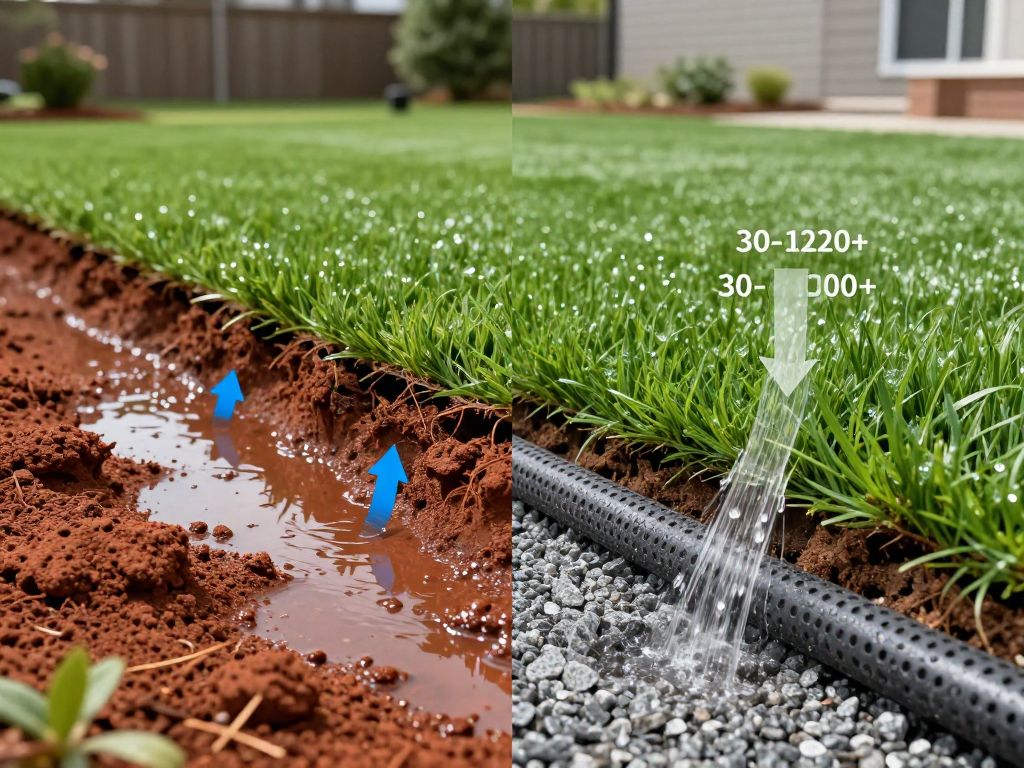
Soil & Drainage Comparison: Ensuring the Longevity of Your Artificial Turf Investment
##?
For synthetic turf installation to be successful and long-lasting, the existing soil and sub-base drainage capability is paramount. While artificial turf itself possesses a superior drainage rate—often ranging from 30 to over 1,200 inches per hour—if the underlying soil, especially dense clay, retains water, you risk standing water, shifting sub-base, and premature turf failure. Proper ground preparation and sub-base installation are therefore essential to maximize the lifespan and utility of your artificial lawn.
2. Deep Dive (Detailed Why and How)
The Superior Drainage of Synthetic Grass
Natural grass drains relatively poorly, typically handling only one to three inches of water per hour. This is often why natural lawns become muddy, spongy, and prone to puddles after heavy rainfall.
In contrast, modern artificial turf is engineered for extreme porosity. The turf backing contains thousands of perforations that allow water to pass through quickly. However, this superior surface drainage is only as effective as the material beneath it.The Critical Role of Sub-Base and Soil
When installing artificial turf over existing soil, the most common installation method, the natural drainage rate of the soil must be taken into account.
Dense soils, such as those rich in clay, are notorious for retaining water. If water cannot penetrate the soil easily, it will accumulate between the turf backing and the top layer of the sub-base. Over time, this pooling can degrade the installation, compromise the integrity of the base layer, and lead to uneven turf surfaces.
To mitigate this, professional installers always remove the existing grass and topsoil and replace it with a highly permeable sub-base. This foundational layer, often crushed granite or decomposed granite (DG), is typically compacted to a depth of three to four inches. This engineered base acts as a filter and a fast conduit, ensuring water efficiently drains away into the underlying native soil.
If your property is known for poor native drainage, additional measures may be necessary, such as installing perforated pipes or trenches beneath the sub-base to direct excess water away from the area. Ignoring these issues means the synthetic turf cannot perform as designed.
3. Quick Reference (Bulleted Key Takeaways)
- Turf Drainage Rate: Artificial turf drains significantly faster (30 to 1,200+ inches/hour) than natural grass (1–3 inches/hour).
- Soil Type Matters: Dense, clay-based soils can block the efficient drainage of artificial turf.
- Sub-Base is Essential: A compacted, highly permeable sub-base (crushed granite/DG) is mandatory to bridge the gap between turf drainage and native soil absorption.
- Preventing Puddles: Proper grading and installation techniques ensure water runs off the surface effectively and prevents standing water.
- Foundation Health: Poor drainage can lead to shifting sub-base materials and eventually degrade the turf installation itself.
4. Strategic Hyperlink
Ultimately, investing in proper drainage is investing in the lifespan and performance of your artificial lawn. To understand the wider implications of this foundational work, review our guide on how poor drainage affects property value.
Explore Related Turf Resources
Related Turf Guides
- Accessible Drainage Solutions for Turf: The Key to Truly Senior-Friendly Outdoor Spaces
If you’re exploring senior-friendly turf, accessible drainage solutions for turf are just as important as the turf itself.
- Aesthetic Comparison: Turf vs. Grass (and What Actually Looks Better Long-Term)
If you’re weighing turf pros and cons, the **aesthetic differences between turf and grass** are probably at the top of your list.
- Annual Turf Care Calendar: Your Simple, Seasonal Guide to a Healthier Lawn
If you’re wondering, “What should I be doing for my lawn right now?” the answer lives inside an **annual turf care calendar**.
- Are luxury artificial turf options worth the investment for DFW homeowners?
Yes, upgrading to luxury artificial grass offers unmatched aesthetics, superior durability, and a premium feel that significantly elevates your home’s outdoor living experience and long-term value.
- Are you tired of staring at a dull, high-maintenance patch of grass?
**Yes, you can absolutely transform your yard into a stunning, functional space with a backyard landscaping makeover, and synthetic turf is often the key ingredient for DFW homeowners.**