
The Definitive Guide to Advanced Golf Turf Technology for Discerning Homeowners
##?
Advanced golf turf technology refers to proprietary manufacturing processes that replicate the precise performance characteristics of professional natural greens, including consistent ball roll (stimpmeter speed), reliable impact absorption, and superior drainage. For homeowners looking to install a residential putting green, these technologies—such as specialized non-infill fibers, multi-layered backing, and heat reduction systems—ensure a consistent, championship-level playing surface with zero maintenance.
2. Deep Dive (Detailed Why and How)
For the serious golfer, a standard artificial turf installation is not sufficient. Achieving a professional-grade experience—one that truly improves your short game—requires turf engineered with advanced golf technology. This is where the difference between a novelty lawn patch and a high-performance practice facility becomes clear.
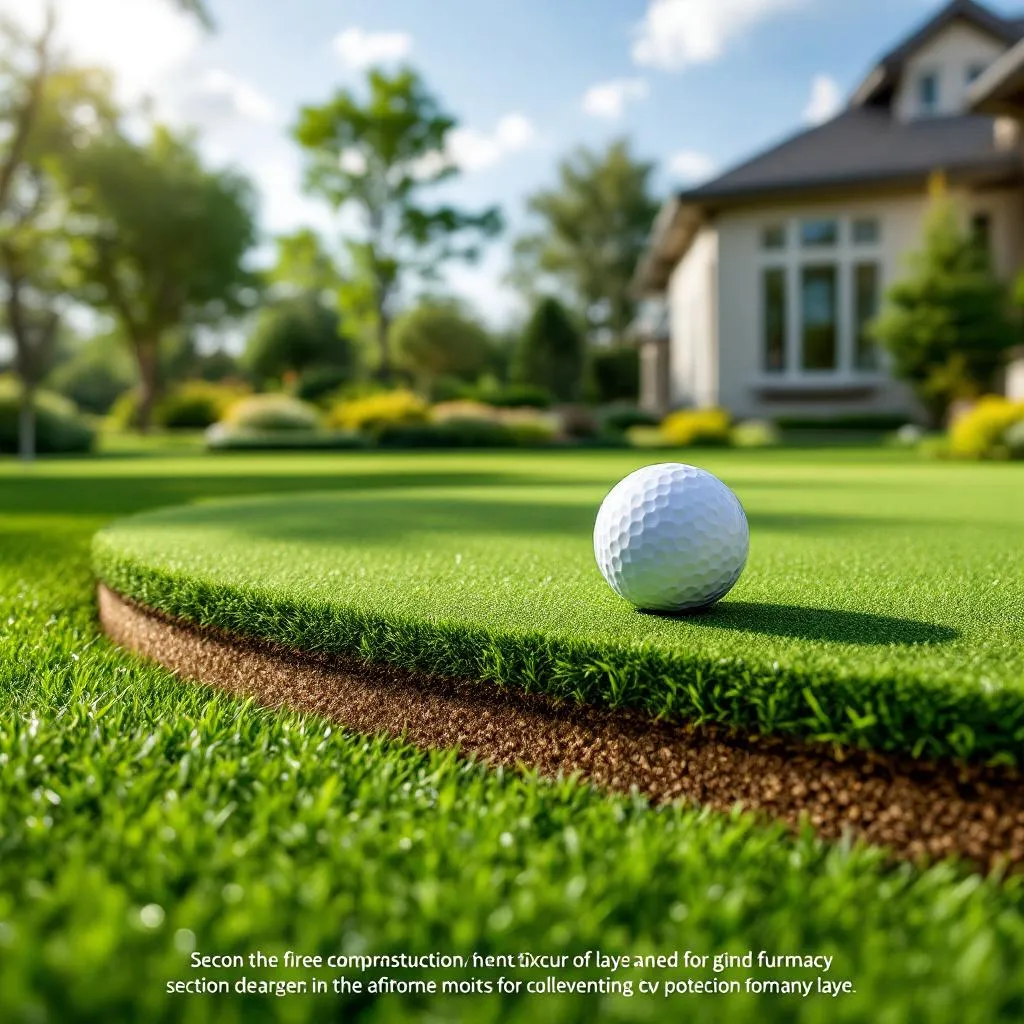
Modern golf turf utilizes polymer blends (often nylon/polyethylene mixes) specifically designed to stand up straight, maintaining their structure after impact and over years of heavy use. Unlike landscape turf, these fibers are dense and tightly woven to provide the necessary rigidity for true ball roll without requiring heavy sand infill.
A major technological leap is the development of non-infill or minimal-infill systems. Traditional putting greens relied heavily on infill to control speed and hold the fibers upright. Advanced systems achieve this fiber stability through dense stitching and proprietary blade shapes, drastically simplifying maintenance and eliminating the risk of messy infill migration.
Drainage technology has also been refined. High-performance backing systems now include punched holes or permeable material designs that allow water to flow rapidly through the turf structure. This prevents standing water, ensures the green is playable immediately after rain, and is critical for maintaining consistency in the DFW area’s fluctuating weather.
Finally, thermal management is a key advancement. While all synthetic turf absorbs some heat, premium golf turf is often treated with heat-reduction coatings or features lighter-colored fibers in the thatch layer to help keep the surface cooler during intense summer practice sessions.
3. Quick Reference (Bulleted Key Takeaways)
- Precision Ball Roll: Engineered fiber density ensures accurate and consistent stimpmeter speeds.
- Minimal Infill Required: Advanced construction reduces reliance on messy sand infill for a cleaner, lower-maintenance surface.
- Superior Shock Absorption: Allows for realistic chip shots and approach shots that check and hold.
- Rapid Permeability: Specialized backing facilitates quick drainage, ensuring playability in all weather.
- UV and Thermal Resistance: Proprietary materials prevent fading and mitigate heat buildup during peak sun exposure.
4. Strategic Hyperlink
Understanding the material science behind your green is essential for making the right investment. To see how these cutting-edge elements are applied across different playing styles, we recommend exploring our guide on utilizing advanced turf technology in different golf turf types.
Explore Related Turf Resources
Related Turf Guides
- Backyard Golf Ideas: How to Turn Your Yard into a Personal Putting Playground
If you’re looking for backyard golf course ideas that feel fun, low-maintenance, and actually help your game, start with this simple principle:
- Backyard Putting Green Cost Estimate
The cost of an expertly installed artificial turf putting green for a DFW home typically ranges based on size, complexity, turf quality, and necessary ground preparation. Homeowners should anticipa...
- Ball Roll Speed Optimization: The Definitive Guide to Achieving Tournament-Grade Consistency on Your Artificial Putting Green
Ball Roll Speed Optimization: The Definitive Guide to Achieving Tournament-Grade Consistency on Your Artificial Putting Green
- Best Home Chipping Practice Turf
The ideal artificial turf for a home chipping practice area is a densely packed, short-pile synthetic grass designed to replicate the tight lie of a professional fairway or fringe, ensuring clubs interact cleanly with the "ground" for consistent ball striking and realistic performance.
- Can I install artificial turf directly over a concrete patio or slab?
Yes, absolutely! Installing artificial turf over concrete is an excellent way for DFW homeowners to transform drab, hard surfaces into beautiful, soft, and functional green spaces.