
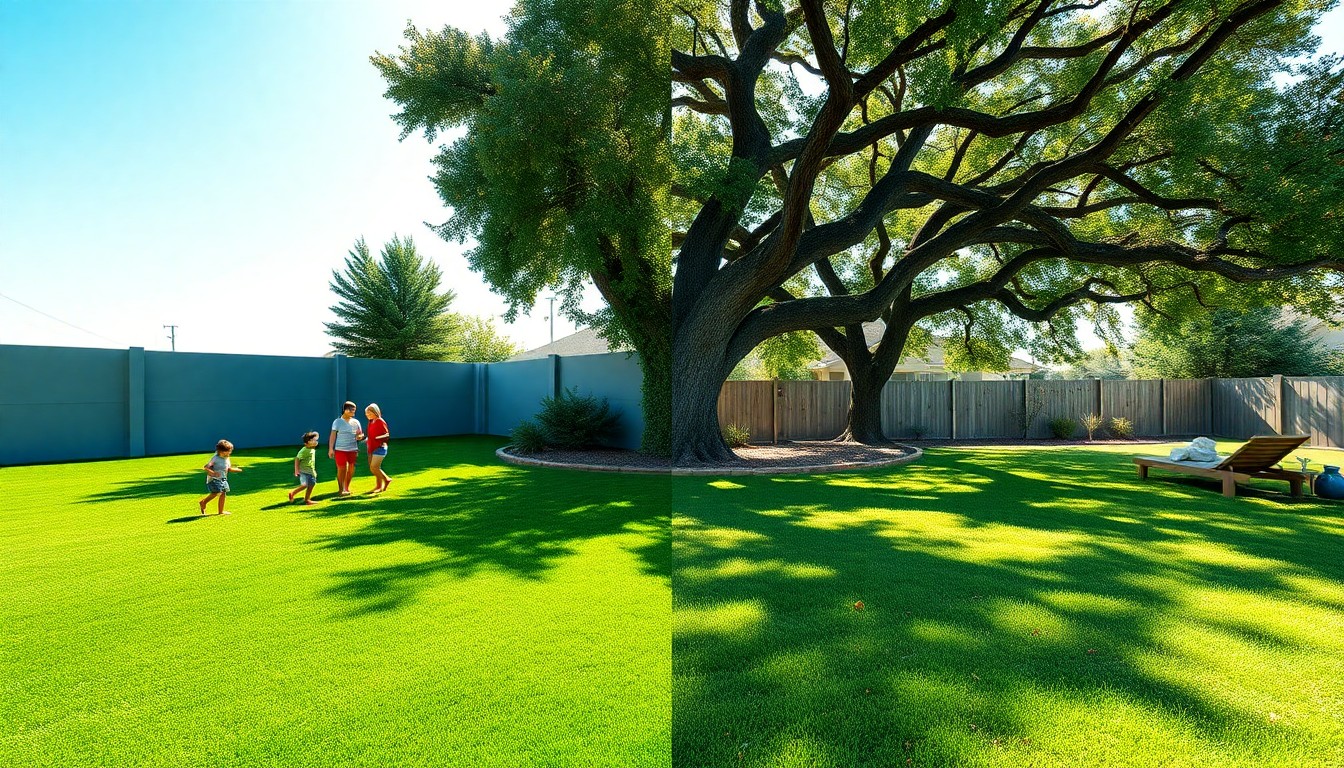
The Definitive Guide to Artificial Turf Performance in Shade vs Sun Year-Round
##?
Artificial turf performs excellently year-round in both sunny and shaded areas, offering a consistent aesthetic where natural grass fails. While sunny areas maximize turf warmth and necessitate cooling infill and UV protection, shaded areas require attention to moisture management and debris removal to prevent moss or mildew, ensuring the turf remains vibrant and functional regardless of light conditions.
2. Deep Dive (Detailed Why and How)
Understanding Turf in Full Sun Exposure
In sunny, exposed areas, particularly in the DFW climate, the primary concern for synthetic turf is heat management and color longevity.
High-quality turf is manufactured with built-in UV inhibitors, protecting the fibers from degradation and fading over many years. This engineering ensures the brilliant green color remains stable even with continuous exposure to intense Texas sun.
However, sun absorption leads to elevated surface temperatures. For these areas, especially those used by bare feet or pets, the application of specialized cooling infill (like T°Cool or zeolite) or a regular, light rinse during the hottest hours is crucial to maintain comfort and usability.
Sunny areas generally benefit from better airflow, which promotes quick drying and minimizes the potential for biological growth.Navigating Turf in Heavy Shade
Shaded areas—such as under large oaks, near fences, or beside the home—are often where artificial turf provides its greatest advantage over natural grass, which struggles to survive without sufficient sunlight.
The core challenge in shaded turf areas is moisture management. Without direct sun to accelerate evaporation, these zones retain dampness longer. This increased moisture retention necessitates careful installation, specifically ensuring the sub-base and drainage perforations are highly efficient.
Homeowners should prioritize regular debris removal (leaves, pine needles) in shaded spots, as decaying organic matter can trap moisture against the turf, potentially encouraging mildew or moss growth over time. A quick, periodic cross-brushing helps lift the fibers and promotes airflow, counteracting the effects of persistent shade.
Crucially, in the shade, the turf’s surface temperature will be significantly cooler than in direct sun, offering a pleasant, temperate area for relaxation.
3. Quick Reference (Bulleted Key Takeaways)
- Sun Areas: Requires UV-stabilized turf; may need cooling infill or rinsing for bare feet; experiences maximum durability and quickest drying time.
- Shade Areas: Provides an aesthetic solution where natural grass dies; stays cooler underfoot; requires vigilant debris removal and brushing to prevent moisture retention.
- Longevity: High-quality turf lasts 15-25 years in both shade and sun due to robust manufacturing standards.
4. Strategic Hyperlink
To truly maximize your turf’s performance across all seasons and light conditions, understanding how different infill materials react to temperature shifts is essential. Learn more about <a href="/guides/the-definitive-guide-to-seasonal-infill-adjustments-for-dfw-artificial-turf">how shade and sun exposure affect turf throughout the year</a>.
Explore Related Turf Resources
Related Turf Guides
- Accessible Drainage Solutions for Turf: The Key to Truly Senior-Friendly Outdoor Spaces
If you’re exploring senior-friendly turf, accessible drainage solutions for turf are just as important as the turf itself.
- Aesthetic Comparison: Turf vs. Grass (and What Actually Looks Better Long-Term)
If you’re weighing turf pros and cons, the **aesthetic differences between turf and grass** are probably at the top of your list.
- Annual Turf Care Calendar: Your Simple, Seasonal Guide to a Healthier Lawn
If you’re wondering, “What should I be doing for my lawn right now?” the answer lives inside an **annual turf care calendar**.
- Are luxury artificial turf options worth the investment for DFW homeowners?
Yes, upgrading to luxury artificial grass offers unmatched aesthetics, superior durability, and a premium feel that significantly elevates your home’s outdoor living experience and long-term value.
- Are you tired of staring at a dull, high-maintenance patch of grass?
**Yes, you can absolutely transform your yard into a stunning, functional space with a backyard landscaping makeover, and synthetic turf is often the key ingredient for DFW homeowners.**