
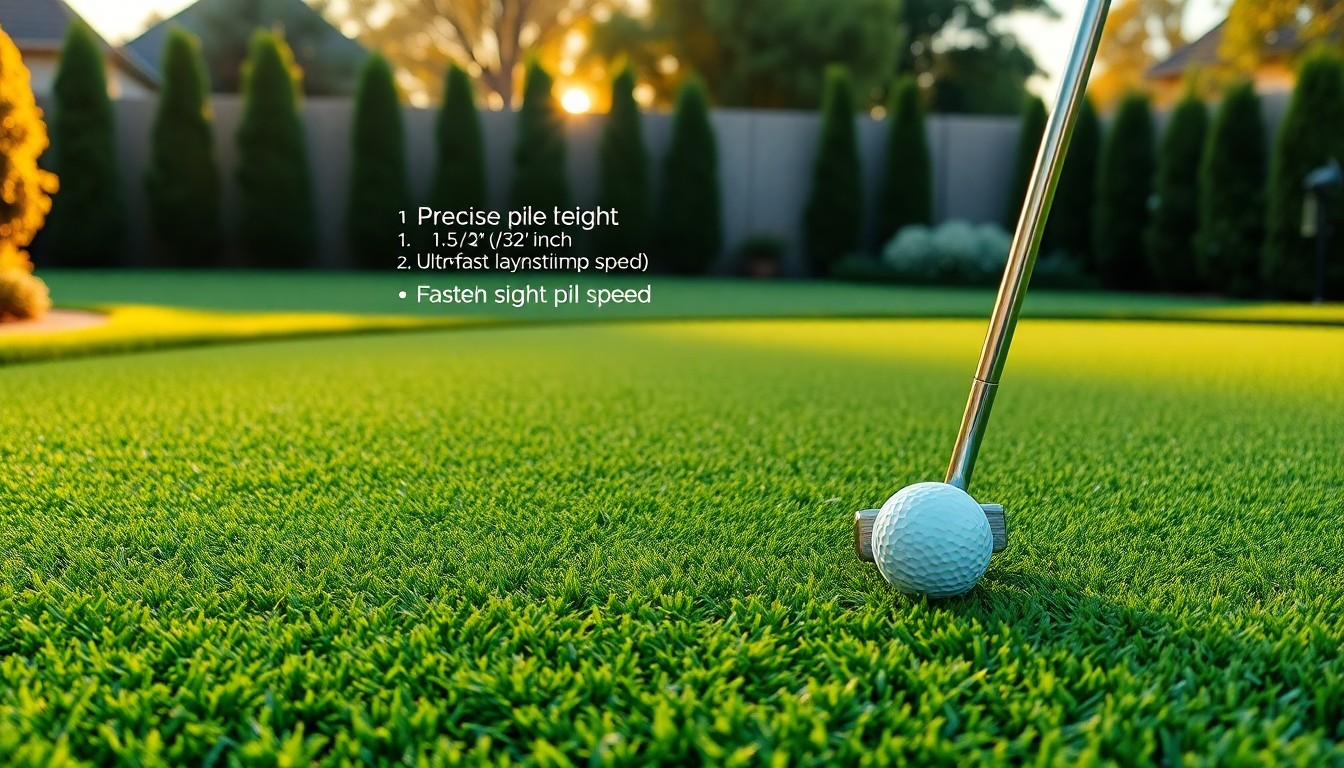
The Definitive Guide to Artificial Turf Pile Height for Your Putting Green
##?
The ideal pile height for a residential artificial putting green typically ranges between 0.5 inches (1/2 inch) and 0.75 inches (3/4 inch). This range ensures optimal ball speed (stimp speed), realistic roll, and the necessary density to replicate the feel and performance of a professional, natural golf green, while minimizing maintenance requirements common with taller turf fibers.
2. Deep Dive (Detailed Why and How)
Understanding Pile Height in Putting Green Performance
When selecting turf for a personal putting green, the pile height—the length of the synthetic grass blades—is the single most critical factor determining the turf's performance characteristics. Unlike standard landscape turf, where height often relates to cushion and aesthetics, putting green pile height directly influences the speed and accuracy of the ball roll.
Taller grass blades (1 inch or more) introduce friction and resistance, significantly slowing the ball and causing an inconsistent roll, which defeats the purpose of practice. Shorter blades minimize this friction, allowing for a faster, truer roll.The Standard Range (0.5" to 0.75")
Most high-performance putting green turfs are engineered to fall within the half-inch to three-quarter-inch height range. * 0.5" (Low Pile): This height offers the fastest surface, closest to a tournament-style green. It requires high-density fibers and specific infill materials (like silica sand) to stand correctly. It is excellent for dedicated golfers prioritizing speed.
- 0.75" (Medium Pile): This height provides a slightly slower, more forgiving roll. It is the most popular choice for homeowners who want a balance between speed, realism, and a surface that remains stable for light chipping practice.The Role of Infill
The pile height cannot be discussed without mentioning infill. For putting greens, the turf fibers are nearly always straight, not curled. To maintain the low pile height and allow the fibers to stand upright—preventing matting that would slow the ball—a specialized infill (often rounded silica sand or a blend) is brushed into the base of the fibers. This infill supports the blade structure, provides stability, and ensures the ball rolls purely on the exposed tips of the turf fibers.Why You Should Avoid Taller Turf
Many homeowners are tempted to choose taller turf for a softer look, but doing so compromises playability. Taller turf requires more infill, which can interfere with the ball's path, or it lacks the density to support the ball, resulting in a slow, unnatural roll and requiring excessive brushing. For areas immediately surrounding the putting surface, you should transition to an appropriately dense, taller turf designed for chipping and aesthetics.
3. Quick Reference (Bulleted Key Takeaways)
- Optimal Height: 0.5" to 0.75" for realistic ball roll and speed.
- Speed vs. Height: Shorter turf provides faster ball speed (higher Stimp rating).
- Aesthetics: Low pile height is essential for simulating the look of a manicured green.
- Function: Must be supported by specialized infill to maintain blade position and playability.
- Density is Key: Even at a short height, the turf must be extremely dense to resist matting under constant foot traffic.
4. Strategic Hyperlink
Choosing the right surface for the primary putting area is only half the battle. To ensure a cohesive and functional practice area, you must also consider The correct pile height for putting green fringe.
Explore Related Turf Resources
Related Turf Guides
- Backyard Golf Ideas: How to Turn Your Yard into a Personal Putting Playground
If you’re looking for backyard golf course ideas that feel fun, low-maintenance, and actually help your game, start with this simple principle:
- Backyard Putting Green Cost Estimate
The cost of an expertly installed artificial turf putting green for a DFW home typically ranges based on size, complexity, turf quality, and necessary ground preparation. Homeowners should anticipa...
- Ball Roll Speed Optimization: The Definitive Guide to Achieving Tournament-Grade Consistency on Your Artificial Putting Green
Ball Roll Speed Optimization: The Definitive Guide to Achieving Tournament-Grade Consistency on Your Artificial Putting Green
- Best Home Chipping Practice Turf
The ideal artificial turf for a home chipping practice area is a densely packed, short-pile synthetic grass designed to replicate the tight lie of a professional fairway or fringe, ensuring clubs interact cleanly with the "ground" for consistent ball striking and realistic performance.
- Can I install artificial turf directly over a concrete patio or slab?
Yes, absolutely! Installing artificial turf over concrete is an excellent way for DFW homeowners to transform drab, hard surfaces into beautiful, soft, and functional green spaces.