
The Definitive Guide to Artificial Turf’s Impact on Soil Health
##?
High-quality artificial turf, when installed correctly, does not harm the existing soil beneath it; rather, it stabilizes the ground, prevents erosion, and eliminates the environmental damage caused by traditional lawn chemicals and excessive water use. For homeowners ready to invest in synthetic grass, the installation process secures the sub-base, maintaining soil stability and permeability without interfering with natural microbial life below the surface.
2. Deep Dive (Detailed Why and How)
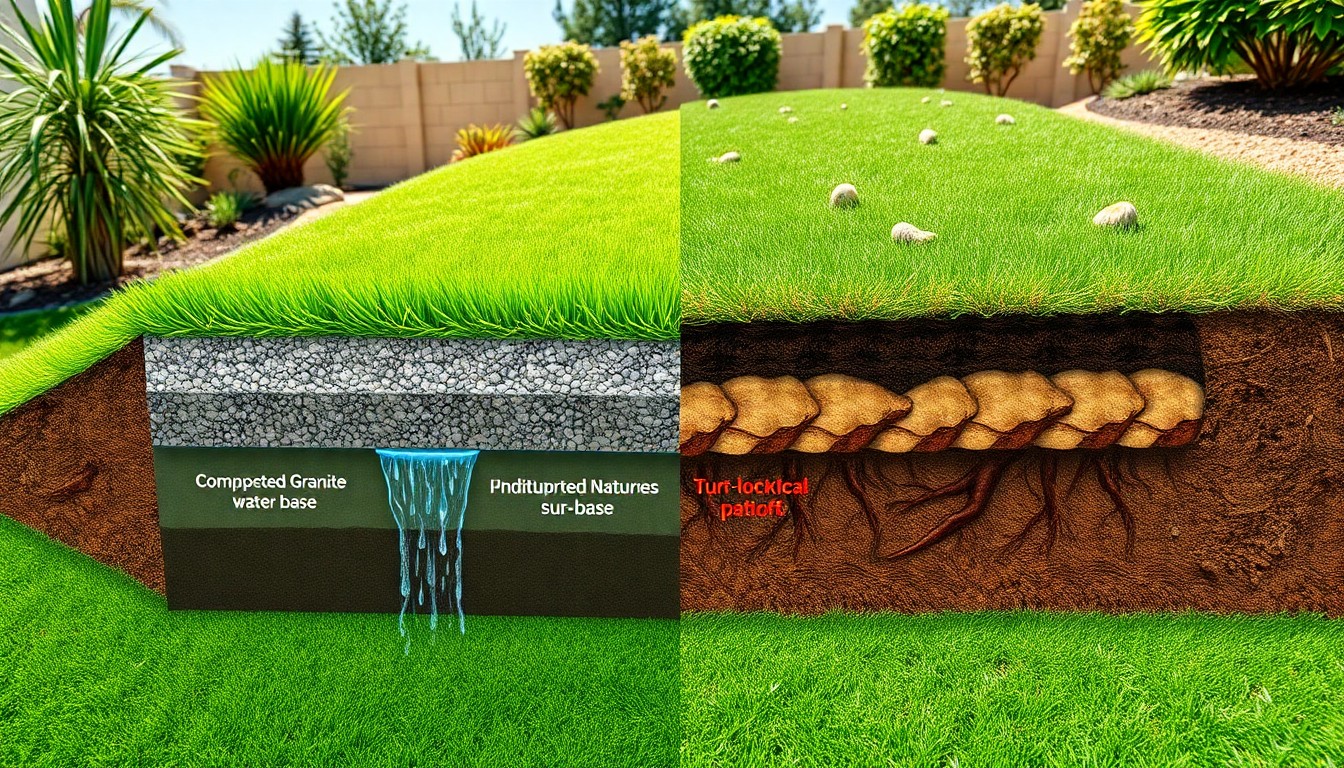
The primary concern many solution-aware homeowners have is what happens to the soil once natural grass is removed. It is essential to understand that artificial turf is installed on a prepared sub-base, typically consisting of compacted crushed granite or limestone, which sits above the native soil.
Stabilization and Erosion Control
One of the key functions of a properly installed turf system is to stabilize the landscape. Natural soil, especially on sloped properties, is prone to wind and water erosion, which removes topsoil over time. The dense, compacted artificial turf sub-base acts as a permanent protective barrier, locking the soil in place and preventing degradation.
The Role of Drainage
Modern synthetic turf features permeable backing that allows water to flow through rapidly. The prepared sub-base beneath the turf is engineered to direct water efficiently. This superior drainage prevents the soil from becoming oversaturated, mitigating runoff issues that carry chemicals and sediment into storm drains—a common problem with traditional lawns.
Elimination of Chemical Runoff
For years, maintaining a natural lawn meant regularly applying fertilizers, herbicides, and pesticides. These chemicals inevitably leach into the soil and run off into local water systems. By installing artificial turf, you permanently cease the use of these harmful agents, allowing the underlying soil to become chemically inert and reducing your overall environmental footprint.
Maintaining Soil Health
While artificial turf covers the soil, it does not create a sealed environment. The permeability of the backing and sub-base allows for aeration and microbial activity. The soil beneath remains dormant but intact, preserving the structure necessary for future use, if desired. Critically, the installation does not require sterilization or the introduction of materials that are toxic to the local ecosystem.
3. Quick Reference (Bulleted Key Takeaways)
- Erosion Prevention: The compacted sub-base stabilizes the underlying soil against wind and rain.
- Chemical Elimination: Installing turf permanently ends the use of polluting lawn chemicals.
- Permeability: Modern turf systems allow water to flow through to the sub-base and soil efficiently.
- Soil Integrity: The installation process keeps the native soil intact and healthy beneath the surface.
4. Strategic Hyperlink
To better understand the misconceptions surrounding synthetic turf and its ecological footprint, review our detailed analysis on the true impact of artificial turf on soil health.
Explore Related Turf Resources
Related Turf Guides
- Accessible Drainage Solutions for Turf: The Key to Truly Senior-Friendly Outdoor Spaces
If you’re exploring senior-friendly turf, accessible drainage solutions for turf are just as important as the turf itself.
- Aesthetic Comparison: Turf vs. Grass (and What Actually Looks Better Long-Term)
If you’re weighing turf pros and cons, the **aesthetic differences between turf and grass** are probably at the top of your list.
- Annual Turf Care Calendar: Your Simple, Seasonal Guide to a Healthier Lawn
If you’re wondering, “What should I be doing for my lawn right now?” the answer lives inside an **annual turf care calendar**.
- Are luxury artificial turf options worth the investment for DFW homeowners?
Yes, upgrading to luxury artificial grass offers unmatched aesthetics, superior durability, and a premium feel that significantly elevates your home’s outdoor living experience and long-term value.
- Are you tired of staring at a dull, high-maintenance patch of grass?
**Yes, you can absolutely transform your yard into a stunning, functional space with a backyard landscaping makeover, and synthetic turf is often the key ingredient for DFW homeowners.**