
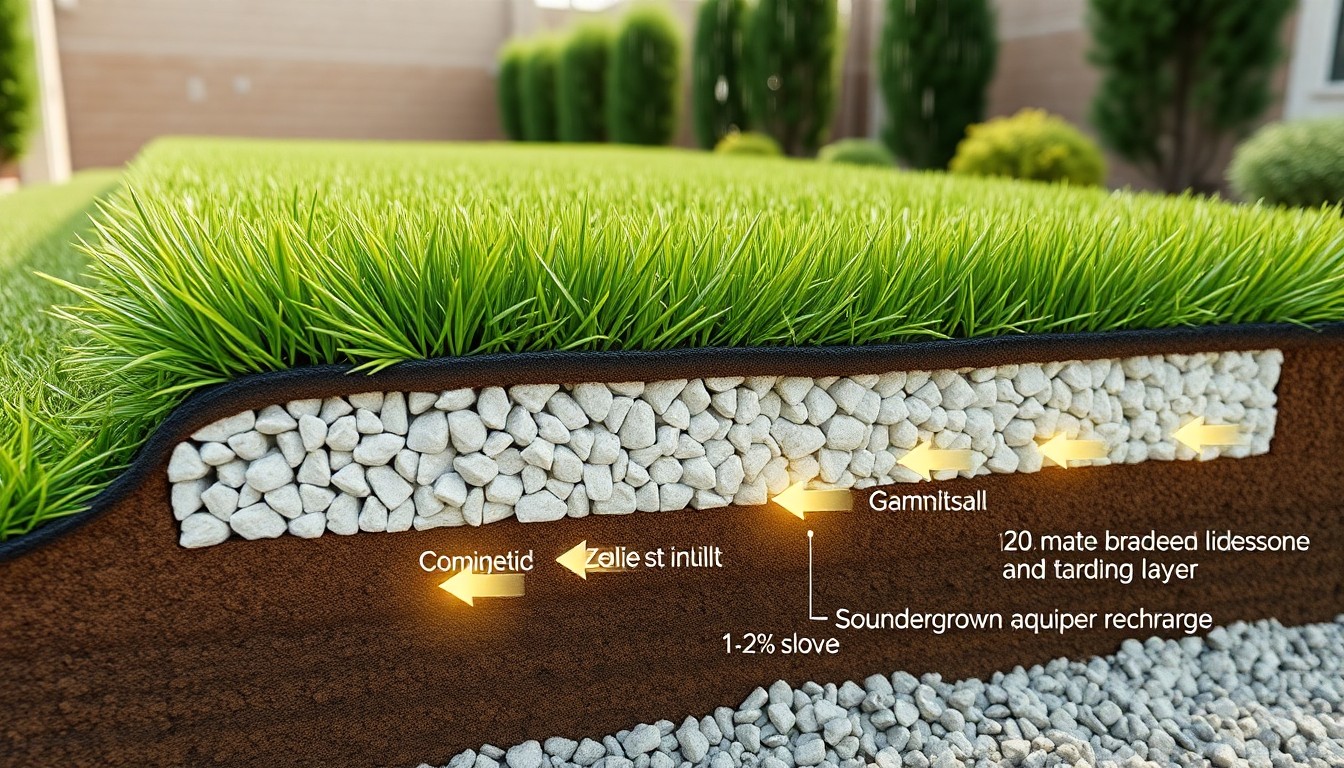
The Definitive Guide to Eco-Friendly Drainage for Artificial Turf
##?
Eco-friendly drainage for artificial turf relies on a highly permeable, layered sub-base system using recycled and natural materials like crushed granite or limestone, paired with flow-through turf backing, to ensure rapid water movement back into the local water table. This approach minimizes runoff, prevents erosion, and avoids the use of harmful chemical stabilizers, securing both the turf installation and the environmental health of your DFW property.
2. Deep Dive (Detailed Why and How)
For homeowners choosing synthetic grass to reduce water consumption, the next logical step is ensuring the installation itself supports a healthy ecosystem. This is where eco-friendly drainage solutions come into play.
Unlike concrete or traditional hardscaping, modern artificial turf systems are engineered to be permeable. However, the true key to "eco-friendly" drainage is in the sub-base preparation—the layers beneath the turf that handle the water flow.
We start by grading the native soil to establish the proper slope, usually a 1-2% grade, directing water toward existing drainage points. This prevents standing water while ensuring water is channeled efficiently.
The next layer is crucial: the sub-base material. Instead of relying on non-porous or chemically treated foundations, we use angular, crushed materials like decomposed granite or crushed limestone. These materials are naturally occurring and, when compacted correctly, create a highly stable foundation with excellent porosity. This allows rainwater to filter slowly and naturally into the ground, replenishing the aquifer instead of rushing into storm drains.
This superior infiltration mimics natural soil processes, reducing the load on municipal stormwater systems and decreasing the risk of flash flooding around your home—a major environmental benefit in the DFW area. We also strictly avoid materials that could leach chemicals, ensuring the runoff is clean.
A final, often-overlooked factor is the infill. Choosing an organic infill like Zeolite, rather than standard rubber crumb, adds another layer of environmental responsibility. Zeolite helps neutralize pet odors and provides structural support while remaining non-toxic and easily degradable should the turf ever need replacing.
3. Quick Reference (Bulleted Key Takeaways)
- Permeable Sub-Base: Use crushed granite or limestone layers for maximum natural filtration.
- Reduced Runoff: Slows down rainwater infiltration to protect municipal drainage and prevent erosion.
- Chemical-Free: Installation avoids harmful sealants or stabilizers that could contaminate groundwater.
- Organic Infill: Incorporating Zeolite enhances drainage and aids in natural odor control.
- Groundwater Recharge: Ensures clean rainwater returns to the local water table, supporting environmental health.
4. Strategic Hyperlink
A responsible installation also includes considering the future. Understanding the foundational elements is key to maintaining proper drainage during removal when the turf eventually reaches the end of its long life cycle.
Explore Related Turf Resources
Related Turf Guides
- Accessible Drainage Solutions for Turf: The Key to Truly Senior-Friendly Outdoor Spaces
If you’re exploring senior-friendly turf, accessible drainage solutions for turf are just as important as the turf itself.
- Aesthetic Comparison: Turf vs. Grass (and What Actually Looks Better Long-Term)
If you’re weighing turf pros and cons, the **aesthetic differences between turf and grass** are probably at the top of your list.
- Annual Turf Care Calendar: Your Simple, Seasonal Guide to a Healthier Lawn
If you’re wondering, “What should I be doing for my lawn right now?” the answer lives inside an **annual turf care calendar**.
- Are luxury artificial turf options worth the investment for DFW homeowners?
Yes, upgrading to luxury artificial grass offers unmatched aesthetics, superior durability, and a premium feel that significantly elevates your home’s outdoor living experience and long-term value.
- Are you tired of staring at a dull, high-maintenance patch of grass?
**Yes, you can absolutely transform your yard into a stunning, functional space with a backyard landscaping makeover, and synthetic turf is often the key ingredient for DFW homeowners.**