
The Definitive Guide to Installing a Weed Barrier Under Artificial Turf
##?
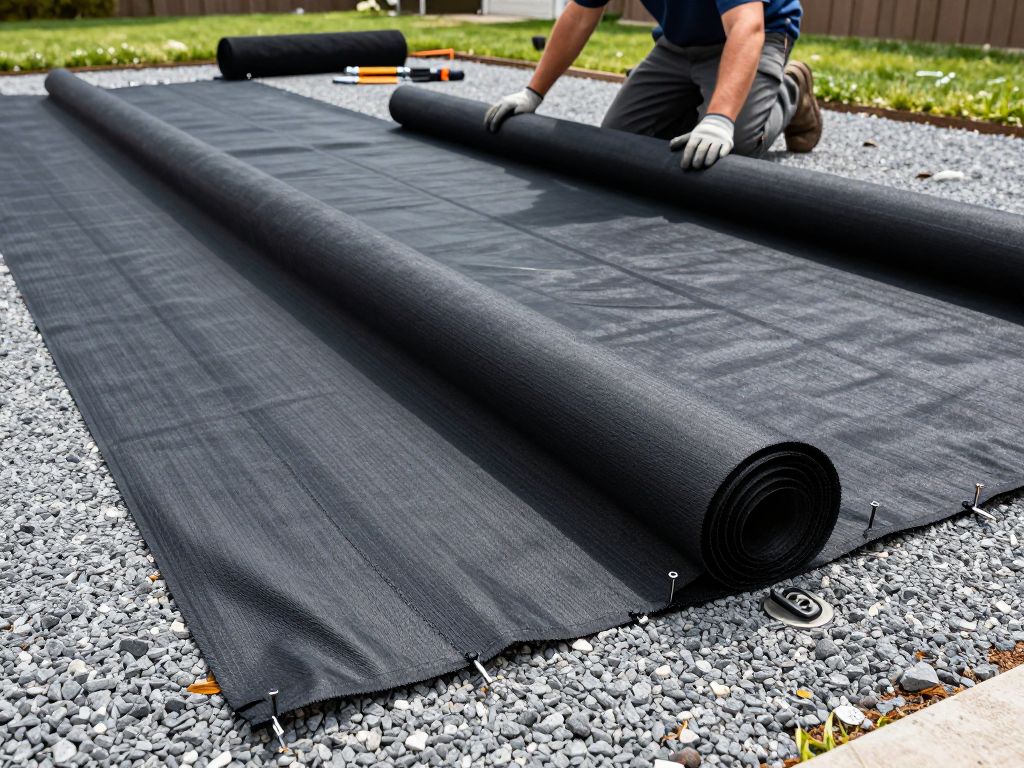
A weed barrier is an essential component of artificial turf installation, designed to prevent native weed growth from penetrating the synthetic turf backing and reaching the surface. For a successful, long-lasting installation, high-quality geotextile fabric should be laid smoothly over the compacted sub-base after all base prep is complete and before turf is rolled out, ensuring continuous coverage and overlapping seams.
2. Deep Dive (Detailed Why and How)
The primary purpose of a weed barrier (or geo-textile fabric) is not drainage, but weed suppression. While the synthetic turf itself acts as a strong barrier against weeds trying to sprout from above, weeds and aggressive grasses native to the DFW soil can push up through the perforations in the turf backing over time. A properly installed weed barrier prevents this upward growth.
Choosing the right material is crucial. It should be a commercial-grade, permeable geotextile fabric. Avoid thick, plastic sheeting, as this can trap moisture, impede the artificial turf's drainage system, and potentially lead to bacterial growth or odor issues.
The installation process is sequential and must be precise. * Sub-Base Completion: The weed barrier is installed after the natural soil has been excavated, the rough grade established, and the crushed stone sub-base (like decomposed granite or crushed rock) has been spread, shaped, and thoroughly compacted. The barrier lies directly on top of this compacted foundation.
- Laying the Fabric: The fabric should be unrolled smoothly across the entire area where the turf will be installed. Cut the fabric to fit the perimeter using a utility knife.
- Seam Management: All seams must be overlapped significantly—typically by 4 to 6 inches—to prevent any gaps where sunlight can penetrate and weeds can emerge. Secure these overlaps using landscape staples, placing them every few feet along the seam and around the edges.
- Protecting Penetrations: Care must be taken around any fixed objects, like posts, trees, or irrigation heads, ensuring the fabric is cut just enough to fit tightly around them without creating large holes.Installing the weed barrier at this stage ensures a clean separation between the prepared base and the turf material, offering the highest defense against organic intrusion and contributing directly to the longevity of your synthetic lawn.
3. Quick Reference (Bulleted Key Takeaways)
- Purpose: Blocks aggressive native weeds from pushing up through the turf backing.
- Timing: Install after the base material (e.g., decomposed granite) is compacted and shaped, but before the turf is rolled out.
- Material: Use permeable, commercial-grade geotextile fabric; avoid non-permeable plastic.
- Overlaps: Overlap all seams by at least 4 to 6 inches and secure them with landscape staples.
- Drainage: Ensure the fabric allows water to pass through freely into the prepared sub-base.
4. Strategic Hyperlink
Once your weed barrier is securely in place, the next steps involve cutting and seaming the turf itself. To ensure a professional finish that maximizes the durability and appearance of your investment, it’s vital to understand the techniques for proper installation of a weed barrier base.
Explore Related Turf Resources
Related Turf Guides
- Accessible Drainage Solutions for Turf: The Key to Truly Senior-Friendly Outdoor Spaces
If you’re exploring senior-friendly turf, accessible drainage solutions for turf are just as important as the turf itself.
- Aesthetic Comparison: Turf vs. Grass (and What Actually Looks Better Long-Term)
If you’re weighing turf pros and cons, the **aesthetic differences between turf and grass** are probably at the top of your list.
- Annual Turf Care Calendar: Your Simple, Seasonal Guide to a Healthier Lawn
If you’re wondering, “What should I be doing for my lawn right now?” the answer lives inside an **annual turf care calendar**.
- Are luxury artificial turf options worth the investment for DFW homeowners?
Yes, upgrading to luxury artificial grass offers unmatched aesthetics, superior durability, and a premium feel that significantly elevates your home’s outdoor living experience and long-term value.
- Are you tired of staring at a dull, high-maintenance patch of grass?
**Yes, you can absolutely transform your yard into a stunning, functional space with a backyard landscaping makeover, and synthetic turf is often the key ingredient for DFW homeowners.**