
The Definitive Guide to Natural vs Synthetic Infill for Artificial Turf
##?
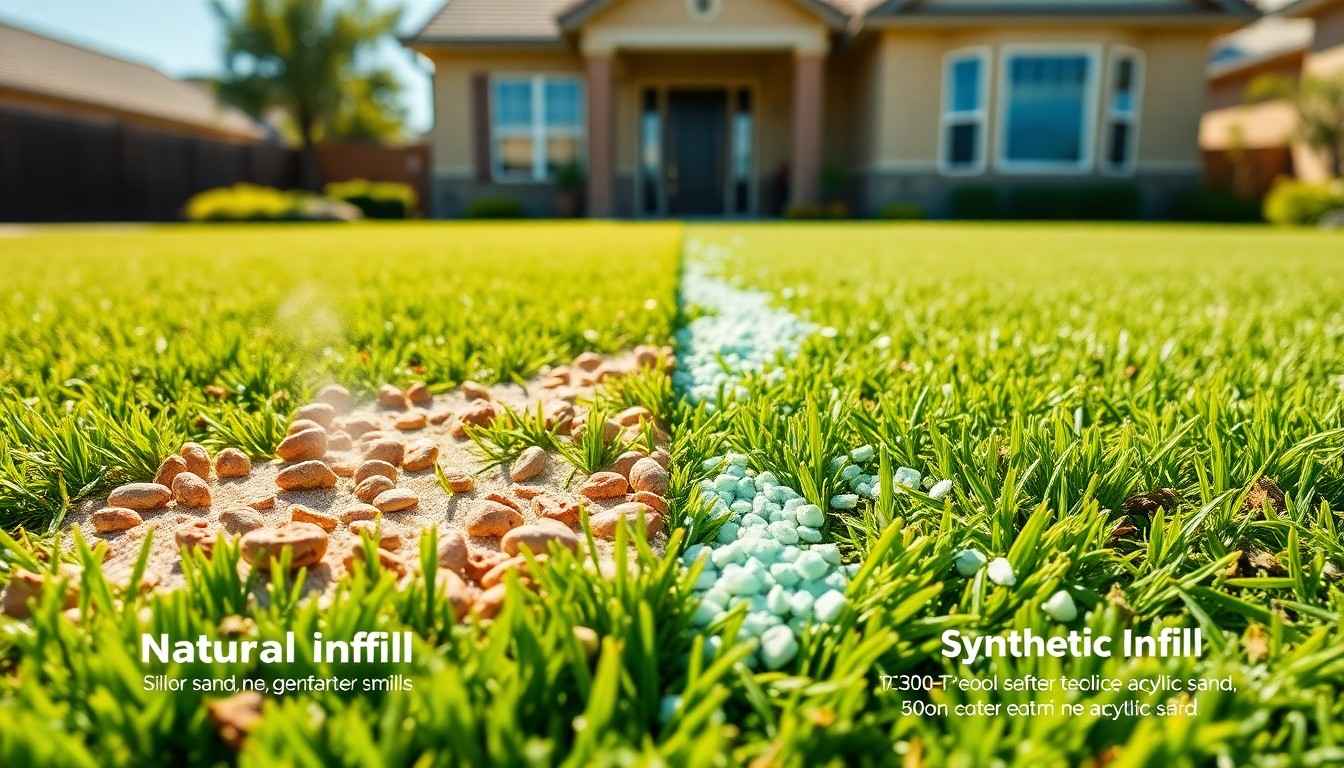
Choosing between natural infill (like silica sand or crushed walnut shells) and synthetic infill (such as crumb rubber or specialized acrylic-coated sand) is a critical decision that impacts the final performance, temperature, drainage, and eco-friendliness of your artificial lawn. While natural infills are often cost-effective and inert, modern synthetic options offer specialized benefits like enhanced cooling, superior odor control, and non-migratory stability, making them a strategic choice for high-use or pet-active DFW homes.
2. Deep Dive (Detailed Why and How)
Natural Infill Options
Natural infills, primarily silica sand, are the traditional and often most affordable choice. They provide essential weight to stabilize the turf and protect the fibers from wear. * Silica Sand: This is a proven, inexpensive option. It stabilizes the turf and is non-toxic. However, it can retain significant heat, offer no odor control (a concern for pet owners), and become compacted over time, which affects drainage.
- Crushed Walnut Shells/Coconut Coir: These are organic, plant-based materials used as alternatives to traditional sand or rubber. They are favored for being 100% natural and offer decent cushioning and cooling properties. Maintenance is crucial, as organic materials can potentially break down or hold moisture if not properly installed.Synthetic Infill Options
Synthetic infills are engineered products designed to solve the inherent challenges of natural materials, especially heat retention, odor, and debris migration. * T°Cool/Cooling Infill: These are coated sands or granular materials specifically engineered to absorb and release moisture slowly (through evaporative cooling), effectively lowering the turf's surface temperature by up to 30-50 degrees compared to standard sand or rubber. This is essential for the intense DFW summer heat.
- Zeolite (Antimicrobial): Zeolite is a natural mineral, but it functions like a synthetic infill in this context. It is widely used in pet installations because its porous structure neutralizes ammonia odors caused by pet urine, preventing the smell from escaping. It provides excellent drainage and odor control but is not designed for cooling.
- Acrylic-Coated Sand: This sand is coated to be non-absorbent and prevent dust, offering a cleaner, firmer feel. It stabilizes the turf well and is highly durable but lacks the cooling features of specialty products.
- Crumb Rubber (SBR): Made from recycled tires, rubber infill offers excellent shock absorption, making it common for playgrounds and sports fields. However, its dark color retains heat, and concerns exist over potential chemical leaching and the "tire smell," leading many residential homeowners to prefer non-rubber alternatives.Making the Right Choice
For most residential applications in DFW, the choice is functional:1.
- For High Traffic/Playgrounds: Focus on durability and shock absorption (often requiring a blend or specialized rubber alternatives).
- For Pet Owners: Zeolite is highly recommended for its odor-neutralizing capabilities.
- For Hot Climates: Cooling infills are a necessity to ensure the turf is comfortable during summer months.3. Quick Reference (Bulleted Key Takeaways) * Best for Budget: Uncoated silica sand.
- Best for Cooling: T°Cool or specialized coated infills.
- Best for Pets/Odor: Zeolite infill.
- Heat Retention: Crumb rubber and silica sand generally retain the most heat.
- Compaction: Natural sands can compact, requiring periodic raking or brushing.
- Safety: All certified infills are safe, but specialized options offer benefits like antimicrobial properties (Zeolite) and cooler surface temperatures.
4. Strategic Hyperlink
The longevity and environmental footprint of your turf depend on every component, starting from the base. To fully understand how your landscape decision impacts the environment, review our guide on selecting the right infill for an environmentally conscious installation at <a href="/guides/the-definitive-guide-to-eco-friendly-drainage-for-artificial-turf">/eco-friendly-drainage</a>.
Explore Related Turf Resources
Related Turf Guides
- Accessible Drainage Solutions for Turf: The Key to Truly Senior-Friendly Outdoor Spaces
If you’re exploring senior-friendly turf, accessible drainage solutions for turf are just as important as the turf itself.
- Aesthetic Comparison: Turf vs. Grass (and What Actually Looks Better Long-Term)
If you’re weighing turf pros and cons, the **aesthetic differences between turf and grass** are probably at the top of your list.
- Annual Turf Care Calendar: Your Simple, Seasonal Guide to a Healthier Lawn
If you’re wondering, “What should I be doing for my lawn right now?” the answer lives inside an **annual turf care calendar**.
- Are luxury artificial turf options worth the investment for DFW homeowners?
Yes, upgrading to luxury artificial grass offers unmatched aesthetics, superior durability, and a premium feel that significantly elevates your home’s outdoor living experience and long-term value.
- Are you tired of staring at a dull, high-maintenance patch of grass?
**Yes, you can absolutely transform your yard into a stunning, functional space with a backyard landscaping makeover, and synthetic turf is often the key ingredient for DFW homeowners.**