
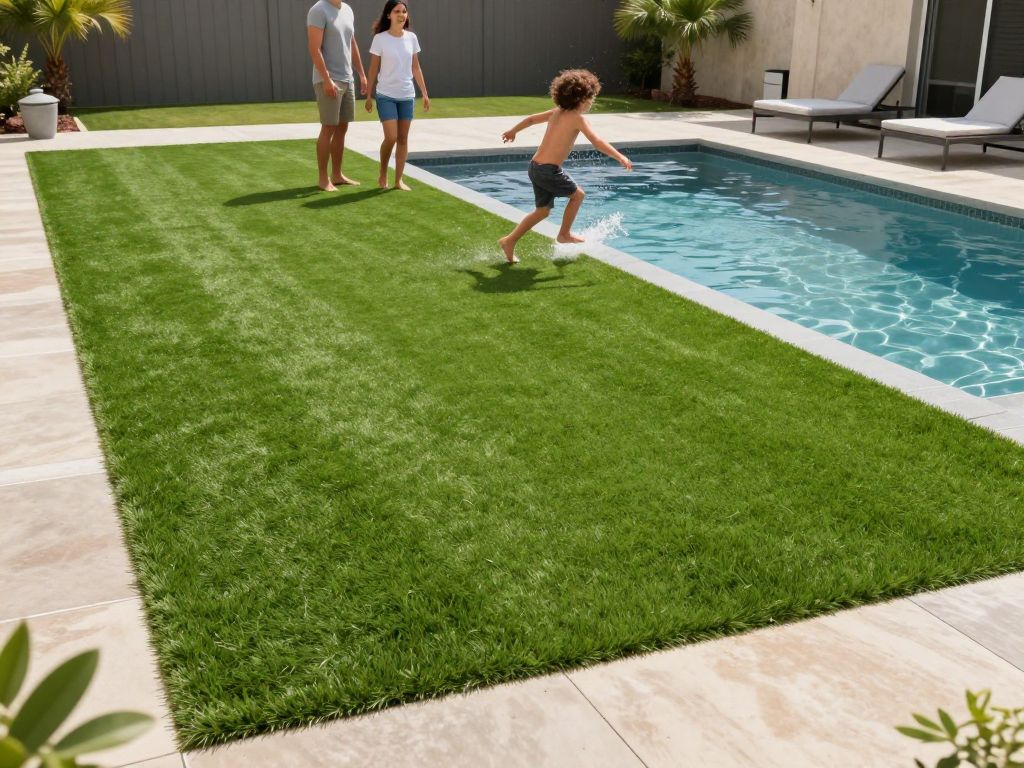
The Definitive Guide to Poolside Turf Safety
##?
High-quality artificial turf installed around a pool significantly enhances safety by offering a consistently slip-resistant surface, superior drainage to prevent standing water, and a cooler environment than concrete or traditional decking materials. For DFW homeowners, synthetic grass is a strategic upgrade that minimizes slip-and-fall risks while eliminating sharp edges and hazardous chemicals common in natural lawn care.
2. Deep Dive (Detailed Why and How)
The Critical Need for Slip Resistance
The area immediately surrounding a pool is inherently hazardous due to constant water exposure. Traditional surfaces like concrete or pavers can become slick when wet, posing a significant risk of accidental slips and falls. Modern artificial turf, specifically engineered for pool environments, utilizes textured, non-abrasive fibers that maintain high traction even when saturated. This design provides a forgiving surface that grips bare feet, drastically reducing the likelihood of accidents.Managing Water and Moisture
Excellent drainage is the cornerstone of poolside safety. Natural grass often turns into mud or standing puddles when wet, and solid surfaces hold water until it evaporates. Quality synthetic turf features rapid-drainage backing, allowing water—whether from splashing or rain—to pass immediately through the material and into the prepared sub-base below. This capability means the surface dries faster and consistently prevents the accumulation of slippery standing water.Temperature Control in the Texas Heat
In the Dallas-Fort Worth climate, surfaces like concrete and dark tile absorb intense sunlight, reaching extremely high temperatures that can be painful or dangerous for bare skin. While all artificial turf gets warmer than natural grass, many contemporary pool turf products incorporate heat reduction technologies, such as lighter colors, reflective pigments, and specialized infills. These features help the turf remain notably cooler under direct sunlight than most hardscape materials, making pool decks safer and more comfortable during peak summer hours.Eliminating Chemical Hazards
Maintaining a natural lawn requires fertilizers, pesticides, and herbicides, chemicals that can be tracked into the pool water, upsetting the delicate chemical balance and creating health risks for swimmers. By switching to synthetic turf, you permanently eliminate the need for these landscaping chemicals, creating a cleaner, safer pool environment for your family and guests.
3. Quick Reference (Bulleted Key Takeaways)
- Slip Resistance: Textured fibers provide reliable traction even when wet, minimizing falls.
- Rapid Drainage: Engineered backing systems prevent standing water and dry quickly.
- Cooler Surface: Advanced materials help reduce heat retention compared to hard decking.
- Non-Abrasive: Soft surface protects bare feet from scrapes and injuries.
- Chemical-Free: Eliminates the use of lawn chemicals near the pool.
4. Strategic Hyperlink
Safety standards for pool turf rely heavily on proper installation and a robust sub-base. To ensure your investment meets the highest standards for water management, review our essential guide on the drainage requirements for pool area safety.
Explore Related Turf Resources
Related Turf Guides
- Accessible Drainage Solutions for Turf: The Key to Truly Senior-Friendly Outdoor Spaces
If you’re exploring senior-friendly turf, accessible drainage solutions for turf are just as important as the turf itself.
- Aesthetic Comparison: Turf vs. Grass (and What Actually Looks Better Long-Term)
If you’re weighing turf pros and cons, the **aesthetic differences between turf and grass** are probably at the top of your list.
- Annual Turf Care Calendar: Your Simple, Seasonal Guide to a Healthier Lawn
If you’re wondering, “What should I be doing for my lawn right now?” the answer lives inside an **annual turf care calendar**.
- Are luxury artificial turf options worth the investment for DFW homeowners?
Yes, upgrading to luxury artificial grass offers unmatched aesthetics, superior durability, and a premium feel that significantly elevates your home’s outdoor living experience and long-term value.
- Are you tired of staring at a dull, high-maintenance patch of grass?
**Yes, you can absolutely transform your yard into a stunning, functional space with a backyard landscaping makeover, and synthetic turf is often the key ingredient for DFW homeowners.**