
The Definitive Guide to Preparing Artificial Turf for Winter
##?
Preparing artificial turf for winter involves proactively clearing debris, ensuring all drainage is unobstructed, and performing a final, deep rinse to prevent organic material and pollutants from freezing and setting into the fibers. For DFW homeowners, this essential seasonal maintenance guarantees your synthetic lawn maintains its pristine appearance and structural integrity, protecting your investment from ice, snow, and severe cold weather.
2. Deep Dive (Detailed Why and How)
Winter weather, especially the unpredictable freezes and storms common in the Dallas-Fort Worth area, can pose unique, though minor, challenges to artificial turf if it hasn't been properly prepared.
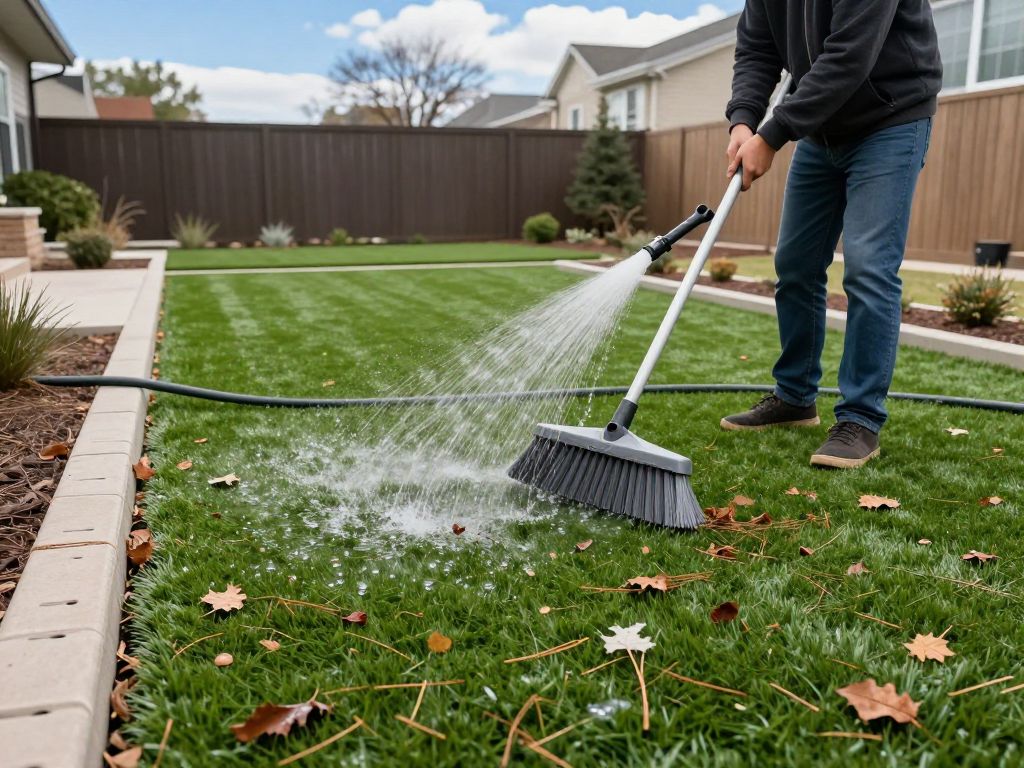
Cleanliness is Protection. The single most important step is ensuring the turf surface is completely free of leaves, pine needles, dirt, and pet waste before the first hard freeze. When organic debris freezes onto the turf, it can foster moss or mold growth when temperatures eventually rise, leading to discoloration and potential odor issues. Use a stiff-bristled broom or a rake with plastic tines to brush against the grain and lift all debris.
Ensure Superior Drainage. Check all edges, seams, and perimeter areas—especially near concrete or landscaping—to confirm drainage holes are clear. Frozen standing water is the primary risk during winter. If water accumulates and freezes, it can put stress on the backing material. Ensure the sub-base is dry and water can flow freely.
The Final Rinse. Before freezing temperatures arrive, give your turf a thorough, deep rinse. This flush helps remove any remaining dust or micro-pollutants that could attract moisture and turn into stubborn frozen grime. Use a hose to flood the area gently, directing the flow toward the nearest drain or perimeter edge.
Managing Ice and Snow. Artificial turf is built to handle snow and ice, but you should never use metal shovels, salt, or chemicals to clear the area. While a layer of frost or light snow will melt naturally without issue, if you must remove ice, use a plastic shovel gently or wait for it to thaw. Avoid walking heavily on frozen turf, as this can temporarily flatten the fibers.
3. Quick Reference (Bulleted Key Takeaways)
- Remove Debris: Thoroughly clear leaves, pine needles, and all organic waste using a plastic rake or stiff broom.
- Check Drainage: Verify that all perimeter drainage points and the turf backing perforations are clear to prevent standing water.
- Deep Rinse: Give the entire lawn a final, heavy rinse with water before the first expected freeze.
- Avoid Chemicals: Never use rock salt or harsh chemical de-icers, as these can damage the turf fibers.
- Patience with Ice: Let snow and ice melt naturally; avoid metal shovels or excessive foot traffic while the turf is frozen.
4. Strategic Hyperlink
Proper winter preparation is part of a larger strategy for year-round turf care. Learn more about how to safeguard your investment from unexpected weather events by reviewing our guide on protecting turf from winter damage(/storm-season-prep).
Explore Related Turf Resources
Related Turf Guides
- Accessible Drainage Solutions for Turf: The Key to Truly Senior-Friendly Outdoor Spaces
If you’re exploring senior-friendly turf, accessible drainage solutions for turf are just as important as the turf itself.
- Aesthetic Comparison: Turf vs. Grass (and What Actually Looks Better Long-Term)
If you’re weighing turf pros and cons, the **aesthetic differences between turf and grass** are probably at the top of your list.
- Annual Turf Care Calendar: Your Simple, Seasonal Guide to a Healthier Lawn
If you’re wondering, “What should I be doing for my lawn right now?” the answer lives inside an **annual turf care calendar**.
- Are luxury artificial turf options worth the investment for DFW homeowners?
Yes, upgrading to luxury artificial grass offers unmatched aesthetics, superior durability, and a premium feel that significantly elevates your home’s outdoor living experience and long-term value.
- Are you tired of staring at a dull, high-maintenance patch of grass?
**Yes, you can absolutely transform your yard into a stunning, functional space with a backyard landscaping makeover, and synthetic turf is often the key ingredient for DFW homeowners.**