
The Definitive Guide to Professional Artificial Turf Seaming
##?
Professional artificial turf seaming is the process of precisely joining two rolls of synthetic grass using specialized seam tape and commercial-grade adhesive to create a virtually invisible, monolithic surface. Proper seaming is arguably the most critical step in installation, ensuring the turf's longevity, aesthetic continuity, and overall performance.
2. Deep Dive (Detailed Why and How)
The quality of your turf seam directly determines the final look and durability of your synthetic lawn. A poorly executed seam will be visible, creating an undeniable fault line, and can quickly become a weak point where the turf pulls apart, fringes, or curls up.
Preparation is paramount. Before adhesive is applied, the edges of both turf panels must be "seam trimmed." This involves carefully cutting away the factory edge (usually about three rows of stitching) to ensure the fibers line up perfectly without leaving a gap or creating overlap. This precision trimming allows the turf rolls to meet cleanly, tip-to-tip.
The physical seam is created by laying seam tape (a non-woven geotextile fabric) down the center line beneath the joined edges. A moisture-curing polyurethane adhesive is then applied evenly onto the tape using a notched trowel. This adhesive must be distributed uniformly to bond every square inch of the tape to the turf backing.
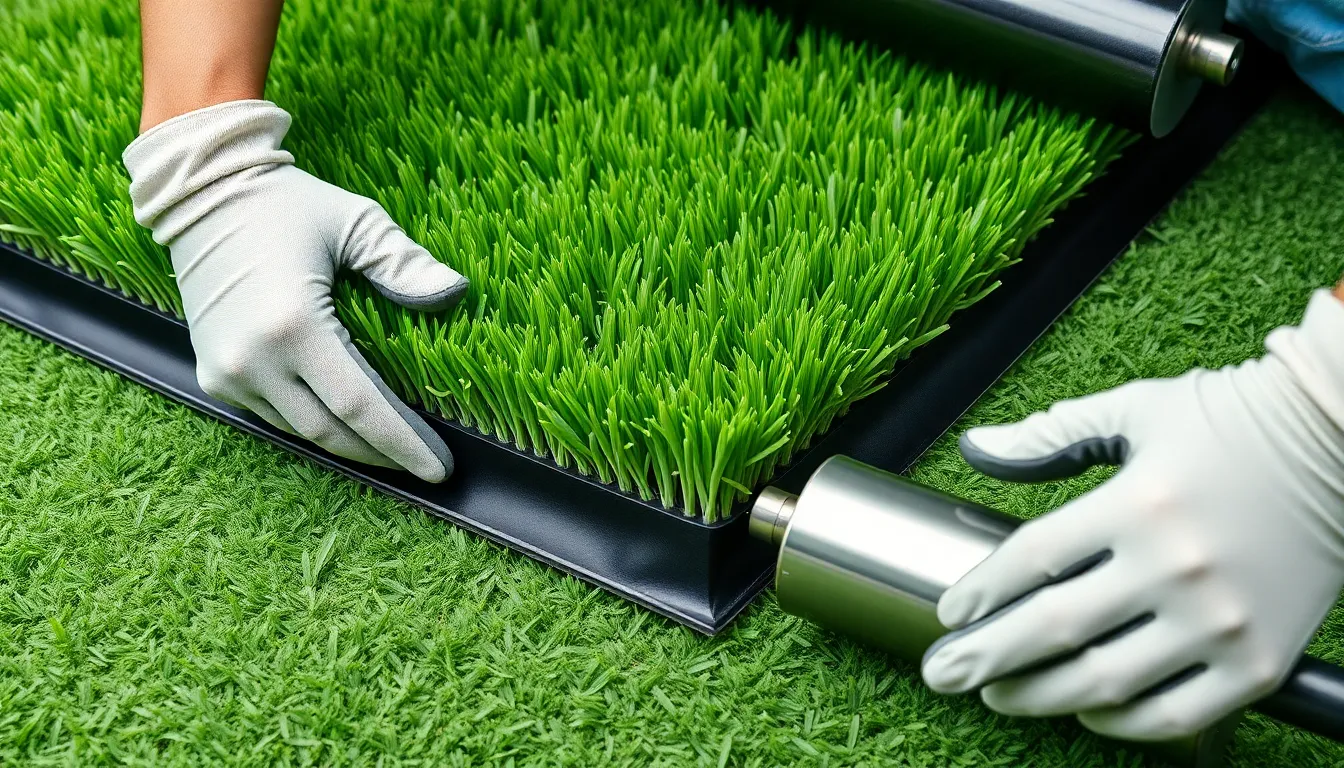
The final and most crucial step is marrying the two turf pieces. They must be lowered onto the wet adhesive simultaneously, ensuring the fiber direction (the grain) of both rolls runs identically. Applying constant, even pressure across the seam using a heavy roller ensures a complete transfer of adhesive to the turf backing, resulting in a secure, lifelong bond.
The objective is not just adhesion; it's invisibility. By ensuring tight, clean edges and aligning the synthetic blades perfectly, the seam becomes functionally and aesthetically indistinguishable from the rest of the turf surface.
3. Quick Reference (Bulleted Key Takeaways)
- Precision Trimming: Always cut off the factory edge to ensure a clean, fiber-to-fiber butt joint.
- Tape and Adhesive: Use high-quality, non-woven seam tape and moisture-curing polyurethane adhesive for maximum strength.
- Fiber Alignment: Ensure the grain of both turf rolls is running in the exact same direction before pressing them together.
- Even Pressure: Use a heavy roller or plate compactor to press the seam into the adhesive firmly and uniformly.
- Curing Time: Allow the adhesive adequate time to cure (usually 24 hours, depending on climate) before permitting foot traffic.
4. Strategic Hyperlink
Once your seams are perfectly bonded, the next priority is locking the entire perimeter down. We detail all the necessary steps and best practices in our comprehensive guide on proper turf seaming techniques.
Explore Related Turf Resources
Related Turf Guides
- Accessible Drainage Solutions for Turf: The Key to Truly Senior-Friendly Outdoor Spaces
If you’re exploring senior-friendly turf, accessible drainage solutions for turf are just as important as the turf itself.
- Aesthetic Comparison: Turf vs. Grass (and What Actually Looks Better Long-Term)
If you’re weighing turf pros and cons, the **aesthetic differences between turf and grass** are probably at the top of your list.
- Annual Turf Care Calendar: Your Simple, Seasonal Guide to a Healthier Lawn
If you’re wondering, “What should I be doing for my lawn right now?” the answer lives inside an **annual turf care calendar**.
- Are luxury artificial turf options worth the investment for DFW homeowners?
Yes, upgrading to luxury artificial grass offers unmatched aesthetics, superior durability, and a premium feel that significantly elevates your home’s outdoor living experience and long-term value.
- Are you tired of staring at a dull, high-maintenance patch of grass?
**Yes, you can absolutely transform your yard into a stunning, functional space with a backyard landscaping makeover, and synthetic turf is often the key ingredient for DFW homeowners.**