
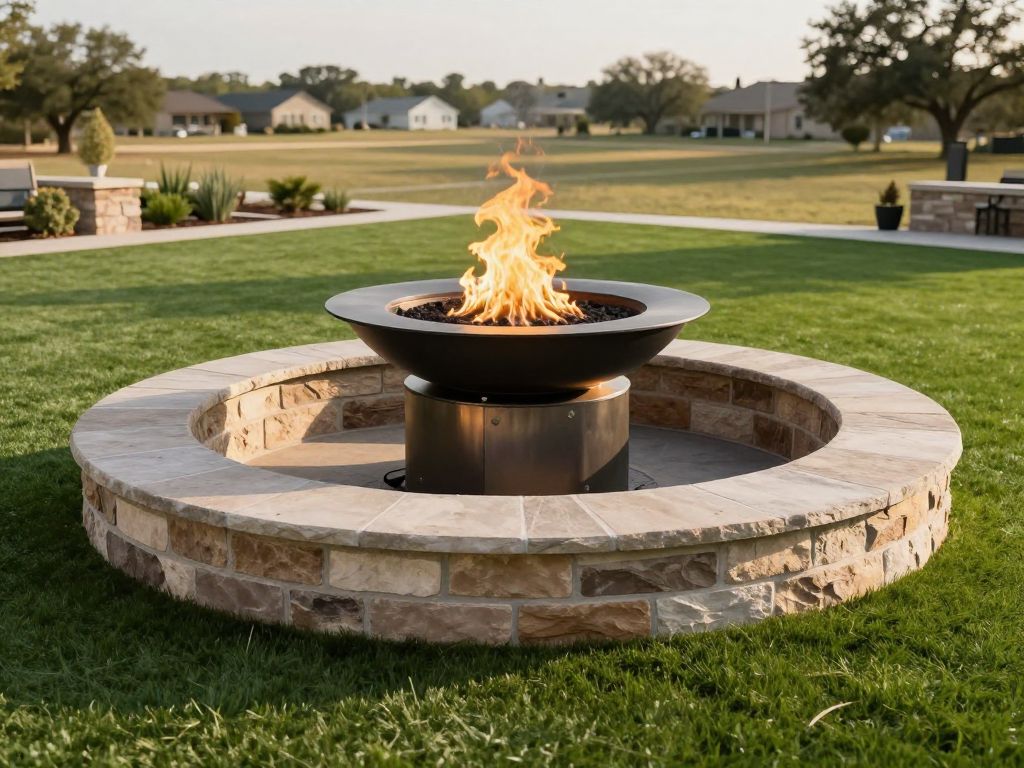
The Definitive Guide to Using Artificial Turf in DFW Firepit Areas
##?
Artificial turf can be safely and effectively incorporated into DFW firepit areas by ensuring the heat source is properly elevated, utilizing a non-flammable thermal barrier (such as a paver circle or metal plate) beneath the pit, and maintaining a minimum of eight feet of clearance from synthetic fibers to prevent melting or scorching caused by radiant heat and errant embers.
2. Deep Dive (Detailed Why and How)
Integrating a firepit into an artificial turf landscape creates a striking focal point, but it requires strategic installation to protect your investment.
Synthetic grass is made of plastic fibers that are highly durable but can melt when exposed to high heat. Direct radiant heat from the base of a firepit—or contact with a hot piece of stray charcoal or ash—will cause the synthetic blades to soften at temperatures around 175–200 °F, resulting in permanent melt spots.
To mitigate this risk, never place a firepit directly on the turf. You must establish a dedicated, non-combustible heat zone. This barrier prevents heat transfer and catches any sparks or embers that might escape the pit.
Ideal solutions include integrating a circular island of pavers, concrete, or stone directly into the turf area. This architectural element acts as a beautiful and safe landing zone for the firepit itself. For homeowners using portable fire bowls, placing the unit on an elevated steel stand or a thick heat-resistant pad ensures sufficient airflow and distance from the turf fibers.
For the safest experience, gas fire tables are often recommended over traditional wood-burning pits, as they radiate less downward heat and completely eliminate the danger of flying embers. If you choose wood, select a smokeless pit or one with a high-domed mesh cover to contain the fire effectively.
The layout is also crucial. Ensure that the firepit is positioned on level ground to prevent wobbling and potential spillage. Maintain at least eight feet of clear turf space around the perimeter of the fire feature to account for both radiant heat and sparks. This intentional design maintains the pristine look of your lawn while maximizing safety.
3. Quick Reference (Bulleted Key Takeaways)
- Use a Barrier: Always place firepits on a non-flammable barrier like pavers, concrete, or a heavy-duty metal heat shield.
- Elevate: Ensure the firepit is sufficiently raised to minimize direct radiant heat contact with the turf backing.
- Clearance: Maintain a minimum of eight feet of clear turf around the feature for safety.
- Type Matters: Gas fire tables are safer than wood pits due to reduced ember risk and more controlled heat radiation.
- Prevent Melting: Understand that stray sparks or ashes will melt synthetic fibers, making a solid barrier essential.
4. Strategic Hyperlink
Protecting your outdoor investment involves understanding every component of the process. To fully appreciate the quality materials and installation techniques that guarantee longevity, review our guide on the initial artificial grass investment.
Explore Related Turf Resources
Related Turf Guides
- Accessible Drainage Solutions for Turf: The Key to Truly Senior-Friendly Outdoor Spaces
If you’re exploring senior-friendly turf, accessible drainage solutions for turf are just as important as the turf itself.
- Aesthetic Comparison: Turf vs. Grass (and What Actually Looks Better Long-Term)
If you’re weighing turf pros and cons, the **aesthetic differences between turf and grass** are probably at the top of your list.
- Annual Turf Care Calendar: Your Simple, Seasonal Guide to a Healthier Lawn
If you’re wondering, “What should I be doing for my lawn right now?” the answer lives inside an **annual turf care calendar**.
- Are luxury artificial turf options worth the investment for DFW homeowners?
Yes, upgrading to luxury artificial grass offers unmatched aesthetics, superior durability, and a premium feel that significantly elevates your home’s outdoor living experience and long-term value.
- Are you tired of staring at a dull, high-maintenance patch of grass?
**Yes, you can absolutely transform your yard into a stunning, functional space with a backyard landscaping makeover, and synthetic turf is often the key ingredient for DFW homeowners.**