
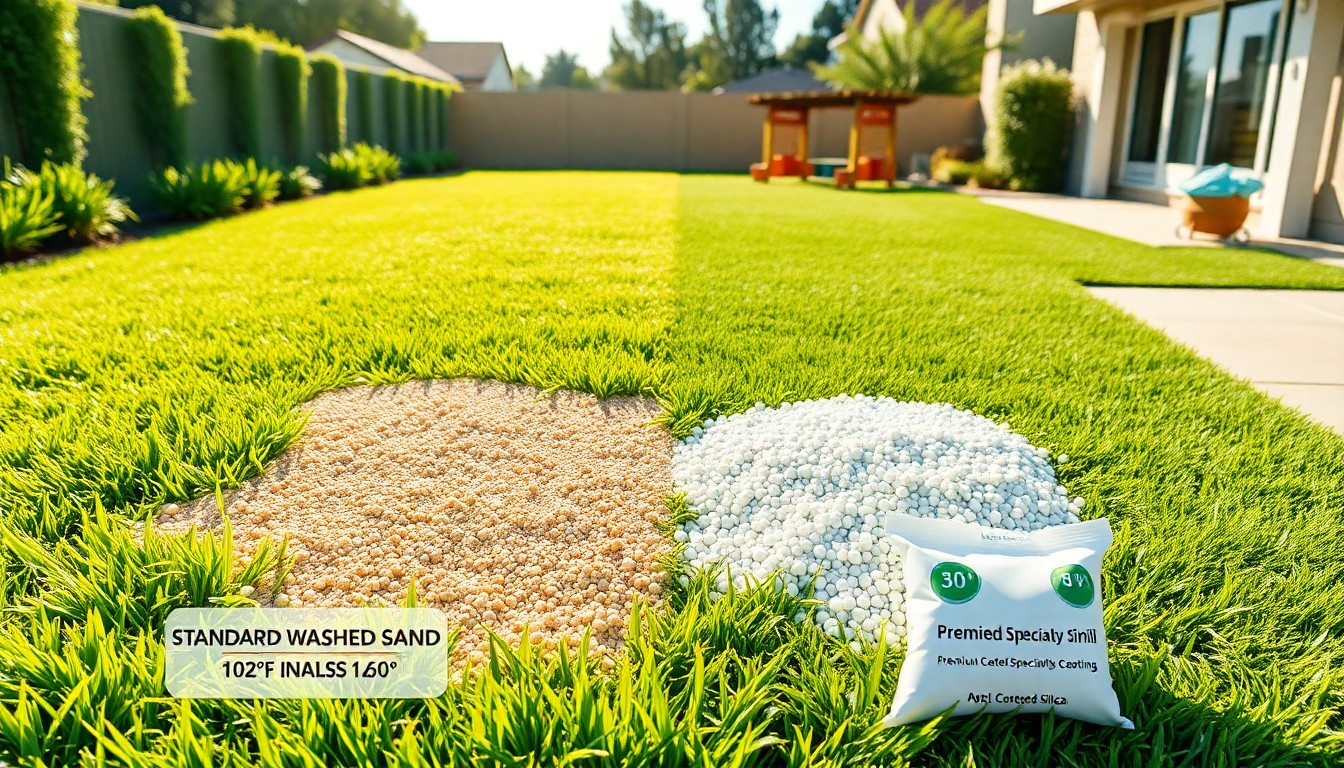
The Essential Difference Between Sand and Silica Infill for Artificial Turf
Sand infill (usually silica sand) and rubber infill are the two primary choices for artificial turf, each serving the critical function of weighing down the turf, supporting the blades, and improving drainage. The distinction lies in their composition, performance, and application suitability: basic sand is generally uncoated and cost-effective, while specialized coated silica infill (often referred to simply as "silica") provides superior thermal performance, better antimicrobial properties, and enhanced stability, especially in high-traffic or pet areas.
Deep Dive: Understanding Your Infill Options
Choosing the correct infill is as important as selecting the turf itself, as it directly impacts the longevity, aesthetics, and comfort of your synthetic lawn. * Standard Washed Sand/Silica Sand: This is the most common and economical infill option. It is typically non-toxic and serves as an excellent stabilizer, preventing the turf from wrinkling and keeping the blades upright. Its main function is adding weight to hold the backing down. However, basic sand can retain more heat and does not offer any odor control, making it less ideal for pet applications.
- Coated and Specialty Silica Infill: When professionals refer to "silica infill," they often mean a specialty product derived from silica that has been coated or treated. These advanced products are engineered to address the drawbacks of standard sand. They often feature proprietary coatings that reduce heat absorption (a major concern in DFW), improve drainage speed, and sometimes include antimicrobial agents to inhibit bacterial and fungal growth. The higher consistency of treated silica also tends to offer better long-term blade support than fine, shifting sand.
- Weight and Stability: Both materials provide the necessary ballast, but treated silica tends to settle more evenly and resists compaction better over time than standard sand. This is critical for maintaining a soft, consistent surface underfoot.
- Heat Management: For Texas homeowners, temperature is paramount. Standard sand can become quite hot under intense sunlight. Specialty silica and other performance infills are designed with lighter colors or reflective coatings to draw less heat, keeping the turf surface cooler and more comfortable for bare feet and pets.
- Application Suitability: If you have high-traffic areas, children, or dogs, investing in a high-quality, specialty infill is highly recommended. The enhanced drainage and antimicrobial properties of coated silica or similar products dramatically simplify cleaning and odor management. For purely aesthetic areas with very low usage, standard sand may suffice.
Quick Reference: Key Takeaways * Cost: Standard sand is the most budget-friendly option.
- Heat: Specialty (coated) silica infill offers better cooling properties than standard sand.
- Blade Support: Both provide stability, but quality treated silica often offers superior, long-term upright blade support.
- Pet Use: Standard sand lacks odor-control; treated/coated silica is far better suited for pet areas due to improved drainage and antimicrobial features.
- Durability: Treated infills generally prolong the life of the turf by cushioning the blades better against abrasion.To see how other performance infills stack up against sand and specialty silica for pet use and odor control, we recommend reviewing our guide on comparing infill types like sand and silica.
Explore Related Turf Resources
Related Turf Guides
- Accessible Drainage Solutions for Turf: The Key to Truly Senior-Friendly Outdoor Spaces
If you’re exploring senior-friendly turf, accessible drainage solutions for turf are just as important as the turf itself.
- Aesthetic Comparison: Turf vs. Grass (and What Actually Looks Better Long-Term)
If you’re weighing turf pros and cons, the **aesthetic differences between turf and grass** are probably at the top of your list.
- Annual Turf Care Calendar: Your Simple, Seasonal Guide to a Healthier Lawn
If you’re wondering, “What should I be doing for my lawn right now?” the answer lives inside an **annual turf care calendar**.
- Are luxury artificial turf options worth the investment for DFW homeowners?
Yes, upgrading to luxury artificial grass offers unmatched aesthetics, superior durability, and a premium feel that significantly elevates your home’s outdoor living experience and long-term value.
- Are you tired of staring at a dull, high-maintenance patch of grass?
**Yes, you can absolutely transform your yard into a stunning, functional space with a backyard landscaping makeover, and synthetic turf is often the key ingredient for DFW homeowners.**