
The Essential Toolkit for Professional Artificial Turf Installation
##?
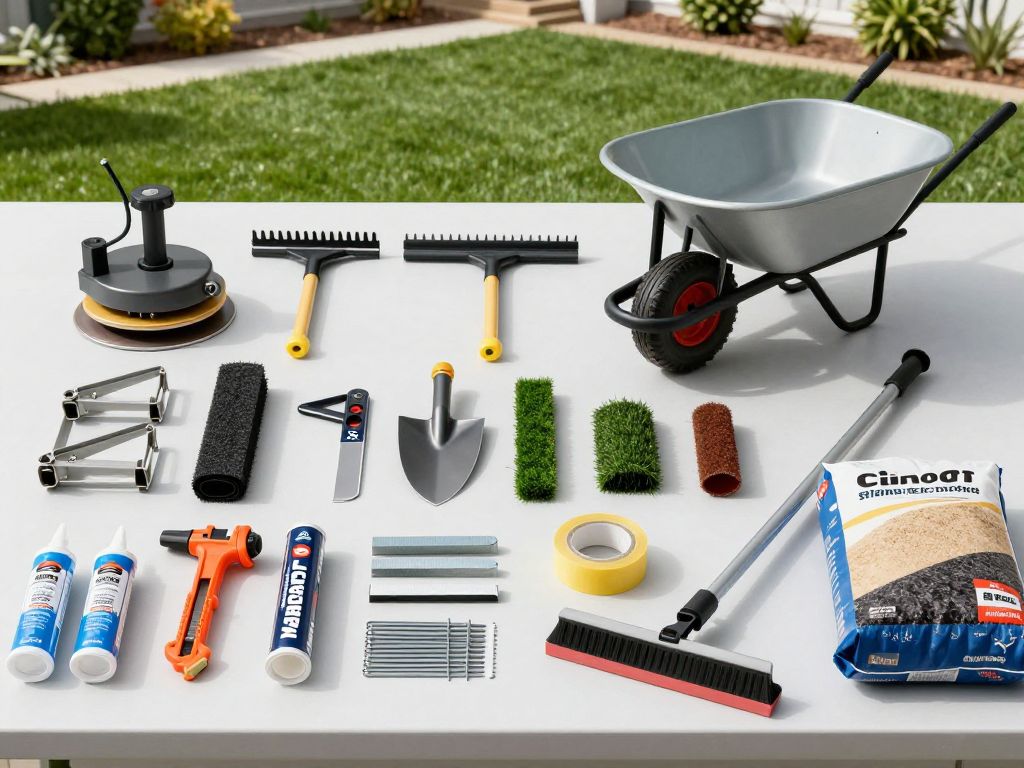
Successful artificial turf installation requires a specialized set of tools for preparation, laying, cutting, seaming, and finishing. The essential toolkit includes heavy-duty equipment like plate compactors and power brooms for base work, precision instruments like seam cutters and carpet kickers for laying the turf, and specialized supplies such as U-pins and landscape adhesive to secure the final product.
2. Deep Dive (Detailed Why and How)
When you decide to install synthetic grass, whether you are a seasoned DIYer or supervising a professional crew, understanding the required tools is critical to ensuring quality and longevity.
Base Preparation Tools: Setting the Foundation
The quality of your turf installation is determined largely by the sub-base. Removing the existing sod requires shovels, wheelbarrows, and often a sod cutter for large areas. Once the area is excavated, you need to create a stable, drainable base layer (typically decomposed granite or crushed rock).
A plate compactor is non-negotiable here. It compresses the base material to prevent shifting and settling over time, which is crucial for a smooth final appearance. A box rake or grading rake is used to ensure the aggregate base is perfectly level and pitched for proper drainage.
Turf Laying and Cutting Tools: Precision is Key
The turf itself is heavy and cumbersome. Carpet clamps or turf grips help installers move and position the large rolls without damaging the edges.
For cutting the turf rolls—both trimming the factory edges and fitting pieces around obstacles—you will need an industrial-grade utility knife with plenty of new blades. To create precise, clean seams, a dedicated seam cutter is necessary; this tool trims the backing material neatly so pieces fit together invisibly.
Seaming and Securing Tools: Making it Permanent
Connecting sections of turf requires robust landscape adhesive applied to seaming tape. A caulking gun or specialized adhesive spreader ensures even coverage.
To tighten seams and stretch the turf slightly to remove any wrinkles or ripples before securing, a carpet kicker (or turf stretcher) is used. Once the turf is positioned, U-pins or landscape staples are driven into the perimeter and seams to hold the turf securely in place during curing.
Finishing Tools: Activation and Aesthetics
The final step involves spreading infill material (like sand or crumb rubber) and ensuring the turf blades stand upright. This requires a drop spreader for even distribution of the infill, and critically, a power broom or stiff-bristled push broom. The power broom works the infill down into the thatch layer and brushes the synthetic fibers against the grain, giving the turf its realistic, lush appearance.
3. Quick Reference (Bulleted Key Takeaways)
- Preparation: Sod cutters and plate compactors are essential for base excavation and stabilization.
- Precision: Use utility knives and seam cutters for accurate, clean cuts and invisible seams.
- Laying: Turf grips and carpet kickers help position, stretch, and remove wrinkles.
- Security: High-quality landscape adhesive and U-pins ensure permanent fixture.
- Finishing: A power broom is vital for working the infill and activating the turf's natural look.
4. Strategic Hyperlink
Whether you plan to tackle the job yourself or hire a crew, understanding the necessity of these specialized tools informs the complexity of the project. To weigh the benefits of professional versus DIY installation, we recommend consulting our guide on the essential turf installation tools.
Explore Related Turf Resources
Related Turf Guides
- Accessible Drainage Solutions for Turf: The Key to Truly Senior-Friendly Outdoor Spaces
If you’re exploring senior-friendly turf, accessible drainage solutions for turf are just as important as the turf itself.
- Aesthetic Comparison: Turf vs. Grass (and What Actually Looks Better Long-Term)
If you’re weighing turf pros and cons, the **aesthetic differences between turf and grass** are probably at the top of your list.
- Annual Turf Care Calendar: Your Simple, Seasonal Guide to a Healthier Lawn
If you’re wondering, “What should I be doing for my lawn right now?” the answer lives inside an **annual turf care calendar**.
- Are luxury artificial turf options worth the investment for DFW homeowners?
Yes, upgrading to luxury artificial grass offers unmatched aesthetics, superior durability, and a premium feel that significantly elevates your home’s outdoor living experience and long-term value.
- Are you tired of staring at a dull, high-maintenance patch of grass?
**Yes, you can absolutely transform your yard into a stunning, functional space with a backyard landscaping makeover, and synthetic turf is often the key ingredient for DFW homeowners.**