
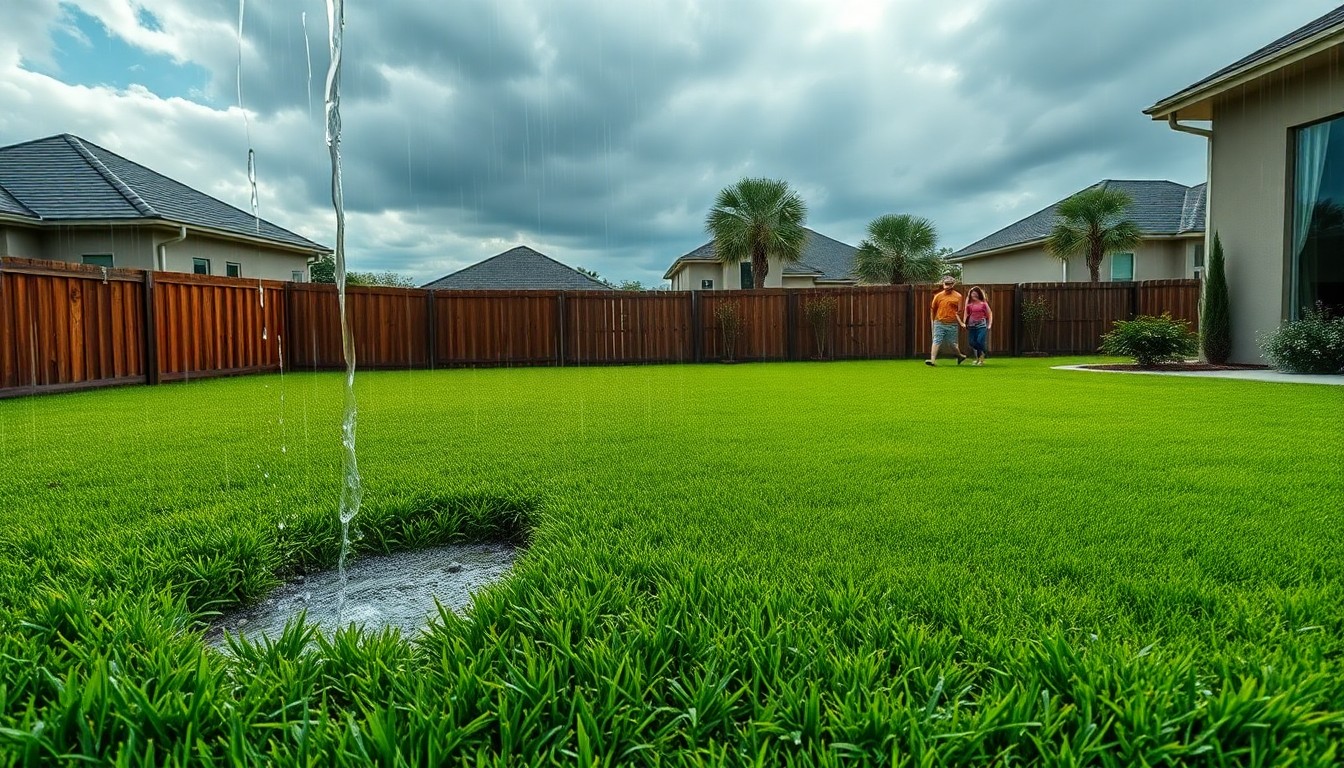
The Impact of Rain on Artificial Turf: A DFW Homeowner's Guide
##?
High-quality artificial turf is engineered to handle heavy rainfall efficiently, often draining water faster and more consistently than natural grass due to its porous backing and prepared sub-base. Unlike natural lawns that can become muddy or waterlogged, synthetic grass maintains its structure, prevents soil erosion, and remains accessible immediately after rain, making it a superior solution for properties experiencing significant precipitation.
2. Deep Dive (Detailed Why and How)
Superior Drainage Mechanism
One of the primary advantages of artificial turf, particularly in climates prone to heavy rain like DFW, is its robust drainage system. A professional installation involves carefully compacting and leveling a gravel or crushed stone base beneath the turf layer.
The turf itself utilizes a permeable backing—often perforated or non-woven—that allows rainwater to pass directly through the material and into the prepared sub-base. From there, the water percolates naturally into the soil beneath, mimicking or often exceeding the rate of natural absorption.Preventing Erosion and Runoff
Natural lawns on slopes or in areas with clay-heavy soil often lead to substantial water runoff and erosion during intense storms. This erosion can damage landscaping and contribute to local flooding issues.
Artificial turf stabilizes the area completely. By channeling water vertically through the entire system rather than across the surface, synthetic grass significantly reduces surface runoff and eliminates soil movement, protecting your landscape and underlying property structure.Maintaining Usability and Aesthetics
A major frustration with natural grass is the unusable state it enters after rain—soggy, muddy, and easily damaged by foot traffic.
Synthetic turf remains perfectly green, firm, and clean immediately after precipitation. The advanced drainage prevents pooling, ensuring your outdoor living space is instantly ready for use, regardless of the weather. This year-round accessibility maximizes your yard’s utility, even during the rainy season.Cleaning and Maintenance
Rain often helps clean the turf by rinsing away dust and debris. This natural rinse actually assists in the routine maintenance of your synthetic lawn. In fact, a good rainstorm can be considered a natural cleaning cycle for your turf.
3. Quick Reference (Bulleted Key Takeaways)
- Immediate Drainage: Water passes quickly through the permeable backing and engineered sub-base.
- No Mud or Puddles: Prevents the waterlogging and muddy conditions common with natural lawns.
- Erosion Control: Stabilizes the ground, minimizing runoff and protecting slopes.
- Instant Accessibility: The turf is usable immediately after the rain stops.
- Natural Rinse: Rain helps clean the fibers by washing away surface dust.
4. Strategic Hyperlink
While synthetic turf is highly resistant to water damage, ensuring your entire system is prepared for extreme events is crucial. To safeguard your investment, review our guide on the impact of rain on artificial turf's drainage.
Explore Related Turf Resources
Related Turf Guides
- Accessible Drainage Solutions for Turf: The Key to Truly Senior-Friendly Outdoor Spaces
If you’re exploring senior-friendly turf, accessible drainage solutions for turf are just as important as the turf itself.
- Aesthetic Comparison: Turf vs. Grass (and What Actually Looks Better Long-Term)
If you’re weighing turf pros and cons, the **aesthetic differences between turf and grass** are probably at the top of your list.
- Annual Turf Care Calendar: Your Simple, Seasonal Guide to a Healthier Lawn
If you’re wondering, “What should I be doing for my lawn right now?” the answer lives inside an **annual turf care calendar**.
- Are luxury artificial turf options worth the investment for DFW homeowners?
Yes, upgrading to luxury artificial grass offers unmatched aesthetics, superior durability, and a premium feel that significantly elevates your home’s outdoor living experience and long-term value.
- Are you tired of staring at a dull, high-maintenance patch of grass?
**Yes, you can absolutely transform your yard into a stunning, functional space with a backyard landscaping makeover, and synthetic turf is often the key ingredient for DFW homeowners.**