
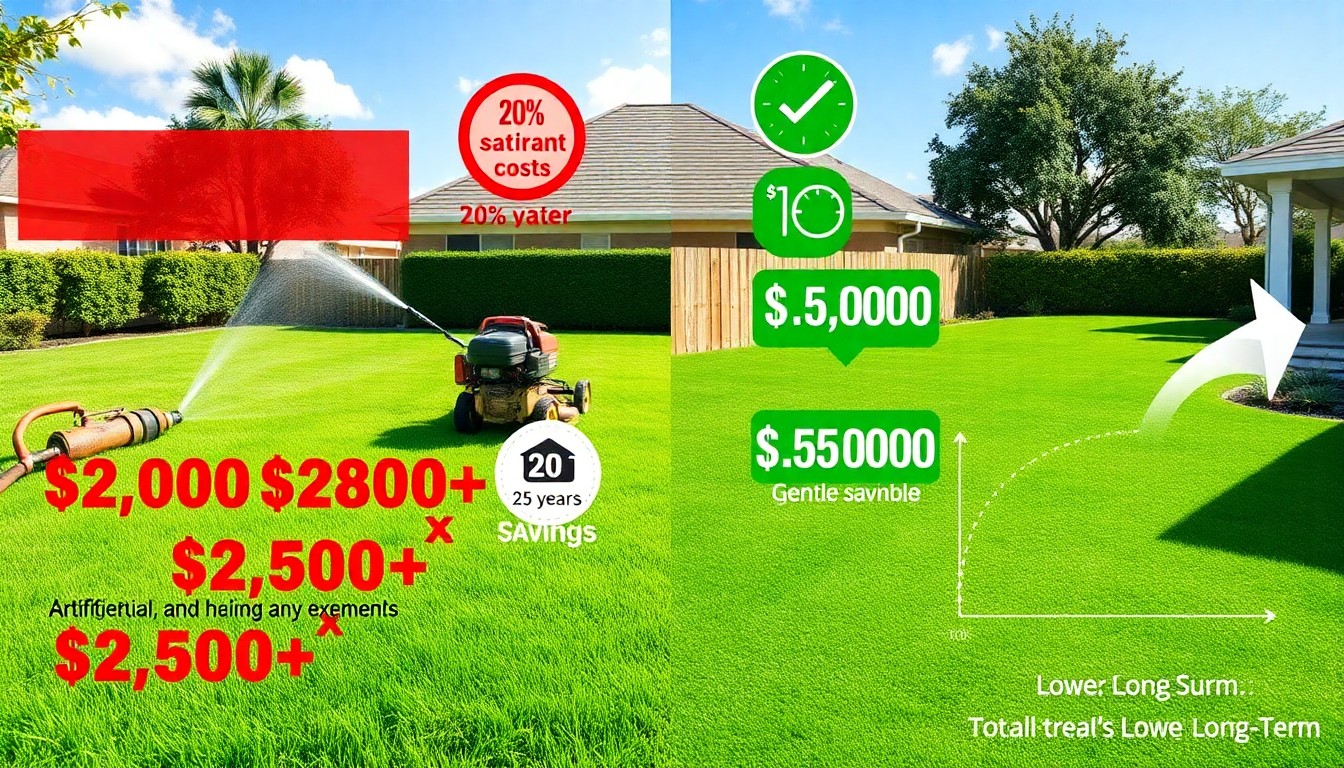
The True Cost Comparison: Artificial Turf vs. Natural Grass
##?
While artificial turf requires a higher upfront installation cost than planting natural grass, it delivers a significantly lower total cost of ownership over its 15-25 year lifespan due to the near-total elimination of recurring maintenance costs, dramatic water savings, and zero need for fertilizers or pesticides. For solution-aware DFW homeowners, this financial shift converts a variable, lifelong expense (natural grass) into a strategic, long-term, fixed asset (synthetic turf) with a predictable return on investment.
2. Deep Dive (Detailed Why and How)
When comparing turf and grass costs, it's essential to move past the initial installation price and look at the life-cycle expenditure. This is known as the "total cost of ownership."
Natural grass appears cheaper initially. Seeding or sodding your lawn is a relatively minor expense. However, this is where the predictable costs end and the recurring expenses begin.
Over a year in the DFW climate, natural grass demands constant financial input: weekly mowing (gas, equipment, or service fees), aeration, seasonal fertilization, chemical weed and pest control, and—most critically—irrigation. During a hot Texas summer, water usage can inflate your monthly utility bills dramatically. These costs compound every single year you own the home.
Artificial turf, conversely, is an investment in infrastructure. The initial price covers high-quality materials, sub-base preparation, and professional installation. This is the largest expense you will face.
After installation, the ongoing costs drop to virtually zero. You eliminate all mowing expenses, chemical costs, and fertilizer fees. Your water bill savings are immediate and substantial, especially when considering the hundreds of gallons of water natural lawns consume weekly in DFW heat.
Furthermore, artificial turf maintains its pristine look regardless of weather or usage, preventing the costly, recurring necessity of reseeding or replacing dead patches common with natural grass.
3. Quick Reference (Bulleted Key Takeaways)
- Upfront Cost: Turf is significantly higher initially; natural grass is low.
- Recurring Maintenance: Turf is near zero (only basic rinsing/brushing); grass is high and continuous (mowing, chemicals, labor).
- Water Bills: Turf generates massive savings; grass incurs significant summer watering costs.
- Life Expectancy: Turf lasts 15-25+ years; grass requires continuous input and occasional costly reseeding/resodding.
- Return on Investment (ROI): Turf offers a measurable ROI through utility and labor savings; grass offers none.
4. Strategic Hyperlink
The transition to synthetic grass is a financial decision that pays dividends over time. To fully quantify how much you can save and when your turf investment breaks even, we encourage you to review our detailed analysis to Calculate the overall ROI of artificial turf.
Explore Related Turf Resources
Related Turf Guides
- Budget Turf Options for DFW Homes: Affordable Backyard Turf Options That Still Look Great
If you’re a Dallas–Fort Worth homeowner looking for **affordable backyard turf options**, here’s the bottom line:
- Budget Turf Options for Seniors: Simple, Safe, and Affordable
If you’re looking for **budget-friendly turf ideas for seniors**, you’re probably asking one simple question:
- Cutting & Shaping Turf Correctly: The Step You Can’t Afford to Rush
Learn about Cutting & Shaping Turf Correctly: The Step You Can’t Afford to Rush with practical guidance from All American Turf in Dallas-Fort Worth.
- DFW Turf Cost Expectations: Understanding the Investment
**?
- DFW Turf Cost Overview: Average DFW Turf Cost Explained & What Impacts ROI
If you’re just trying to get a realistic number fast, here’s the short version most DFW homeowners are searching for: