
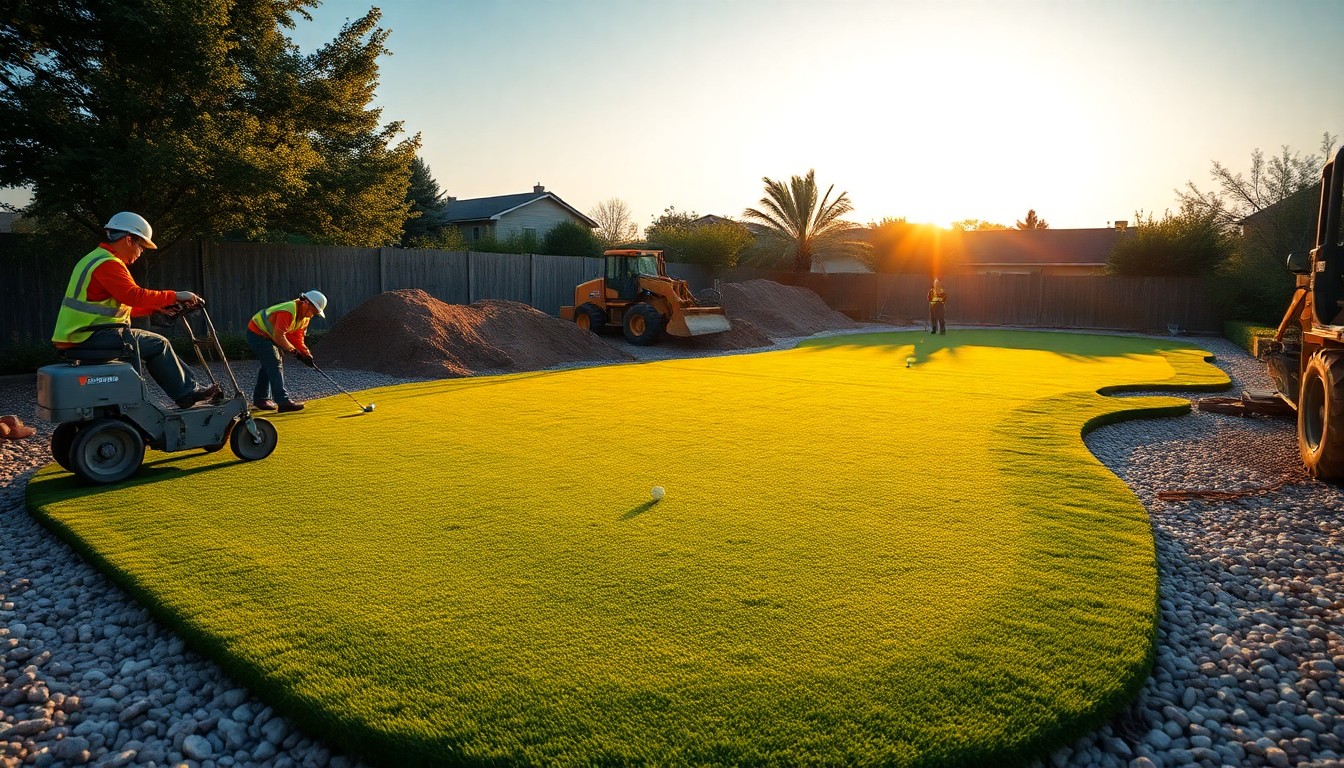
What does a professional putting green installation involve, and why is it necessary?
A professional putting green installation is a specialized, multi-step process that ensures optimal performance, aesthetics, and longevity of the turf, moving far beyond simple DIY attempts. It involves expert site preparation, precise base compaction, custom contouring for realistic breaks and slopes, seamless turf application, and specialized infill to achieve a true, consistent ball roll (Stimp speed).
For bottom-of-funnel (BOFU), solution-aware homeowners, professional installation is not merely a service; it is the critical factor that transforms a patch of synthetic grass into a high-performance practice surface that mirrors the quality of a private course.
The Precision of Professional Installation
When you invest in a home putting green, the quality of the installation directly dictates the quality of your practice. Unlike landscaping turf, a putting green requires exact engineering.
The foundation is everything. A professional crew starts by excavating the area and establishing a multilayered sub-base, typically consisting of crushed rock and decomposed granite. This base is compacted to near-concrete density to prevent settling, heaving, and warping—issues that can ruin the green's performance over time, especially with DFW’s shifting soils.
Custom contouring is where artistry meets engineering. Professionals use specialized tools and techniques to design subtle, yet challenging, undulations and breaks into the sub-base before the turf is laid. This allows for personalized speed and challenge levels, replicating the complexity of natural greens.
The turf itself must be cut, seamed, and bonded with impeccable precision. Any visible seams or inconsistencies in the material will translate to an unreliable roll. Specialized, non-directional turf is used, and it is meticulously installed to ensure the grain (or direction) does not unfairly affect ball travel.
Finally, the correct infill (often specialized silica sand or ceramic material) is applied and brushed deep into the fibers. This serves three vital functions: it weighs down the turf, protects the fibers from wear, and, most importantly, adjusts the speed of the ball roll to the desired Stimp rating. This level of calibration is impossible to achieve without professional-grade equipment and experience.
- Key Components of a Quality Installation: * Sub-Base Compaction: Ensures zero settling, which is necessary for a perfectly flat or contoured surface.
- Custom Contouring: Creates realistic breaks, slopes, and undulations for challenging play.
- Seam Integrity: Utilizes commercial-grade adhesives and precision cutting for invisible, durable seams.
- Infill Calibration: Specialized infill is applied and brushed to control the Stimp speed (ball roll speed).
- Drainage Integration: Ensures water moves efficiently through the green and surrounding area, preventing pooling.The expertise required to achieve a professional-grade ball roll is why the installation phase is the most valuable part of the entire investment. To explore how this expertise translates to larger-scale projects, you can Learn about professional installation services for putting greens at /commercial-golf-turf.
Explore Related Turf Resources
Related Turf Guides
- Backyard Golf Ideas: How to Turn Your Yard into a Personal Putting Playground
If you’re looking for backyard golf course ideas that feel fun, low-maintenance, and actually help your game, start with this simple principle:
- Backyard Putting Green Cost Estimate
The cost of an expertly installed artificial turf putting green for a DFW home typically ranges based on size, complexity, turf quality, and necessary ground preparation. Homeowners should anticipa...
- Ball Roll Speed Optimization: The Definitive Guide to Achieving Tournament-Grade Consistency on Your Artificial Putting Green
Ball Roll Speed Optimization: The Definitive Guide to Achieving Tournament-Grade Consistency on Your Artificial Putting Green
- Best Home Chipping Practice Turf
The ideal artificial turf for a home chipping practice area is a densely packed, short-pile synthetic grass designed to replicate the tight lie of a professional fairway or fringe, ensuring clubs interact cleanly with the "ground" for consistent ball striking and realistic performance.
- Can I install artificial turf directly over a concrete patio or slab?
Yes, absolutely! Installing artificial turf over concrete is an excellent way for DFW homeowners to transform drab, hard surfaces into beautiful, soft, and functional green spaces.