
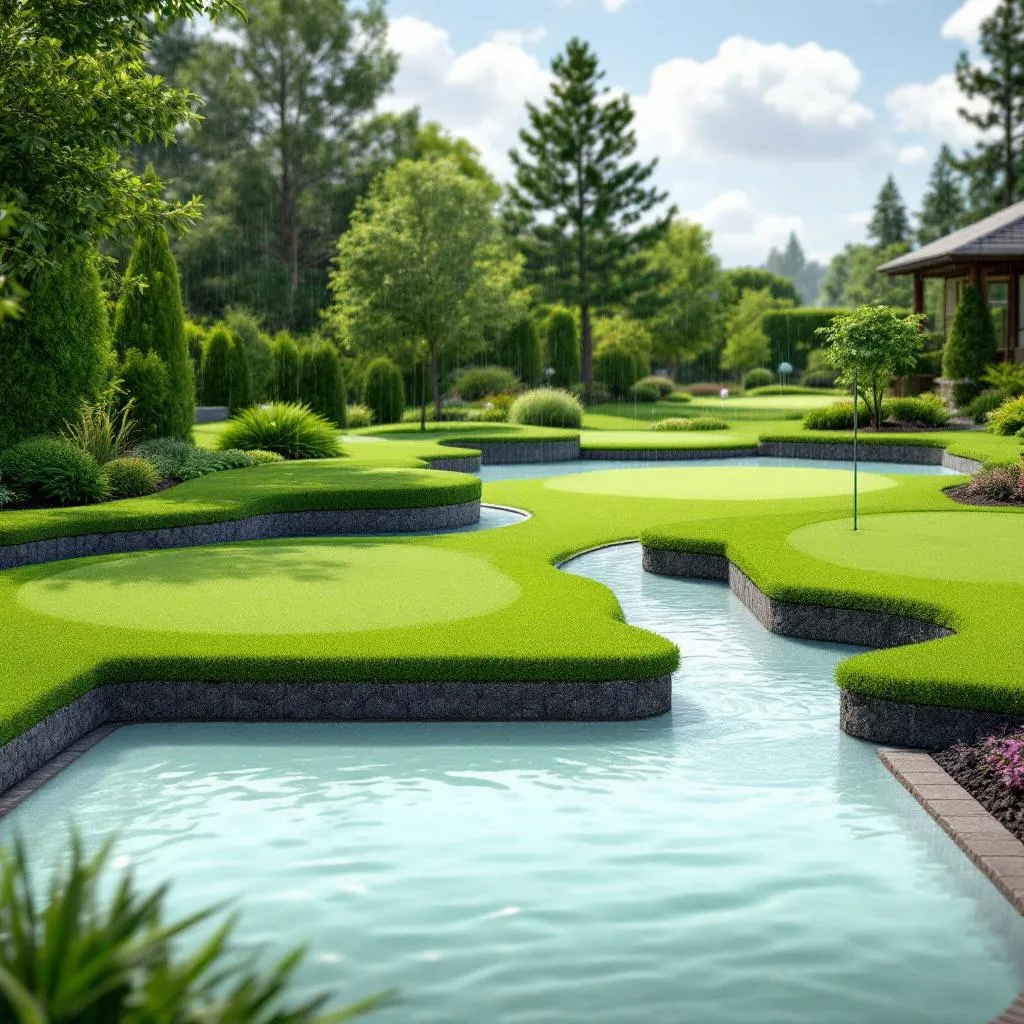
Putting Green Drainage: The Fast Answer (and Why It Matters More Than You Think)
If water sits on your putting green, you have a drainage problem—no matter how good your turf is.
Here’s the core idea in one sentence:
**Good putting green drainage solutions protect your turf, keep ball roll true, and make your green playable faster after rain.
Everything else—from how you shape contours to what you install under the turf—should support that one goal: move water away efficiently without ruining the putting experience.
What Is Putting Green Drainage?
At its simplest, putting green drainage is the way you design and build your green so water:
- Doesn’t sit on top of the turf
- Flows off the surface quickly and predictably
- Drains through the base layers into the soil or a drain system
- Keeps the putting surface smooth, firm, and consistent
It’s not just pipes and gravel. It’s a system that includes:
- Contours and slopes (surface shaping)
- Base materials (compacted stone, decomposed granite, or sand)
- Drainage channels or pipes (for heavy rain or poor native soil)
- The putting green turf itself (and how permeable it is)
Why Putting Green Drainage Is So Important Right Now
More homeowners, coaches, and facilities are installing putting green turf than ever before. That means more people are discovering this surprise:
A green can look perfect on day one and still drain terribly.
Weather patterns are also changing in many areas:
- Heavier, more frequent storms
- Longer dry spells between rain
- More freeze-thaw cycles in some climates
All of that puts extra pressure on drainage. If you plan a green today as if you’ll only ever get light showers, you’re setting yourself up for:
- Puddles and soggy spots
- Mold, odors, and bacteria buildup under the turf
- Base movement and wrinkles in the turf
- Unpredictable ball roll and dead spots
So the question is no longer “Do I need drainage?” It’s:
“What level of drainage is right for my putting green, my climate, and my soil?”
The Core Principles of Good Putting Green Drainage
Think of putting green drainage as three layers of decisions:
- Surface drainage – how water moves across the turf
- Subsurface drainage – how water passes through the base
- Exit drainage – where that water actually goes
Each layer needs to work with the others.
1. Surface Drainage: Shaping the Green to Move Water
The fastest drainage solution is built into the shape of the green itself.
- Key idea:
A well-shaped green rarely lets water stand still. Gentle slopes and contours guide water off the surface without making the green unplayable.
Essential practices:
-
Avoid flat areas
- Even a “flat” putt should have a very slight slope (often 1–2%)
- Completely level sections easily become puddle zones
-
Use subtle fall lines
- Design the green so water always has a “preferred” direction to travel
- Think: “If I poured a bucket of water here, where would it go?”
-
Plan low points intentionally
- Any natural low point should have a drainage strategy underneath
- Never let a low point just “happen” where water will sit
-
Align slopes with playability
- Avoid extreme slopes that make putts unrealistic or frustrating
- Use gentle swales and ridges to move water and add interest
To dive deeper into how shaping the surface and designing contours to accommodate drainage work together, you can explore more about putting green contours. The way you contour your green is one of the most powerful putting green drainage solutions you have—before you touch a single drain pipe.
2. Subsurface Drainage: What Happens Under the Putting Green Turf
Even with perfect surface slopes, water still needs to go down through the turf and base.
A typical subsurface drainage system includes:
-
Permeable putting green turf
- Backed with perforations that let water pass through
- Designed for high drainage rates (often far higher than natural grass)
-
Base layers
- Usually compacted crushed stone, DG (decomposed granite), or sand blends
- Built in lifts (layers), compacted for strength but not sealed so tight that water can’t move
-
Drainage channels or trenches
- Cut into the base and filled with gravel
- May or may not contain perforated drain pipe
- Carry water away from the green’s footprint
Goals of good subsurface drainage:
- Move water away from turf backing quickly
- Prevent “trapped water” pockets that lead to odors and algae
- Keep the base stable and load-bearing over time
- Allow the green to dry out relatively quickly after rain
3. Exit Drainage: Where the Water Actually Goes
Even the best-designed putting green drainage solutions fail if water has nowhere to exit.
Important considerations:
-
Slope away from buildings and structures
- Never direct green runoff toward foundations, patios, or pool decks
-
Use daylighting when possible
- Let drains outlet to a lower, visible point where water can flow away
- This avoids hidden, always-wet ground around your green
-
Tie into existing systems carefully
- If you connect to French drains, yard drains, or storm systems, ensure they have the capacity
- A clogged existing system can send water right back toward your green
-
Respect local codes and neighbors
- Avoid directing water onto neighboring properties
- Follow any municipal rules about drainage discharges
Common Putting Green Drainage Problems (and What They Tell You)
Symptoms on the surface usually point to specific underlying issues.
1. Puddles after light rain
Likely causes:
- Low spots in the surface grading
- Base not properly crowned or sloped
- Turf installed over an uneven base
2. Water draining slowly after heavy rain
Likely causes:
- Base material too fine or compacted too tightly
- Lack of subsurface drainage channels
- Native soil below base is heavy clay, limiting percolation
3. Turf feels spongy or “squishy”
Likely causes:
- Water trapped in or under the base
- Organic debris buildup under turf (leaves, soil, etc.)
- Poor exit drainage
4. Algae, moss, or odor under the turf
Likely causes:
- Chronic excess moisture
- Little to no air movement under the system
- Drain paths clogged or insufficient
Understanding these signs helps you choose the right putting green drainage solutions—whether that’s reshaping contours, improving base material, or adding drains.
How Putting Green Drainage Affects Playability
Drainage is not just a “maintenance” issue—it directly shapes how the green plays.
Better drainage tends to mean:
-
More consistent ball roll
- Less soft or “grabby” turf in wet areas
- Fewer sudden speed changes across the surface
-
Faster return to play after rain
- You can use the green sooner
- Less risk of damaging the surface by walking on it wet
-
More realistic practice
- Greens that drain like real courses help you prepare better
- Contours remain true instead of deforming over time
Poor drainage, on the other hand, often leads to:
- Spots that stay softer and slower than the rest of the green
- Subtle dips or depressions forming over time
- Frustrating inconsistency that undermines practice quality
Designing Contours That Work WITH Drainage, Not Against It
Contours and drainage are deeply connected. You can’t design one well without thinking about the other.
When planning contours:
-
Start with drainage paths first
- Sketch where you want water to flow off the green
- Then layer breaks, ridges, and hole locations around that pattern
-
Use ridges to divide drainage zones
- A central spine or ridge can send water in different directions
- This helps keep any one area from getting overloaded
-
Avoid “bowls” without an exit
- Every low area must have a defined drainage strategy
- Hidden “saucers” in the surface quickly become ponding spots
-
Think like a golfer and a civil engineer
- Ask: Is this putt interesting?
- Also ask: Where does every drop of water go from here?
For a deeper dive into shaping breaks, slopes, and putting surfaces that still drain efficiently, you can explore more about putting green contours and how they interact with drainage.
Matching Drainage Solutions to Different Site Conditions
Every site is different. The best putting green drainage solutions depend on:
- Climate
- Soil type
- Space available
- Surrounding features (buildings, slopes, trees)
Below are examples of how strategies can change.
Drainage in Wet or Rainy Climates
In areas with frequent or heavy rain, prioritize:
- Higher base elevations (don’t set the green in a low-lying swampy area)
- Strong surface slopes (without making the green unplayable)
- Heavier use of subsurface drains under low points
- Well-planned exit points to avoid saturated surroundings
Drainage in Arid or Hot Climates
You might think drainage is less of a concern in dry climates, but you still need it:
- Occasional storms can be intense, overwhelming poor drainage
- Without good drainage, water can pool, evaporate, and leave mineral deposits
- Efficient drainage reduces long-term base damage from the few heavy storms you do get
In hot climates, good drainage also helps:
- Reduce heat buildup under the turf by avoiding constant trapped moisture
- Keep the base from expanding and contracting unevenly
Drainage for Clay vs. Sandy Soil
Your native soil strongly affects how aggressively you need to drain.
-
Clay soil
- Holds water, drains slowly
- Often requires more structured drains and well-designed exit paths
- Essential to prevent the base from sitting on a “bathtub” of wet clay
-
Sandy soil
- Drains quickly
- May allow simpler systems with fewer installed drain lines
- Still needs managed exit points to avoid erosion
Understanding your soil type helps you choose the right combination of contouring, base material, and subdrainage.
Maintaining Drainage Over Time
Even a well-designed drainage system can lose performance without basic upkeep.
Helpful habits:
-
Keep debris off the surface
- Regularly blow or brush off leaves, pine needles, and dirt
- This prevents organic buildup that clogs backing perforations
-
Check outlets after storms
- Ensure discharge points aren’t blocked by soil, mulch, or plant growth
-
Look for recurring wet spots
- If one area consistently stays wet, there may be a localized drainage issue worth inspecting
-
Protect surrounding grades
- Avoid adding mulch, soil, or features that trap water around the edges of the green
Maintenance doesn’t need to be complex—it’s mostly about keeping water paths open.
Where Putting Green Turf Fits into the Drainage Picture
Putting green turf is only one part of the system, but it plays a key role in how quickly water enters the base.
Good turf for drainage typically:
- Has a permeable backing with drainage holes
- Allows large volumes of water to pass through quickly
- Works well with compacted stone or sand-based bases
- Holds its shape over time so contours don’t distort
However, even the most permeable turf cannot fix poor grading or inadequate subdrainage. It’s the combination of:
- Thoughtful contours
- Proper base design
- Smart exit strategies
that makes drainage effective and long-lasting.
FAQ: Putting Green Drainage & Putting Green Turf
| Question | Answer |
|---|---|
| Do I always need drain pipes under a putting green? | Not always. Small greens on well-draining soil with good contours can sometimes function with just a properly built base. However, in clay soils, flat yards, or high-rain areas, adding drain lines under low points is one of the most reliable putting green drainage solutions. |
| What slope should a putting green have for good drainage? | Many designs use surface slopes of around 1–3% in main putting areas. That’s usually enough to move water while still keeping putts realistic. Avoid large flat zones, and ensure every area has a subtle direction for water to flow. |
| Can I fix drainage problems without tearing up the whole green? | Sometimes. Minor standing water caused by small depressions might be corrected by lifting turf, adjusting the base, and reinstalling it. Deeper issues—like an un-sloped base or no exit drainage—often need more extensive work. |
| How does contour design affect drainage? | Contours essentially “tell” water where to go. Thoughtful contour design prevents bowl-shaped low spots, creates clear drainage directions, and balances playability with water movement. For more on this connection, see resources on putting green contours . |
| Is artificial putting green turf better for drainage than natural grass? | In many cases, yes. Quality putting green turf is engineered to be highly permeable, often draining faster than typical native soil. But performance still depends heavily on the base construction and drainage plan underneath. |
| How fast should a well-drained green dry after rain? | It depends on rainfall amount, temperature, and wind. As a general guideline, a well-designed synthetic putting green with good drainage and contours should shed standing water quickly and feel largely playable in a relatively short period once rain stops. |
| What’s the biggest mistake people make with putting green drainage? | Treating drainage as an afterthought. Many issues come from designing for looks and play first, then trying to “add drainage” later. In reality, contouring, base design, and drainage should all be planned together from the start. |
Key Takeaways: How to Think About Putting Green Drainage
When you step back, the most effective way to approach putting green drainage is to keep these points in mind:
-
Drainage starts with shape.
Smart contours and slopes are your first and most powerful tools. -
The base matters as much as the turf.
Materials, compaction, and subsurface channels all affect performance. -
Water always needs a destination.
Every drop that hits your putting green turf should have a clear path off the surface, through the base, and away from the area. -
Design, don’t just “install.”
A green that looks great and drains well is the result of intentional planning—not just rolling out turf.
By understanding these fundamentals, you can better evaluate designs, ask sharper questions, and choose putting green drainage solutions that keep your green true-rolling, durable, and enjoyable for years.
Explore Related Turf Resources
Related Turf Guides
- Backyard Golf Ideas: How to Turn Your Yard into a Personal Putting Playground
If you’re looking for backyard golf course ideas that feel fun, low-maintenance, and actually help your game, start with this simple principle:
- Backyard Putting Green Cost Estimate
The cost of an expertly installed artificial turf putting green for a DFW home typically ranges based on size, complexity, turf quality, and necessary ground preparation. Homeowners should anticipa...
- Ball Roll Speed Optimization: The Definitive Guide to Achieving Tournament-Grade Consistency on Your Artificial Putting Green
Ball Roll Speed Optimization: The Definitive Guide to Achieving Tournament-Grade Consistency on Your Artificial Putting Green
- Best Home Chipping Practice Turf
The ideal artificial turf for a home chipping practice area is a densely packed, short-pile synthetic grass designed to replicate the tight lie of a professional fairway or fringe, ensuring clubs interact cleanly with the "ground" for consistent ball striking and realistic performance.
- Can I install artificial turf directly over a concrete patio or slab?
Yes, absolutely! Installing artificial turf over concrete is an excellent way for DFW homeowners to transform drab, hard surfaces into beautiful, soft, and functional green spaces.