
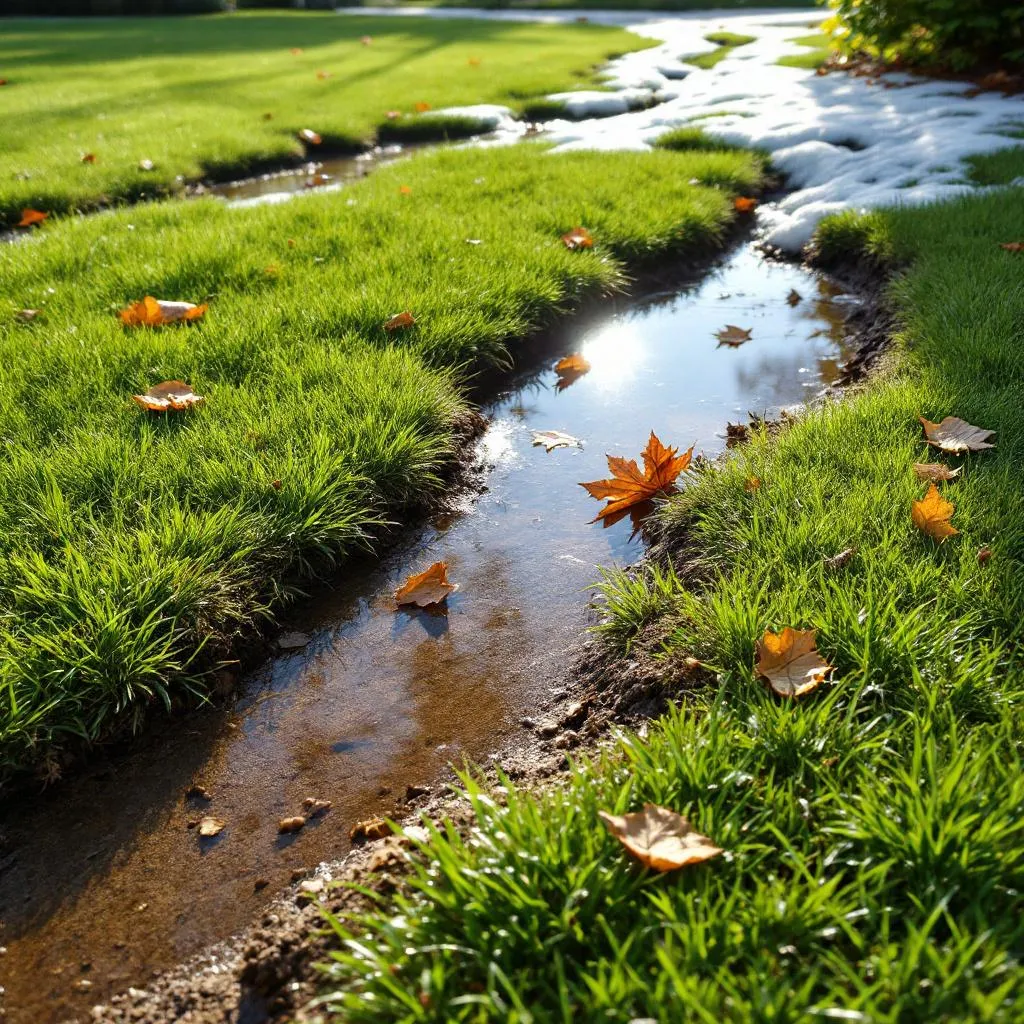
Seasonal Drainage Performance: The Simple Guide to Keeping Water Moving Year-Round
If you’re wondering, “Why does my lawn/yard suddenly hold water in some seasons but not others?” you’re already asking the right question about seasonal drainage performance.
Here’s the short answer first:
- Your property drains differently in spring, summer, fall, and winter because:
- Soil structure changes with temperature and moisture.
- Vegetation, root growth, and thatch levels change by season.
- Rainfall intensity and snowmelt vary through the year.
- Pollen, leaves, and debris can clog drainage pathways seasonally.
- Paying attention to seasonal drainage performance helps you:
- Prevent puddling, mud, and slippery surfaces.
- Reduce risk of foundation damage and basement moisture.
- Protect turf health and avoid compaction or root rot.
- Plan smarter seasonal care for your yard, lawn, or landscape.
The rest of this seasonal drainage performance guide will walk you through:
- What seasonal drainage performance actually means
- Why it changes through the year
- How to spot good vs. poor performance
- Seasonal care habits that protect your property
- How factors like pollen and thatch come into play
What Is Seasonal Drainage Performance?
Seasonal drainage performance is how effectively water moves through and away from your lawn, garden, and landscape during different times of the year.
It’s not just “Does my yard drain?” but rather:
- How quickly water disappears after rain or snowmelt
- How consistently different areas handle moisture through the seasons
- How seasonal changes (temperature, plant growth, pollen, leaves) impact infiltration and runoff
Think of it as your property’s “drainage behavior” over a full year, not just during one big storm.
Why Seasonal Drainage Performance Matters Right Now
Seasonal drainage performance feels most relevant when:
- You notice standing water after spring storms
- Your lawn turns to mud in fall
- Ice sheets form in low spots in winter
- Turf thins or dies in summer where water lingers
Paying attention now helps you:
- Spot early warning signs before you face erosion, mold, or structural damage
- Time your aeration, overseeding, and soil amendments when they’ll have the most impact
- Understand why your drainage seems fine one month and terrible the next
If your yard behaves differently in March than in August, that’s seasonal drainage performance in action.
The Core Factors That Shape Seasonal Drainage Performance
Seasonal drainage performance is driven by a combination of factors that change over the year:
- Soil Conditions
- Clay, silt, or sand dominance
- Compaction from foot traffic or equipment
- Freeze-thaw cycles that tighten or loosen soil
- Moisture Levels
- Saturated soil in early spring
- Dry, hydrophobic soil in mid-summer
- Slow to thaw, semi-frozen soil in late winter
- Vegetation & Roots
- Active roots in spring and fall promoting infiltration
- Dormant or shallow roots in extreme heat or cold
- Thatch buildup creating a sponge-like barrier
- Organic Debris
- Pollen, seed heads, and dust in spring and early summer
- Leaves, needles, and branches in fall
- Weather Patterns
- Intense downpours vs. steady light rain
- Snow, ice, and freeze-thaw transitions
Your seasonal care choices—mowing, raking, aerating, and cleaning drainage paths—decide whether these factors work with or against your drainage.
How Seasonal Drainage Performance Changes by Season
Understanding drainage by season helps you target the right fix at the right time.
Spring: Saturated Soils and First Signs of Trouble
Spring is when seasonal drainage performance is most obvious:
- Snowmelt and frequent rain keep soils near saturation.
- Partially frozen or just-thawed layers can trap water.
- Turf may be thin or weak coming out of winter, exposing wet spots.
Common spring drainage symptoms:
- Persistent puddles 24+ hours after rain
- Spongy grass that squishes underfoot
- Bare soil that stays slick and muddy
- Early moss growth in chronically damp areas
Spring care to support seasonal drainage performance:
- Limit traffic on soft, saturated turf to avoid compaction.
- Clear debris (sticks, leftover leaves) from low spots and drains.
- Observe patterns:
- Where does water pool?
- How long does it take to soak in or run off?
- Do gutters or downspouts dump into problem areas?
- Plan for aeration and topdressing once soil is firm enough to support equipment.
Summer: Fast Storms, Dry Soil, and Compaction
Summer drainage problems often look different from spring:
- Heavy, fast storms can overwhelm compacted or dry soils.
- Baked, dry ground can initially repel water, causing runoff.
- Higher foot traffic (kids, pets, parties) increases compaction.
Common summer drainage symptoms:
- Water runs off slopes instead of soaking in
- Dry, cracked soil that briefly turns muddy, then hard again
- Thin turf in areas that collect water after storms
- Localized “burn” or stress where roots are shallow from poor infiltration
Summer care to support seasonal drainage performance:
- Raise mowing height to encourage deeper roots and better water use.
- Water deeply but infrequently to promote infiltration, not surface wetness.
- Address compaction in high-traffic areas with spot-aeration or deep-tine tools.
- Watch for surface crusting on bare soil and break it up gently.
Fall: Leaves, Thatch, and Hidden Drainage Barriers
Fall is the season when drainage can quietly become clogged:
- Falling leaves, needles, and seed pods blanket surfaces.
- Thatch layers may be at their yearly maximum.
- Cooler temps and steadier rain can expose weak drainage spots.
Common fall drainage symptoms:
- Slow disappearance of water after light or moderate rain
- Water sitting on top of thatch or leaf mats
- Slippery, slick soil under leaf piles
- Mushrooms or fungi in chronically damp turf
Fall care to protect seasonal drainage performance:
- Keep leaves cleared, especially in low-lying or shaded areas.
- Consider dethatching if thatch is thicker than about ½ inch.
- Use fall’s cooler weather for core aeration and overseeding.
- Check that drains, swales, and downspout outlets are free of organic buildup.
Winter: Frozen Ground and Slow Infiltration
Winter drainage is less obvious but still important:
- Frozen or partially frozen soil slows water movement.
- Melt events can create pooling and refreezing.
- Snowmelt patterns reveal low spots and compaction issues.
Common winter drainage symptoms:
- Ice sheets forming in depressions or on walkways
- Water flowing in erratic paths during thaws
- Refreezing at the base of slopes or near foundations
Winter care to maintain seasonal drainage performance:
- Avoid heavy equipment on frozen turf to limit deep compaction.
- Gently channel meltwater away from structures where safe and possible.
- Use de-icing materials thoughtfully—excessive salt can alter soil structure over time.
- Take mental (or physical) notes of where winter water accumulates to address in spring.
How Pollen and Seasonal Debris Affect Turf Drainage
One factor many people overlook in seasonal drainage performance is pollen.
During pollen-heavy seasons, a surprising amount of fine material settles on your turf and hard surfaces:
- Pollen grains, dust, and other airborne particles
- Seed heads and fine plant debris
- Microscopic organic material that can collect in low spots
Over time, especially when combined with moisture, pollen can:
- Form a thin film that reduces infiltration
- Feed microbial layers that make surfaces slick
- Become part of the thatch layer, slowing water movement
If you’ve noticed hazy yellow residue on your lawn or driveway in spring, that’s pollen contributing to seasonal drainage changes. To explore this interaction more deeply, including how pollen affects turf resilience and water movement, see the discussion on pollen season and turf and how it relates to seasonal turf drainage behavior.
Simple Ways to Evaluate Your Seasonal Drainage Performance
You don’t need advanced tools to start understanding how your property drains across seasons.
Use this quick, repeatable approach:
- After a typical rain event
- Check how long it takes for water to disappear from:
- Lawn
- Beds
- Walks and driveways
- Near the house or structures
- Check how long it takes for water to disappear from:
- Watch for consistent problem indicators
- Standing water 24+ hours after rain
- Muddy spots that never fully dry
- Thin, yellowing, or mossy turf in wet pockets
- Erosion channels or bare soil on slopes
Simple “Soak Test” for Any Season
Pick a few representative locations and test:
- Use a hose to apply moderate water to a 1–2 square foot area.
- Time how long it takes for water to:
- Stop pooling on the surface
- Fully soak in
Rough guide to interpreting results:
| Infiltration Time (Approx.) | What It Suggests | Seasonal Drainage Performance Insight |
|---|---|---|
| < 5 minutes | Good infiltration, likely healthy structure | Seasonal drainage likely strong in that area |
| 5–15 minutes | Moderate; may be compacted or organic buildup | Watch performance in heavy storms or wet seasons |
| > 15–20 minutes | Poor infiltration, high compaction or barrier | Seasonal drainage likely problematic; focus on remediation |
Repeat this in different seasons to see how your drainage performance changes over time.
Seasonal Care Habits That Improve Drainage Year-Round
Strong seasonal drainage performance isn’t about one big fix; it’s about consistent, small habits.
Focus on these core practices:
-
Manage Compaction
- Limit vehicle and heavy equipment on turf.
- Rotate foot-traffic paths where possible.
- Use core aeration as needed (often spring or fall).
-
Control Thatch and Surface Barriers
- Dethatch when layers exceed about ½ inch.
- Rake or mulch leaves instead of letting them mat.
- Keep an eye on pollen and fine debris buildup in drains and low spots.
-
Support Healthy Roots
- Mow at the recommended height for your turf type.
- Water deeply, not constantly.
- Feed the soil (with compost or appropriate amendments) to maintain structure.
-
Keep Water Pathways Clear
- Ensure gutters, downspouts, and splash blocks direct water away from foundations.
- Maintain swales, French drains, and daylight outlets free of sediment and vegetation clogs.
- Avoid piling soil or mulch in a way that blocks natural flow.
-
Observe and Adjust by Season
- Spring: Identify wet spots and plan remediation.
- Summer: Address compaction and surface crusting.
- Fall: Clean up leaves and prepare soil structure.
- Winter: Note patterns of ice and meltwater flow.
These habits improve not just drainage, but overall landscape resilience to weather swings.
FAQ: Seasonal Drainage Performance & Seasonal Care
| Question | Answer |
|---|---|
| What is “seasonal drainage performance” in simple terms? | It’s how well your lawn and landscape handle water in different seasons—how fast water soaks in, runs off, or pools after rain, snow, or irrigation throughout the year. |
| Why does my yard drain fine in summer but not in spring? | Spring soils are often saturated from snowmelt and frequent rain, and may still be affected by freeze-thaw cycles. Summer soils, while sometimes compacted or dry, usually have more active root growth and higher evaporation, which can temporarily improve drainage in some areas. |
| How can I quickly tell if my drainage is a problem? | Check after a normal rain: if water is still standing after 24 hours, turf is consistently spongy or muddy, or you see moss and thinning grass in specific areas, your seasonal drainage performance is likely poor in those spots. |
| Does pollen really affect drainage? | Yes. Pollen and other fine organic material can accumulate on turf and in low spots, slowly contributing to surface films, thatch, and clogs that reduce how easily water moves into the soil. Over time, this influences seasonal drainage patterns, especially during and after heavy pollen seasons. |
| What’s the best season to improve my lawn’s drainage? | Often fall and spring are best, when temperatures are moderate and grass is actively growing. These seasons are ideal for aeration, overseeding, and soil improvement that support better drainage year-round. |
| How does thatch affect seasonal drainage performance? | A thin thatch layer can protect soil, but a thick layer (> ½ inch) can act like a sponge or barrier, slowing infiltration and holding water at the surface. This effect is more noticeable during wet spring and fall weather. |
| Can poor drainage damage my home? | Yes. Chronic pooling near foundations, downspouts that dump next to walls, and poorly sloped areas can lead to foundation issues, basement moisture, and erosion around structures over time. |
| How often should I reassess my property’s drainage? | At least once per major season: early spring, midsummer, and mid-to-late fall. Noting how water behaves in each season gives you a clear picture of your overall seasonal drainage performance. |
| Is all standing water bad? | Not always. Very short-term puddling immediately after heavy rain can be normal. The concern is water that lingers for a day or more, repeatedly saturates soil, or appears in the same spots every season. |
| Where does seasonal care fit into improving drainage? | Seasonal care—like aerating, raking, dethatching, managing traffic, and cleaning drains—shapes your soil structure and surface conditions. Done consistently, these habits steadily improve seasonal drainage performance without major reconstruction. |
By paying attention to how water behaves throughout the year, you turn seasonal drainage performance from a mystery into a manageable part of your regular seasonal care—helping your turf, soil, and structures stay healthier and more resilient over time.
Explore Related Turf Resources
Related Turf Guides
- Accessible Drainage Solutions for Turf: The Key to Truly Senior-Friendly Outdoor Spaces
If you’re exploring senior-friendly turf, accessible drainage solutions for turf are just as important as the turf itself.
- Aesthetic Comparison: Turf vs. Grass (and What Actually Looks Better Long-Term)
If you’re weighing turf pros and cons, the **aesthetic differences between turf and grass** are probably at the top of your list.
- Annual Turf Care Calendar: Your Simple, Seasonal Guide to a Healthier Lawn
If you’re wondering, “What should I be doing for my lawn right now?” the answer lives inside an **annual turf care calendar**.
- Are luxury artificial turf options worth the investment for DFW homeowners?
Yes, upgrading to luxury artificial grass offers unmatched aesthetics, superior durability, and a premium feel that significantly elevates your home’s outdoor living experience and long-term value.
- Are you tired of staring at a dull, high-maintenance patch of grass?
**Yes, you can absolutely transform your yard into a stunning, functional space with a backyard landscaping makeover, and synthetic turf is often the key ingredient for DFW homeowners.**