
The Definitive Guide to Artificial Turf in DFW Pollen Season
##?
Artificial turf is a significant asset during DFW's intense pollen season because, unlike natural grass, it does not produce allergens and provides a smooth, non-porous surface that allows for quick, easy removal of airborne pollen deposits via simple rinsing. For allergy-conscious homeowners, synthetic grass minimizes the retention of fine dust and allergens, offering a cleaner, more manageable outdoor environment.
2. Deep Dive (Detailed Why and How)
How Pollen Affects Natural vs. Artificial Turf
Natural lawns create a dual allergy problem. First, the grass itself releases pollen. Second, the thick, uneven blades and underlying soil structure trap high amounts of tree and weed pollen that settles from the air. This creates a dense reservoir of allergens right in your yard, which are then easily disturbed by wind, foot traffic, or mowing, releasing them back into the air you breathe.
Artificial turf completely removes the biological source of grass pollen. More importantly, its smooth, inert fibers and specialized infill do not provide the complex structure necessary to hold onto heavy concentrations of external pollen.Simple Maintenance for High-Pollen Days
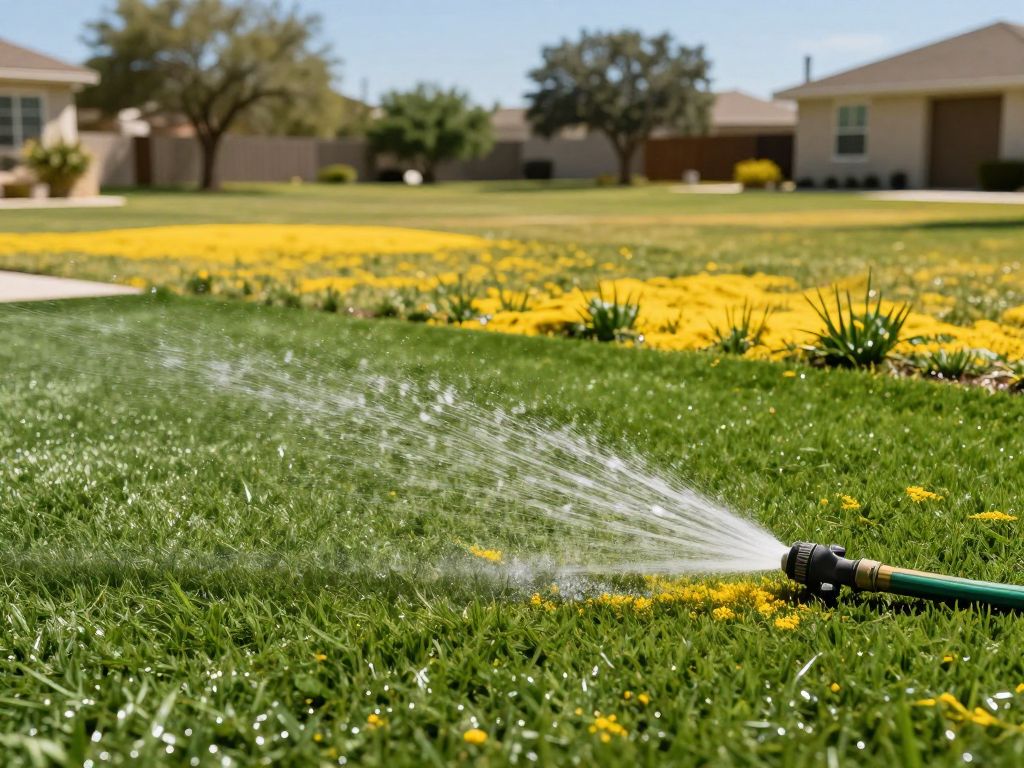
The primary maintenance task during peak pollen season is simple rinsing. When you notice a yellow or green dusting (common with tree and cedar pollen in DFW), a light spray from a garden hose is usually sufficient. This action washes the pollen granules through the turf's porous backing and into the sub-base, effectively removing them from the surface where they can trigger allergy symptoms.
For persistent issues or stubborn buildup, a leaf blower or soft-bristled broom can be used to loosen the particles before rinsing. This routine is dramatically easier and safer for allergy sufferers than the constant, high-allergen activity of mowing and maintaining natural grass.Consistency in Hot Weather
Pollen season often coincides with the onset of high temperatures in the DFW area. Maintaining a natural lawn during this period means increased watering, which can sometimes worsen mold issues that also trigger allergies. Artificial turf remains entirely water independent and requires only occasional rinsing, ensuring your maintenance routine doesn't introduce new problems while effectively managing pollen.
3. Quick Reference (Bulleted Key Takeaways)
- Non-Allergenic: Artificial turf does not produce grass-based allergens.
- Easy Cleanup: Pollen rests on the surface and can be quickly rinsed away with water.
- No Traps: Smooth fibers prevent the deep retention of airborne allergens common in natural sod.
- Reduced Airborne Triggers: Eliminates the need for mowing, which stirs up pollen and dust.
- Water Efficient: Simple rinsing uses significantly less water than a typical lawn requires.
4. Strategic Hyperlink
If you have pets, managing their outdoor time and keeping your turf clean during seasonal peaks is also vital. Learn more about effective solutions in our guide on managing turf during high pollen counts.
Explore Related Turf Resources
Related Turf Guides
- Accessible Drainage Solutions for Turf: The Key to Truly Senior-Friendly Outdoor Spaces
If you’re exploring senior-friendly turf, accessible drainage solutions for turf are just as important as the turf itself.
- Aesthetic Comparison: Turf vs. Grass (and What Actually Looks Better Long-Term)
If you’re weighing turf pros and cons, the **aesthetic differences between turf and grass** are probably at the top of your list.
- Annual Turf Care Calendar: Your Simple, Seasonal Guide to a Healthier Lawn
If you’re wondering, “What should I be doing for my lawn right now?” the answer lives inside an **annual turf care calendar**.
- Are luxury artificial turf options worth the investment for DFW homeowners?
Yes, upgrading to luxury artificial grass offers unmatched aesthetics, superior durability, and a premium feel that significantly elevates your home’s outdoor living experience and long-term value.
- Are you tired of staring at a dull, high-maintenance patch of grass?
**Yes, you can absolutely transform your yard into a stunning, functional space with a backyard landscaping makeover, and synthetic turf is often the key ingredient for DFW homeowners.**