
The Definitive Cost Breakdown for Residential Artificial Putting Greens
##?
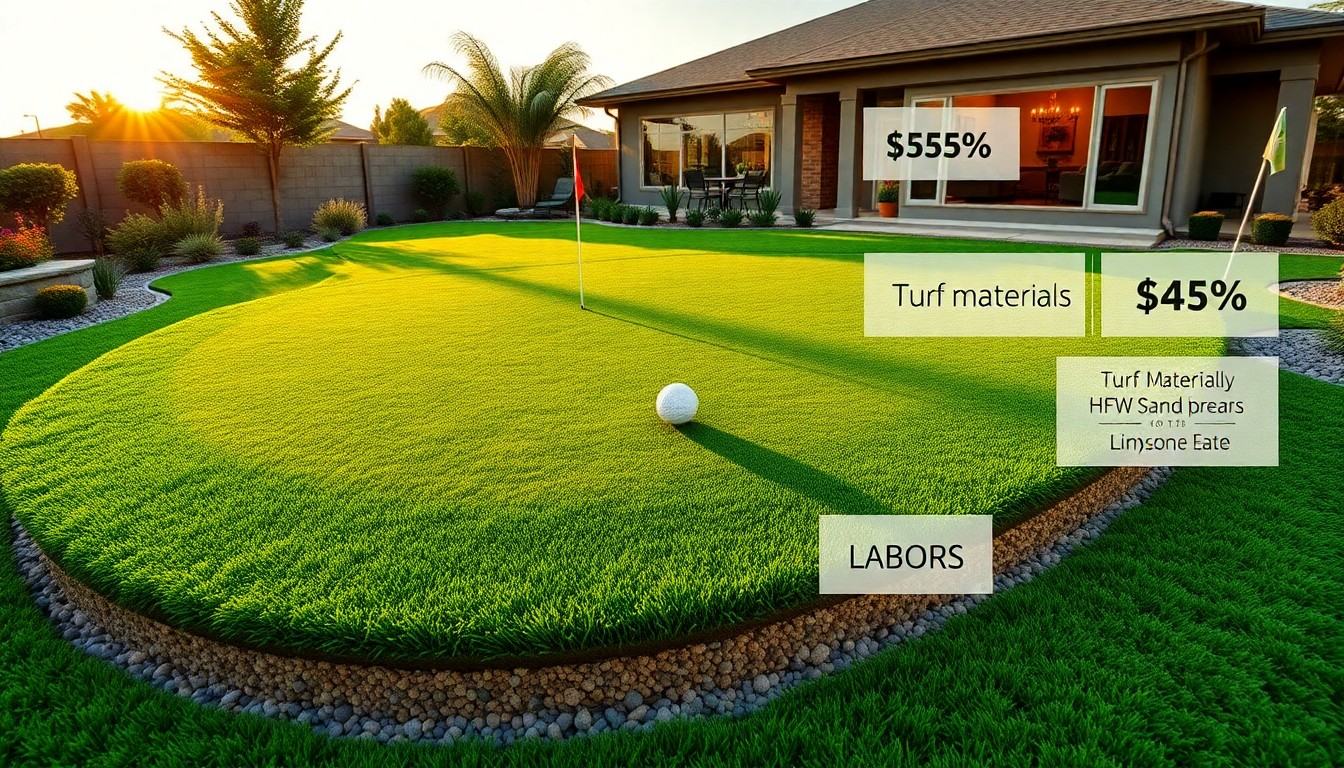
The cost for a professionally installed residential artificial putting green typically breaks down into three primary components: the high-quality turf material itself, the comprehensive site preparation (excavation, drainage, and aggregate sub-base), and the professional labor for shaping and installation. For bottom-of-funnel (BOFU) homeowners, understanding this breakdown is crucial, as the investment provides a significant return through eliminating maintenance and offering a high-performance practice surface tailored to your property.
2. Deep Dive (Detailed Why and How)
When assessing the price of a custom putting green, it’s helpful to move beyond a simple "cost per square foot" number and look at the value delivered by each component.
Component 1: Turf Material (The Surface)
The turf used for a putting green is highly specialized, offering a much denser, shorter pile height than typical landscape turf to ensure a true ball roll (Stimp speed). The material cost reflects the quality of the polymer fibers, the density, and the backing system. Premium materials, designed to replicate professional speed and feel, cost more but offer superior longevity and performance. Avoid low-grade turf, as it will inevitably lead to frustration due to uneven roll and premature matting.
Component 2: Base Preparation and Shaping
This is arguably the most critical and labor-intensive part of the installation. A proper putting green base requires significant excavation, the installation of a proper drainage system, and the layering of crushed aggregate (like crushed granite or limestone) that is compacted to create a perfectly stable sub-base. The cost is highly variable depending on the existing soil conditions and the complexity of the desired contours, breaks, and undulations. A flat, simple green requires less preparatory work than a challenging, architecturally shaped one.
Component 3: Professional Installation and Customization (Labor)
Professional labor covers the precise seaming of the turf, the cutting and installation of cups, and the crucial process of infilling the green with specialized sand (often silica sand or similar material) which dictates the speed and stability of the green. Expertise in this step ensures a flawless surface that performs correctly under intense DFW heat. Professionals also manage debris removal and site cleanup, adding convenience and quality assurance. Larger, complex, or multi-hole projects naturally require more labor time and increase this portion of the cost.
Factors Influencing the Final Price * Size and Shape: Larger greens increase material and labor costs.
- Design Complexity: Features like multiple tiers, fringe turf, and bunker designs add complexity and cost.
- Accessibility: If your backyard is difficult to access with machinery, labor costs may rise.
- Accessory Features: Adding LED lighting, custom flags, or automated drainage systems are additional investments.3. Quick Reference (Bulleted Key Takeaways) * Turf Quality is Key: Investing in high-density, specialized putting green turf ensures accurate ball roll and longevity.
- Base is Paramount: Proper sub-base preparation (drainage and compaction) dictates the green’s performance and lifespan.
- Labor Varies: The cost of labor is directly related to the size and design complexity (contours, breaks) of the green.
- Long-Term Savings: Unlike natural bentgrass greens, artificial turf eliminates costs for mowing, watering, fertilizing, and aeration.
4. Strategic Hyperlink
While professional installation provides maximum performance and warranty coverage, some homeowners opt to undertake portions of the project themselves. To understand how labor and materials costs differ in a non-professional setting, we recommend reviewing our guide on how to save money with a DIY installation cost breakdown.
Explore Related Turf Resources
Related Turf Guides
- Backyard Golf Ideas: How to Turn Your Yard into a Personal Putting Playground
If you’re looking for backyard golf course ideas that feel fun, low-maintenance, and actually help your game, start with this simple principle:
- Backyard Putting Green Cost Estimate
The cost of an expertly installed artificial turf putting green for a DFW home typically ranges based on size, complexity, turf quality, and necessary ground preparation. Homeowners should anticipa...
- Ball Roll Speed Optimization: The Definitive Guide to Achieving Tournament-Grade Consistency on Your Artificial Putting Green
Ball Roll Speed Optimization: The Definitive Guide to Achieving Tournament-Grade Consistency on Your Artificial Putting Green
- Best Home Chipping Practice Turf
The ideal artificial turf for a home chipping practice area is a densely packed, short-pile synthetic grass designed to replicate the tight lie of a professional fairway or fringe, ensuring clubs interact cleanly with the "ground" for consistent ball striking and realistic performance.
- Can I install artificial turf directly over a concrete patio or slab?
Yes, absolutely! Installing artificial turf over concrete is an excellent way for DFW homeowners to transform drab, hard surfaces into beautiful, soft, and functional green spaces.