
The Definitive Guide to Artificial Turf Environmental Certifications
##?
Artificial turf environmental certifications verify that a product and its manufacturer adhere to stringent environmental and safety standards throughout their lifespan, from raw material sourcing and production waste reduction to end-of-life recyclability and non-toxicity. For solution-aware homeowners, seeking certifications like ISO 14001, USDA Certified Biobased, GRS, and Non-Toxic (EN 71-3) is critical assurance of a responsible, high-quality, and safe synthetic grass investment.
2. Deep Dive (Detailed Why and How)
Why Certifications Matter to Your Investment
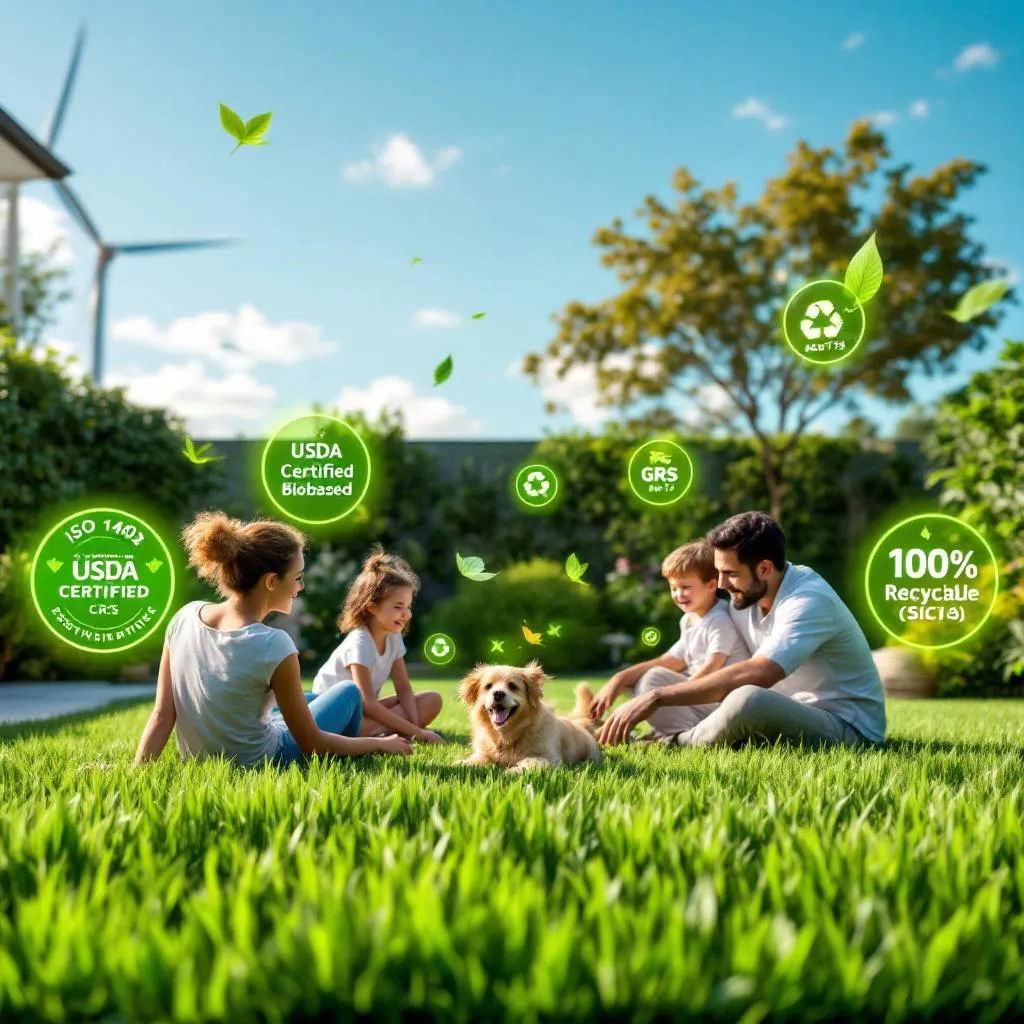
When you invest in artificial turf, you are looking for a product that is safe for your family, durable, and environmentally conscious. Third-party certifications provide the objective proof that a manufacturer's claims are credible and meet global benchmarks for safety and sustainability.Key Environmental Certifications Explained * ISO 14001 Certification: This is an internationally recognized standard that confirms the manufacturer has an effective Environmental Management System (EMS) in place. This certification ensures the company continuously evaluates and improves its practices to minimize its environmental footprint during manufacturing.
- USDA Certified Biobased Product Label: Products bearing this label indicate that the turf utilizes renewable, biobased materials, reducing the reliance on petrochemicals. This is a significant factor for homeowners prioritizing a lower-carbon footprint in their landscaping choices.
- Global Recycled Standard (GRS) Certification: GRS certification is vital for confirming the product contains recycled materials and that the production process adheres to social and environmental requirements. This supports the circular economy by reducing landfill waste.
- 100% Recyclable Certification (e.g., CSIC): While artificial turf has a long lifespan (15–25 years), knowing the product can be recycled afterward is essential for preventing future landfill volume. This certification confirms the material breakdown and reuse potential.Key Safety and Health Certifications
In addition to environmental impact, homeowners must ensure the turf is safe for use, especially by children and pets. * Non-Toxic (EN 71-3) Certification: This European safety standard is critical as it guarantees the artificial turf is free from harmful heavy metals and toxic substances. Essentially, it confirms the materials meet the same safety standards as children's toys, which is essential if pets or children play directly on the grass.
- Bacteria Free (e.g., ASTM G 21:2013): Certifications relating to antimicrobial resistance confirm the turf fibers resist the growth of bacteria and fungi, promoting a more hygienic play environment, particularly important in pet areas.Choosing certified turf means you are purchasing peace of mind—a verified, sustainable, and safe product that supports your environmental values.
3. Quick Reference (Bulleted Key Takeaways)
- Verifiable Non-Toxicity: Certifications like EN 71-3 ensure the turf is free from harmful chemicals, making it safe for children and pets.
- Sustainable Manufacturing: ISO 14001 signifies the manufacturer operates with a committed environmental management system.
- Recycled/Recyclable Content: GRS and 100% Recyclable standards confirm the material's eco-conscious end-of-life plan.
- Biobased Materials: The USDA label indicates the use of renewable resources, reducing dependence on petroleum.
4. Strategic Hyperlink
Understanding these certifications is the first step in ensuring your outdoor investment is responsible. To learn how material choice impacts the ground below, we recommend reviewing our guide on how to ensure your turf meets environmental standards.
Explore Related Turf Resources
Related Turf Guides
- Accessible Drainage Solutions for Turf: The Key to Truly Senior-Friendly Outdoor Spaces
If you’re exploring senior-friendly turf, accessible drainage solutions for turf are just as important as the turf itself.
- Aesthetic Comparison: Turf vs. Grass (and What Actually Looks Better Long-Term)
If you’re weighing turf pros and cons, the **aesthetic differences between turf and grass** are probably at the top of your list.
- Annual Turf Care Calendar: Your Simple, Seasonal Guide to a Healthier Lawn
If you’re wondering, “What should I be doing for my lawn right now?” the answer lives inside an **annual turf care calendar**.
- Are luxury artificial turf options worth the investment for DFW homeowners?
Yes, upgrading to luxury artificial grass offers unmatched aesthetics, superior durability, and a premium feel that significantly elevates your home’s outdoor living experience and long-term value.
- Are you tired of staring at a dull, high-maintenance patch of grass?
**Yes, you can absolutely transform your yard into a stunning, functional space with a backyard landscaping makeover, and synthetic turf is often the key ingredient for DFW homeowners.**