
The Definitive Guide to Keeping Your Artificial Turf Pristine
##?
Maintaining clean artificial turf requires a simple, routine process focused on three steps: removing debris, restoring the pile height through brushing, and routinely rinsing the area to clear dust and minor spills. For spot cleaning or pet waste, specialized enzymatic cleaners ensure a hygienic and odor-free surface.
2. Deep Dive (Detailed Why and How)
While artificial turf is inherently low-maintenance, a consistent cleaning schedule is vital to preserve its aesthetic appeal and longevity. Neglecting routine care allows organic material (like leaves or dust) to compact the infill and flatten the turf fibers.
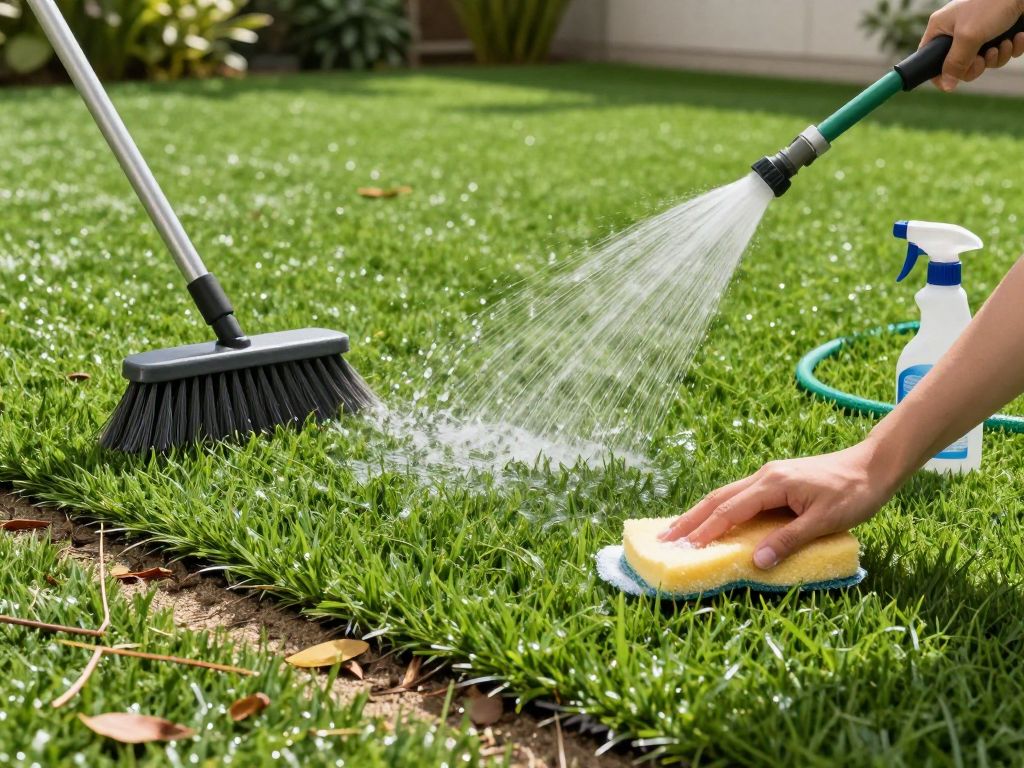
The first step in cleaning is the removal of debris. Use a leaf blower, stiff-bristled broom (non-metal), or a specialized turf rake to clear leaves, twigs, and larger dirt particles. Always brush against the grain of the fibers to help lift and restore the natural look of the turf.
After debris removal, a simple rinse with a garden hose is typically enough to wash away dust and pollen. For general maintenance, this should be done every few weeks.
For stains or spills, immediate attention prevents permanent bonding. For common stains (like coffee or soda), blot the area first, then apply a mixture of mild soap and water. Scrub gently with a soft brush or sponge, and rinse thoroughly. Avoid using harsh chemicals or oil-based cleaners, as these can damage the synthetic fibers or backing.
Specialized attention is required for high-traffic areas or areas used by pets. Regular rinsing is critical to flush away urine, and utilizing turf-specific deodorizers or enzymatic cleaners ensures bacteria and odors are neutralized at the source, preventing buildup in the infill.
3. Quick Reference (Bulleted Key Takeaways)
- Routine Debris Removal: Use a leaf blower or non-metal rake weekly to prevent fiber matting.
- Regular Rinsing: Hose down the turf every few weeks to remove dust and pollen.
- Brush Against the Grain: Periodically brush the turf fibers to maintain an upright, natural appearance.
- Immediate Spill Treatment: Use mild soap and water on spills; blot first, then scrub lightly.
- Pet Area Sanitization: Employ enzymatic cleaners and consistent rinsing to control odor and maintain hygiene.
4. Strategic Hyperlink
Pet waste introduces unique challenges to turf maintenance that require targeted solutions to ensure lasting cleanliness and odor control. To learn the specifics of managing dog-friendly turf systems, review our guide on the proper turf cleaning techniques.
Explore Related Turf Resources
Related Turf Guides
- Accessible Drainage Solutions for Turf: The Key to Truly Senior-Friendly Outdoor Spaces
If you’re exploring senior-friendly turf, accessible drainage solutions for turf are just as important as the turf itself.
- Aesthetic Comparison: Turf vs. Grass (and What Actually Looks Better Long-Term)
If you’re weighing turf pros and cons, the **aesthetic differences between turf and grass** are probably at the top of your list.
- Annual Turf Care Calendar: Your Simple, Seasonal Guide to a Healthier Lawn
If you’re wondering, “What should I be doing for my lawn right now?” the answer lives inside an **annual turf care calendar**.
- Are luxury artificial turf options worth the investment for DFW homeowners?
Yes, upgrading to luxury artificial grass offers unmatched aesthetics, superior durability, and a premium feel that significantly elevates your home’s outdoor living experience and long-term value.
- Are you tired of staring at a dull, high-maintenance patch of grass?
**Yes, you can absolutely transform your yard into a stunning, functional space with a backyard landscaping makeover, and synthetic turf is often the key ingredient for DFW homeowners.**