
The Definitive Guide to Soft Turf Options for Senior-Friendly Homes
##?
Soft turf options are specialized artificial grasses engineered with high-density foam padding or shock-absorbing underlayments beneath low-abrasion polyethylene fibers to provide maximum cushioning, fall height protection, and a comfortable, gentle surface. For solution-aware homeowners or those in senior living communities, selecting a soft turf option is a critical step in creating a beautiful, low-maintenance, and significantly safer outdoor environment.
2. Deep Dive (Detailed Why and How)
When choosing landscaping for areas frequently used by seniors, the priority shifts from just aesthetics to safety and comfort. Hardscaping materials like concrete or traditional pavers pose a significant fall risk. Natural grass, while soft, can become uneven, muddy, or require hazardous maintenance (mowing). Soft artificial turf eliminates these issues entirely.
The Role of Shock-Absorbing Underlayment The key feature of a truly soft turf option is the underlying padding. This shock-absorbing layer, often made from cross-linked polyethylene (PEX) foam, is placed directly on the sub-base beneath the turf surface. This padding dramatically improves the Critical Fall Height (CFH) rating, cushioning impact from falls and making the ground less taxing on joints during walks.
Fiber Material and Pile Height The surface turf itself is also engineered for softness. Premium soft turf uses low-abrasion, non-toxic polyethylene fibers that are plush to the touch. A medium pile height (1.5 to 2 inches) is often preferred, as it feels soft underfoot while maintaining resilience. Excessively long piles can sometimes lead to tripping hazards or matting, undermining the safety goal.
Non-Abrasive Infill Unlike traditional landscaping turf that often uses sharp silica sand or rubber crumbs, soft turf systems for seniors rely on rounded, smooth infill (if any) or a system that encapsulates the infill. This prevents skin irritation and keeps the surface clean, hygienic, and non-slip, even when wet.
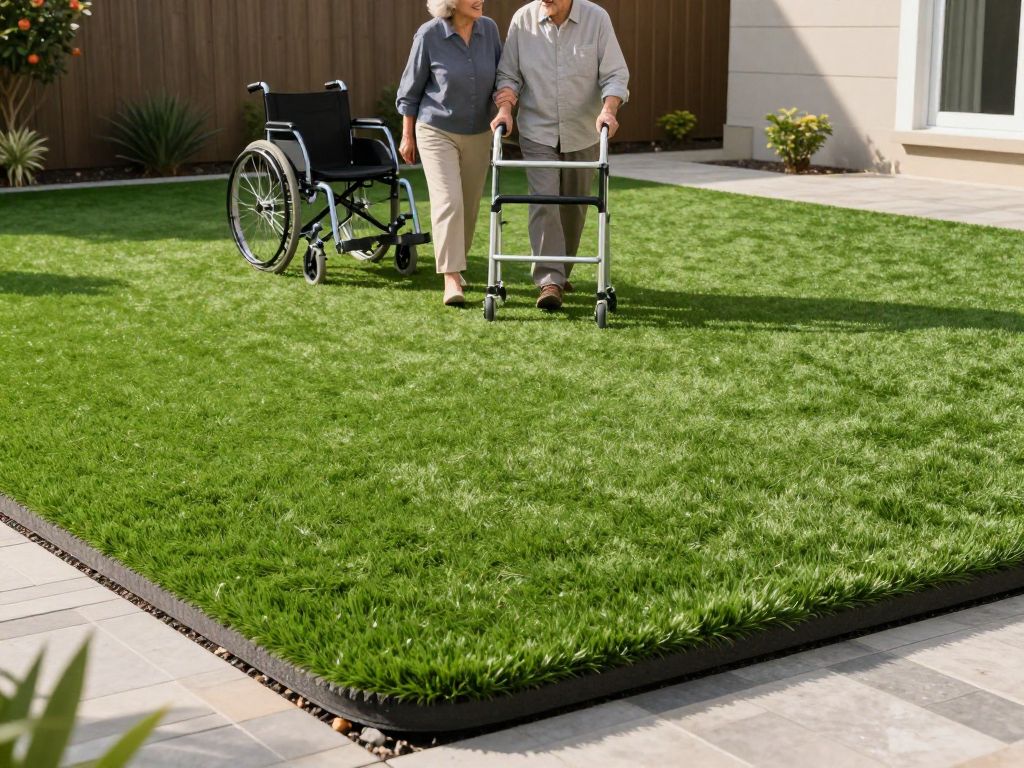
Low Maintenance, High Accessibility The transition to soft turf removes the need for strenuous yard work, benefiting senior homeowners. Furthermore, the consistently flat, uniform surface of quality turf is excellent for mobility aids, ensuring that wheelchairs, walkers, and canes navigate the space smoothly and safely.
3. Quick Reference (Bulleted Key Takeaways)
- Enhanced Safety: Significantly reduces fall impact risk through dedicated cushioning layers.
- Joint Comfort: Provides a gentle surface that reduces stress on knees, hips, and ankles during activity.
- Non-Slip: Engineered fibers and superior drainage maintain traction even when wet.
- Accessibility: Offers a smooth, flat surface ideal for wheelchairs and walkers.
- Chemical-Free: Eliminates the need for harmful fertilizers and pesticides.
4. Strategic Hyperlink
To fully explore how this specialized landscaping can integrate into care facilities and private residences, review our essential guide on the best soft turf options for seniors.
Explore Related Turf Resources
Related Turf Guides
- Accessible Drainage Solutions for Turf: The Key to Truly Senior-Friendly Outdoor Spaces
If you’re exploring senior-friendly turf, accessible drainage solutions for turf are just as important as the turf itself.
- Aesthetic Comparison: Turf vs. Grass (and What Actually Looks Better Long-Term)
If you’re weighing turf pros and cons, the **aesthetic differences between turf and grass** are probably at the top of your list.
- Annual Turf Care Calendar: Your Simple, Seasonal Guide to a Healthier Lawn
If you’re wondering, “What should I be doing for my lawn right now?” the answer lives inside an **annual turf care calendar**.
- Are luxury artificial turf options worth the investment for DFW homeowners?
Yes, upgrading to luxury artificial grass offers unmatched aesthetics, superior durability, and a premium feel that significantly elevates your home’s outdoor living experience and long-term value.
- Are you tired of staring at a dull, high-maintenance patch of grass?
**Yes, you can absolutely transform your yard into a stunning, functional space with a backyard landscaping makeover, and synthetic turf is often the key ingredient for DFW homeowners.**