
The Definitive Guide to Turf Cooling Techniques for DFW Homeowners
##?
The most effective turf cooling techniques involve utilizing advanced infill materials (like T°Cool or zeolite) and implementing periodic light irrigation. These strategies address the root cause of surface heat retention in synthetic grass, ensuring your lawn remains comfortable, functional, and safe for bare feet and pets, even during peak DFW summer temperatures.
2. Deep Dive (Detailed Why and How)
Synthetic turf is a revolutionary product, but like most dark-colored materials exposed to intense Texas sunlight, it naturally absorbs and retains heat. For solution-aware homeowners, managing this surface temperature is the final step in perfecting the artificial lawn experience.
Cooling Infill Technologies
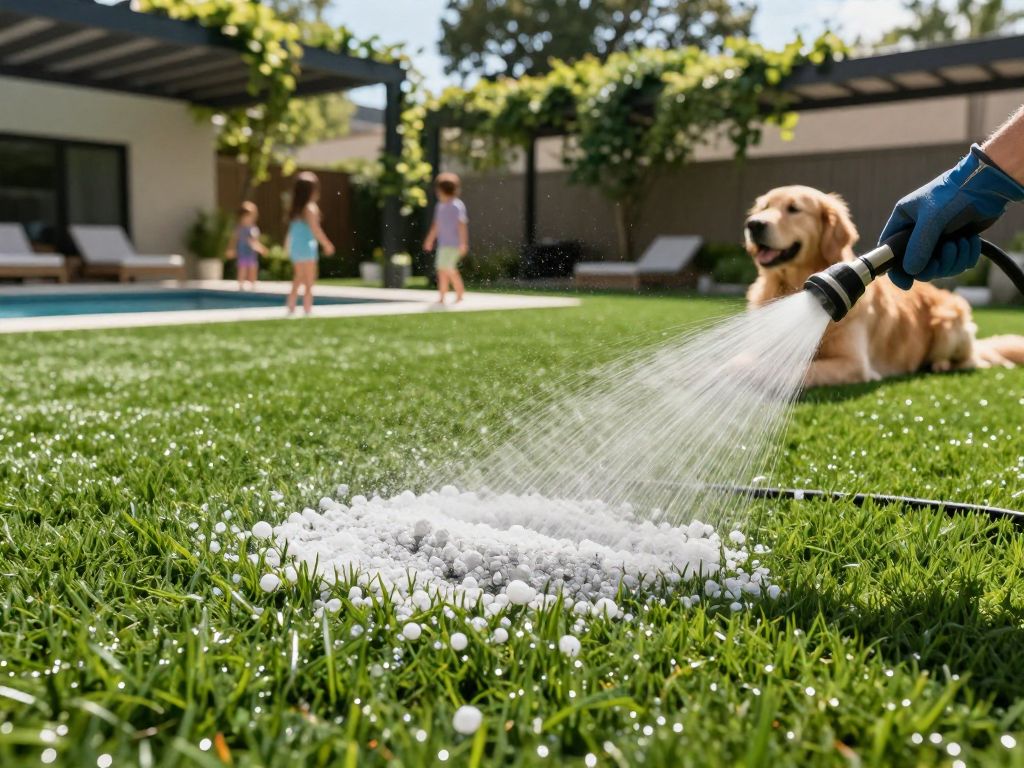
The material placed between the turf blades, known as infill, plays the most significant role in heat management. Standard sand infills offer little cooling. However, performance-based infills are engineered to absorb water and release it slowly through evaporation. * Evaporative Cooling Infill: Specialized infills (such as T°Cool or other proprietary polymer-coated granules) hold moisture and trigger a cooling effect as the water evaporates. A simple light spray can reduce the turf surface temperature by 30 to 50 degrees Fahrenheit compared to untreated turf. This is a passive, non-toxic cooling method that reactivates every time the turf is wet.
- Zeolite Infill: While primarily used for odor control, zeolite infill also offers better thermal performance than standard silica sand by absorbing less heat and having a greater capacity to hold ambient moisture.
The Role of Irrigation
A brief, light misting of the turf surface with a hose or sprinkler system is often sufficient to initiate the cooling process when using performance infills. This is not about watering the lawn; it’s about wetting the infill material to enable evaporative cooling. A typical cooling cycle uses a fraction of the water a natural lawn requires. * Timing: The best time to cool the turf is generally mid-day, when the sun is highest, and immediately before planned use, such as playtime or entertaining.
- Method: A quick 10–15 second rinse is enough to re-saturate the infill and activate cooling for several hours.
Other Strategies
Strategic landscaping also aids in passive cooling. Planting trees, installing pergolas, or utilizing shade sails can dramatically lower the ambient temperature around the turf surface, reducing the amount of direct sun exposure the fibers absorb.
3. Quick Reference (Bulleted Key Takeaways)
- Specialized Infill: Use evaporative cooling infills (like T°Cool) for the largest temperature reduction.
- Water Activation: A quick, light misting activates the infill’s cooling properties.
- Shade: Incorporate landscaping features (trees, pergolas) to minimize direct sun exposure.
- Avoid Dark Infill: Ensure your installer uses light-colored or treated infills, as black rubber crumb can absorb excessive heat.
4. Strategic Hyperlink
Selecting the right products is key to a comfortable outdoor experience. To ensure you install a high-performance system that is not only cool but also safe around your pool area, explore our guide on the best cooling solutions for artificial grass.
Explore Related Turf Resources
Related Turf Guides
- Accessible Drainage Solutions for Turf: The Key to Truly Senior-Friendly Outdoor Spaces
If you’re exploring senior-friendly turf, accessible drainage solutions for turf are just as important as the turf itself.
- Aesthetic Comparison: Turf vs. Grass (and What Actually Looks Better Long-Term)
If you’re weighing turf pros and cons, the **aesthetic differences between turf and grass** are probably at the top of your list.
- Annual Turf Care Calendar: Your Simple, Seasonal Guide to a Healthier Lawn
If you’re wondering, “What should I be doing for my lawn right now?” the answer lives inside an **annual turf care calendar**.
- Are luxury artificial turf options worth the investment for DFW homeowners?
Yes, upgrading to luxury artificial grass offers unmatched aesthetics, superior durability, and a premium feel that significantly elevates your home’s outdoor living experience and long-term value.
- Are you tired of staring at a dull, high-maintenance patch of grass?
**Yes, you can absolutely transform your yard into a stunning, functional space with a backyard landscaping makeover, and synthetic turf is often the key ingredient for DFW homeowners.**