
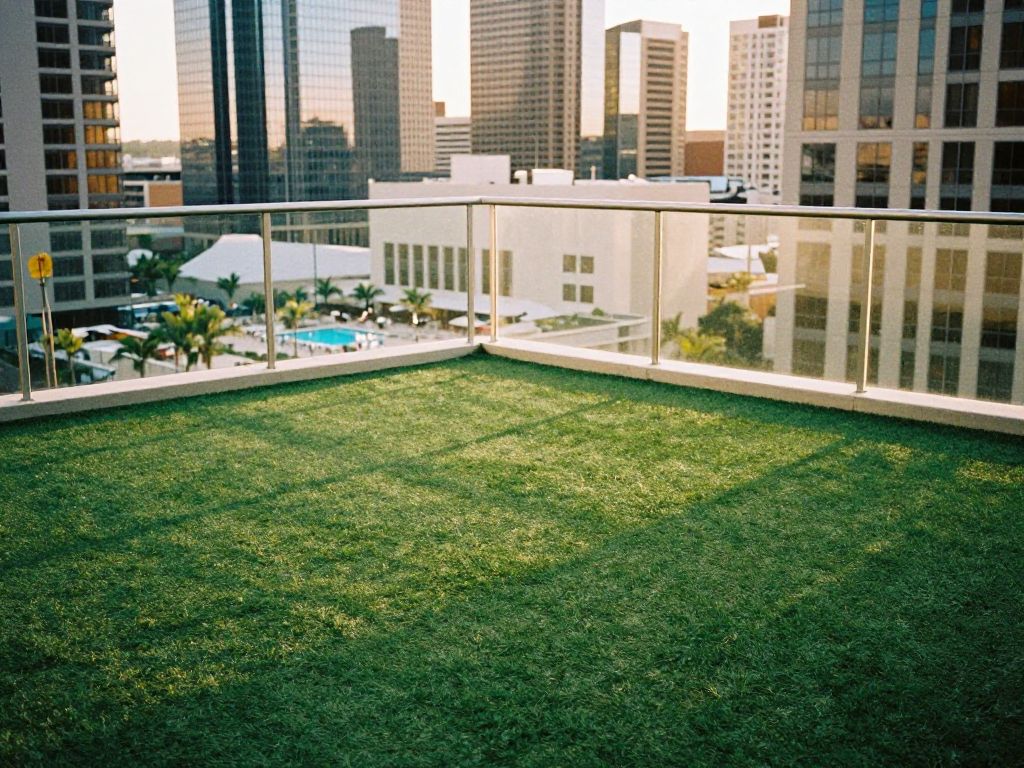
Turf for Pool-Side Balconies: The Fastest Way to Make Small Outdoor Spaces Feel Like a Resort
If you’re wondering whether turf for pool-side balconies is a good idea, here’s the short answer:
- Yes, it can work extremely well when installed and maintained correctly
- It can make a hard, hot balcony feel soft, safe, and resort-like
- The most important factors are drainage, heat, and durability—not just “how it looks”
Once you understand those three points, choosing and using turf for pool-side balconies (and even rooftop and patio turf) becomes much simpler and far less risky.
Why Turf for Pool-Side Balconies Is Suddenly Everywhere
Turf for pool-side balconies has exploded in popularity because it solves a very modern problem:
We want outdoor spaces that look luxurious and feel relaxing—but many of us only have:
- Condo or apartment balconies
- Small rooftop terraces
- Compact patios around plunge pools or spas
Artificial turf steps in as a way to:
- Soften concrete and tile
- Create a “green” feel without constant upkeep
- Make wet areas more comfortable and slip-resistant
In other words, turf for pool-side balconies is less about “fake grass” and more about turning hard, hot, and echoey spaces into calm, usable outdoor rooms.
The Core Benefits of Turf for Pool-Side Balconies
When people search for turf for pool-side balconies, they’re usually chasing a few key outcomes:
1. Comfort Under Bare Feet
Pool-side areas are walked on barefoot more than any other outdoor surface.
Good turf for pool-side balconies can:
- Feel softer than concrete or stone
- Reduce the shock from jumping in and out of pools or spas
- Limit minor foot scrapes from rough balcony surfaces
Look for turf with:
- Medium pile height (not the longest, not the shortest)
- A bit of “give” underfoot, especially over hard slabs
- Cushioning pads in high-impact areas if needed
2. Better Safety Around Water
Balconies and rooftop patios near water bring up one big concern: slipping.
Turf for pool-side balconies can help:
- Improve traction when surfaces are wet
- Reduce puddling compared to flat concrete, when properly drained
- Soften minor falls from tripping or kids running
What affects safety most:
- Drainage design (water has to move through and out)
- The texture of the turf fibers (smoother yarns can be slick when wet)
- How the turf is secured (no loose edges or lifted corners)
3. Visual Calm in Small, Hard Spaces
Even a narrow strip of turf on a balcony can change how a space feels.
Turf for pool-side balconies gives you:
- A visual “soft break” from glass, metal, and cement
- A resort-like look, even in dense urban settings
- A better backdrop for lounge chairs, small tables, and plants
This is where rooftop & patio turf concepts overlap strongly: it’s not just functional—it’s emotional. Green surfaces calm the eye, especially when you have limited access to real yards or parks.
4. Low Maintenance Compared to Live Grass
Natural grass and upper-level structures rarely mix:
- Soil adds weight and mess
- Roots need depth
- Watering and drainage get complicated
Turf for pool-side balconies avoids:
- Constant mowing
- Mud, dead patches, and pests
- Overwatering issues around the building structure
Instead, you’re mostly dealing with:
- Rinsing off pool chemicals and debris
- Brushing fibers to keep them upright
- Occasional cleaning for spilled food or sunscreen
For a deeper look at how ongoing care works (and how it differs for balconies vs. rooftops), you can explore rooftop-specific tips on the rooftop turf maintenance page; many of those principles apply directly to pool-side balconies too.
The Three Big Design Rules for Turf on Pool-Side Balconies
If you only remember one section, make it this one. Turf for pool-side balconies works best when you design for:
- Drainage
- Heat
- Durability
1. Drainage: Where Does All That Water Go?
Pool splashes, rain, and balcony wash-downs all end up on your turf. The key is to move that water away fast.
When planning turf for pool-side balconies, pay attention to:
-
Existing balcony slope
- Most balconies are pitched slightly to a drain. Turf shouldn’t block that.
-
Perforated backing
- Look for turf products with drainage holes throughout the backing.
-
Drainage pads or tiles
- These sit between the balcony surface and the turf, creating channels for water to flow out.
-
Edge detailing
- Avoid sealing edges so tightly that water gets trapped under the turf and can’t escape.
If water can’t move, you’ll end up with:
- Odors
- Algae film
- Premature wear
Designing drainage correctly up front usually prevents all three.
2. Heat: Keeping Turf Comfortable in Full Sun
Balconies and rooftop patios often get intense direct sun, especially near reflective glass or metal railings. Turf for pool-side balconies can get hot if this isn’t considered.
Ways to manage heat:
-
Fiber color
- Slightly lighter greens often absorb less heat than deep, dark tones.
-
Infill choices (if used)
- Some infills can contribute to heat; others are engineered to stay cooler.
-
Shade strategy
- Umbrellas, shade sails, or pergolas make a big difference in comfort.
-
Usage timing
- Many people naturally use pool-side balconies more in the morning and late afternoon, when turf is cooler.
The goal isn’t “turf that’s always cold”—it’s “turf that doesn’t become unusably hot during normal use.”
3. Durability: Standing Up to Chlorine, Sunscreen, and Furniture
Pool-side environments are rougher on surfaces than most people expect.
Turf for pool-side balconies needs to withstand:
- Pool chemicals and chlorinated water
- Metal furniture being dragged or repositioned
- Lotions, oils, and sunscreen spills
- Frequent rinsing and cleaning
Durable turf characteristics:
- UV-stabilized fibers (to resist fading)
- Strong backing that doesn’t crack or delaminate
- Good tuft bind (how strongly fibers are held in place)
Planning for durability upfront means your balcony doesn’t look tired after just one season.
How Turf for Pool-Side Balconies Compares to Rooftop & Patio Turf
Turf for pool-side balconies is part of a larger category: rooftop & patio turf. The principles are similar, but pool-side use has added demands.
| Factor | Standard Rooftop & Patio Turf | Turf for Pool-Side Balconies |
|---|---|---|
| Primary Concern | Weight, drainage, aesthetics | Slip-resistance, fast drainage, chemical exposure |
| Water Exposure | Rain and light cleaning | Heavy splashing, frequent wet/dry cycles |
| Traffic Type | Shoes, furniture, occasional entertaining | Mostly bare feet, wet surfaces, pool loungers |
| Heat Management | Sun exposure and roof reflection | Added reflection from water and glass, more skin contact |
| Maintenance Focus | Debris removal and periodic cleaning | Rinsing off chemicals, preventing algae or slick film |
Understanding rooftop & patio turf basics helps you design smarter for balconies—but near a pool or spa, you’ll just be more strict about drainage, slip-resistance, and cleaning routines.
Practical Design Ideas for Turf on Pool-Side Balconies
Once the technical side is clear, the fun part is how you use turf for pool-side balconies to shape the space.
1. Full Coverage “Green Room” Balcony
Ideal for:
- Long, narrow condo balconies
- Spaces where you want a lounge or yoga area by the pool
Key considerations:
- Use furniture with wide feet or felt/pad protectors
- Add small side tables rather than heavy, sharp-edged pieces
- Layer in a couple of potted plants to soften railings and walls
2. Turf “Rug” Near the Pool or Spa Edge
Ideal for:
- Balconies with partial deck tile or concrete
- Rooftop plunge pools or hot tubs
Benefits:
- Concentrates comfort where people step in/out of water
- Makes cleaning simpler (less turf to rinse)
- Creates a visual “landing zone” for towels and loungers
Design tip:
Use a rectangular or custom-shaped turf section that aligns with the pool edge so it looks intentional, not like an afterthought.
3. Split-Surface Balcony: Turf + Pavers or Decking
Ideal for:
- Larger balconies or rooftop patios
- Multi-use spaces (dining + lounging + sunbathing)
Layout ideas:
- Turf along the pool line, hard surface closer to doors
- Turf in the “relaxation zone,” solid surface where food and drinks are handled
- A small turf corner as a kid or pet play spot, away from the main entrance
This approach is especially popular in rooftop & patio turf layouts, and it carries over beautifully to pool-side balconies.
Basic Care: Keeping Pool-Side Balcony Turf Fresh and Safe
Good turf for pool-side balconies is low-maintenance—but not maintenance-free.
Here’s what a simple routine might look like:
Weekly (or After Heavy Use)
- Rinse with a hose to remove:
- Chlorinated water residue
- Dust, pollen, and light debris
- Gently brush fibers with a stiff broom:
- Keeps pile upright
- Helps avoid flat spots from seating or foot paths
Monthly
- Check drainage:
- Make sure water doesn’t pool longer than expected
- Clear balcony drains of leaves or hair
- Light cleaning of problem spots:
- Quickly treat sunscreen/oil spills to prevent buildup
Seasonally
- Inspect seams and edges:
- Look for lifting, fraying, or movement
- Evaluate furniture placement:
- Rotate or slightly shift pieces to avoid permanent compression
- Deep-clean if needed:
- Particularly after a season of heavy pool use
For more structured, rooftop-level guidance that also applies to elevated pool spaces, see how maintenance is broken down on the rooftop turf maintenance page—those same habits keep balcony turf looking and performing well.
Common Mistakes to Avoid with Turf for Pool-Side Balconies
Being aware of a few pitfalls can save a lot of trouble later.
-
Ignoring building rules
- Some condos or HOAs have specific policies about balcony flooring and weight.
-
Blocking drains
- Covering or sealing balcony drains can cause backups and water damage.
-
Skimping on drainage layers
- Laying turf directly on flat concrete with no drainage space underneath leads to trapped water.
-
Choosing turf only by looks
- Overly long, plush turf may mat quickly under furniture or in wet environments.
-
Never rinsing after pool use
- Over time, un-rinsed chemicals and body oils can create film or odors.
Avoiding these helps ensure turf for pool-side balconies stays an asset rather than becoming a maintenance headache.
FAQ: Turf for Pool-Side Balconies
| Question | Answer |
|---|---|
| Is turf safe to use around pools on upper-level balconies? | Yes, when properly designed for drainage, securely installed, and aligned with building rules. The key is ensuring water can flow freely to existing balcony drains and that turf edges are firmly secured. |
| Will turf for pool-side balconies get slippery when wet? | Quality turf typically offers better traction than smooth tile when wet. However, poor drainage or algae buildup can create slickness, which is why regular rinsing and occasional cleaning matter. |
| Can chlorine damage balcony turf? | Most modern turf is designed to resist pool chemicals in normal use. Overconcentration from repeated, heavy splashing without rinsing may accelerate wear, so a quick hose-down after heavy pool sessions is a smart habit. |
| How hot does turf get on sunny balconies? | Turf can get warmer than natural grass but often feels similar to or cooler than many dark pavers. Color, infill, and shading play major roles. Using umbrellas or timing peak sun exposure can keep it comfortable for bare feet. |
| Can I put outdoor furniture on turf for pool-side balconies? | Yes. Choose furniture with smooth or wide feet, avoid dragging sharp metal edges, and consider using protective pads. Occasionally move pieces slightly to prevent deep impressions. |
| How do I clean sunscreen or drink spills from turf? | Blot any excess, rinse with water, and if needed, spot-clean with a mild soap solution. Avoid harsh solvents. Regular rinsing prevents buildup that can attract dirt. |
| Does balcony turf require infill? | Some systems do, and some are designed to work without it. On balconies and rooftops, lighter or no-infill systems are often chosen to manage weight and simplify maintenance. |
| How long does turf for pool-side balconies typically last? | With proper installation and care, many turf systems can serve for several years of regular use. Lifespan depends on sun exposure, chemical exposure, and traffic levels. |
| Is turf a good option for pets on balconies near pools? | Yes, if you plan for waste cleanup and rinsing. Many of the same maintenance strategies used for rooftop & patio turf with pets apply to pool-side balconies as well. |
| How is maintenance different from standard rooftop turf? | Core tasks are similar—rinsing, brushing, and checking drainage—but pool-side balconies need more frequent rinsing to remove chlorinated water and lotions. You’ll see parallels with the routines used for elevated spaces on the rooftop turf maintenance page. |
When you focus on drainage, heat, and durability, turf for pool-side balconies stops feeling like a risky experiment and starts becoming what it’s best at: a simple, effective way to turn compact outdoor areas into inviting, resort-style spaces you’ll actually want to use.
Explore Related Turf Resources
Related Turf Guides
- Accessible Drainage Solutions for Turf: The Key to Truly Senior-Friendly Outdoor Spaces
If you’re exploring senior-friendly turf, accessible drainage solutions for turf are just as important as the turf itself.
- Aesthetic Comparison: Turf vs. Grass (and What Actually Looks Better Long-Term)
If you’re weighing turf pros and cons, the **aesthetic differences between turf and grass** are probably at the top of your list.
- Annual Turf Care Calendar: Your Simple, Seasonal Guide to a Healthier Lawn
If you’re wondering, “What should I be doing for my lawn right now?” the answer lives inside an **annual turf care calendar**.
- Are luxury artificial turf options worth the investment for DFW homeowners?
Yes, upgrading to luxury artificial grass offers unmatched aesthetics, superior durability, and a premium feel that significantly elevates your home’s outdoor living experience and long-term value.
- Are you tired of staring at a dull, high-maintenance patch of grass?
**Yes, you can absolutely transform your yard into a stunning, functional space with a backyard landscaping makeover, and synthetic turf is often the key ingredient for DFW homeowners.**