
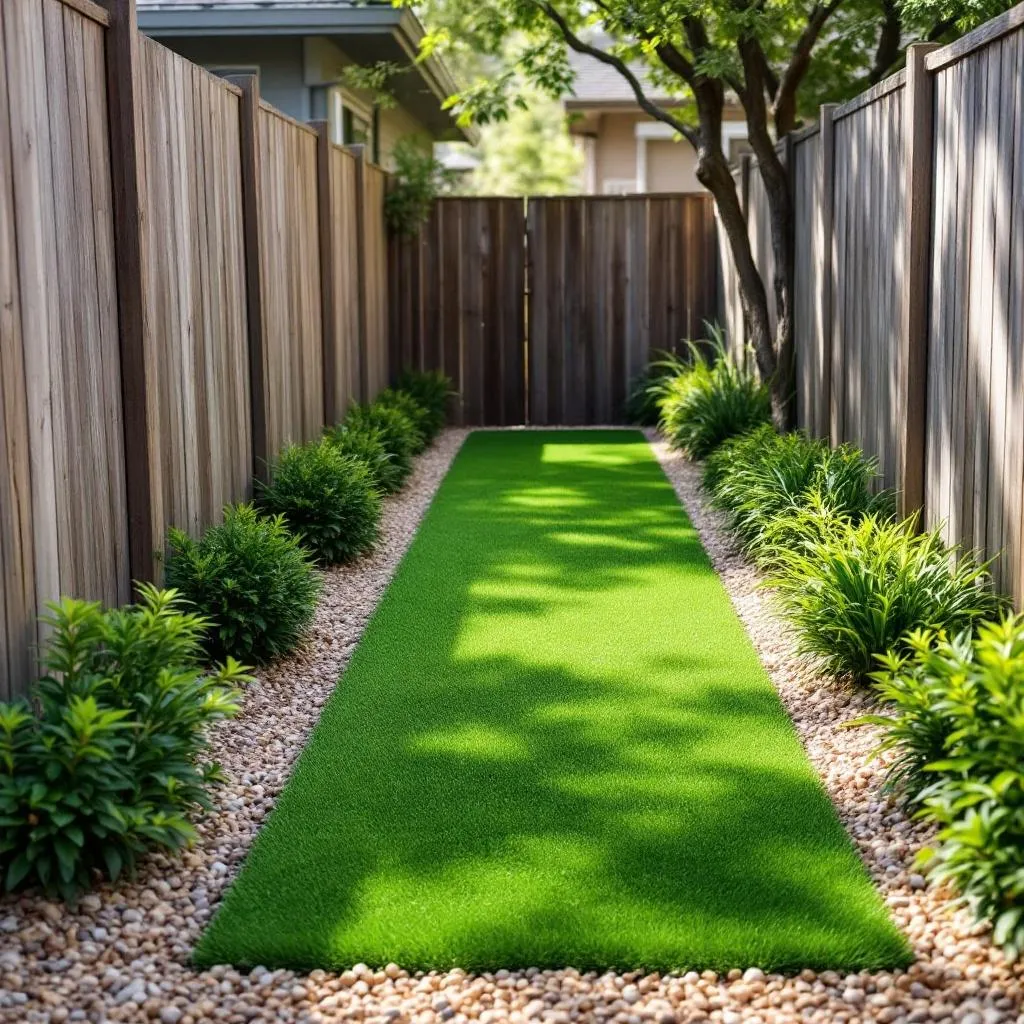
Turf for Side Yards in DFW: The Smart Fix for Tough, Awkward Spaces
If you’re searching for side yard turf solutions, you’re probably dealing with at least one of these problems:
- Patchy grass that never fills in
- Muddy, unusable walkways after every rain
- Narrow, shaded side yards that refuse to grow anything
- HOA pressure to keep things neat without constant maintenance
Here’s the answer you’re likely looking for:
Turf for side yards gives you a clean, low-maintenance, always-usable space in areas where traditional grass continually fails—especially in DFW’s sun, shade, and heat extremes.
From there, you can get as simple or as creative as you want: a tidy green walkway, a pet run, kids’ play strip, or just a cleaner path to your trash bins and gates.
Below, we’ll unpack why residential artificial turf works so well in DFW side yards, what to consider before installing, and how it ties into your overall landscape (including your front yard turf design).
Why Side Yards Are So Difficult in DFW
Side yards in the Dallas–Fort Worth area are a perfect storm of lawn challenges:
- Narrow space
- Limits sun exposure
- Makes mower access annoying or impossible
- Shade from the house and fence
- Grass struggles with inconsistent light
- Bare spots and mud become the norm
- Traffic patterns
- Dogs, kids, and foot traffic wear down fragile grass
- Trash cans, AC units, and meters add clutter and compaction
- DFW climate
- Heat waves, drought restrictions, and heavy storm bursts
- Native or traditional turfgrass struggles to stay consistent
That’s why side yard turf solutions have become a go-to option for homeowners across DFW: they solve multiple chronic problems in one move.
How Turf for Side Yards Solves the Most Common Problems
1. From Patchy and Muddy to Clean and Consistent
Artificial turf creates a uniform, stable surface where grass, gravel, or bare dirt often fail.
- Key benefits:
- No mud tracked into the house after rain
- No bald spots where grass never took root
- No ruts from foot traffic along fences or around corners
2. Low-Maintenance in an Annoying-to-Maintain Area
Side yards are tedious to mow and edge, especially when:
- The mower barely fits through the gate
- You have obstacles like AC units, utilities, or steps
- The area is narrow enough to scalp or damage grass easily
With turf:
- No mowing
- Minimal edging
- Occasional rinsing and brushing only
- Easier to keep side gates and paths clear and usable
3. Safe, Comfortable Pathways and Play Areas
Artificial turf can turn a previously “off-limits” strip into usable space:
- Soft under bare feet
- Cleaner than dirt, mulch, or gravel
- Safer surface for kids who cut through the side yard to the backyard
For families in DFW, this often means turning a forgotten area into:
- A kid-friendly shortcut between front and backyard
- A dog run that doesn’t turn into a mud pit
- A green corridor for curb appeal and flow
Side Yard Turf Solutions: Design Ideas That Work in DFW
You don’t have to use turf for the entire side yard. Many DFW homeowners mix and match for function and style.
1. Turf Walkway + Border Beds
A very popular side yard turf solution is a simple, clean walkway look:
- Turf strip as the main walking surface
- Gravel or rock border for drainage and contrast
- Narrow planting beds or shrubs along the fence or wall
This gives you:
- A visual “path” from front to back
- Room for low-maintenance plants
- An organized, intentional look
2. Side Yard Dog Run
Side yards are ideal for dogs, but turf makes them far easier to maintain.
- Consider for a DFW-friendly turf dog run:
- Turf with good drainage and infill for pet use
- Slight slope away from house and fence
- Easy access for rinsing and cleaning
- Separation from main entertainment area (if desired)
This turns your side yard into:
- A dedicated potty zone away from patios and kids’ play areas
- A year-round exercise strip that doesn’t get muddy
3. Utility-Friendly, Still Attractive Side Yard
If your side yard houses AC units, meters, or storage, you might only need something clean and functional.
Turf is ideal when you want:
- Quick access for utility crews or maintenance techs
- A more polished look than bare dirt or patchy grass
- A space that doesn’t require regular mowing around obstacles
You can pair turf with:
- Simple stepping stones or pavers
- Decomposed granite in low-traffic corners
- Mulched or rock areas around equipment
4. Coordinated Look with Front and Backyard Turf
Many DFW homes are moving to a cohesive turf strategy:
- Turf in the front yard for curb appeal
- Turf in the backyard for entertaining or play
- Turf in the side yard to visually and functionally connect both
If you’re already planning or considering front yard turf design and installation, it often makes sense to plan the side yard turf at the same time so:
- Grading and drainage are handled consistently
- Turf style and color match across the property
- The home has a unified, intentional look from all angles
What to Consider Before Installing Turf in Your Side Yard
1. Drainage and DFW Storm Events
The biggest technical factor in a side yard is drainage. DFW can be dry for weeks and then get hammered with intense storms.
Consider:
- Does water already collect along the side of your house?
- Is there a visible slope toward or away from the foundation?
- Are there downspouts directing water into the side yard?
Good side yard turf solutions usually include:
- Proper grading to direct water away from the house
- Permeable base layers under the turf
- Channels for water to flow out the front or back yard
2. Access and Use Patterns
How do you actually use the side yard?
- Daily route for trash cans?
- Occasional path for yard work or deliveries?
- Main dog run or kid passageway?
This affects decisions like:
- Turf durability and pile height
- Need for pavers or stepping stones in heavier-use paths
- Whether to include lighting or edging features
3. Shade, Heat, and Comfort
Even though turf doesn’t “need” sun, comfort still matters in DFW heat:
- Shady side yards may feel cooler and very comfortable
- Full-sun side yards can benefit from lighter-colored infill or occasional shading
- Tall fences can trap heat; airflow matters
A thoughtful side yard plan may include:
- Small shade structures or pergola-style elements (where feasible)
- Plantings that soften reflective heat surfaces
- Turf varieties better suited for high-heat applications
How Turf in the Side Yard Changes Daily Life
When DFW homeowners install turf for side yards, they often notice:
- Less stress about rain
- No more tiptoeing through mud
- Dogs can go out anytime without creating a mess
- Cleaner interiors
- Less dirt and grass tracked in
- Especially noticeable with kids and pets
- More usable square footage
- The side yard isn’t just a forgotten strip—it becomes part of the home’s living experience
- Simpler weekly routines
- Fewer “problem zones” to manage
- Easier mowing in the remaining natural-grass areas, if any
Over time, the side yard stops being an eyesore or afterthought and starts functioning as:
- A link between front and back spaces
- A buffer zone for pets, utilities, or storage
- A visual extension of your home’s overall landscape design
How Side Yard Turf Fits Into Your Overall DFW Landscape
When you think about residential artificial turf for DFW homes, it’s helpful to see your property as a whole:
- Front yard
- Curb appeal
- First impression
- Often the most visible area for turf upgrades
- Backyard
- Entertainment and play
- Patios, pools, and seating areas
- Side yard
- Function and flow
- Connection between front and back
- Utility, pets, and pass-throughs
Planning your side yard turf solutions with your front yard strategy in mind (see ideas for turf for front yards) makes your property feel unified instead of piecemeal.
FAQ: Turf for Side Yards in DFW
General Questions
| Question | Answer |
|---|---|
| Is turf a good idea for narrow side yards? | Yes. Turf works especially well in narrow, hard-to-mow areas. It turns awkward, shaded, or high-traffic strips into neat, low-maintenance walkways or functional pet areas. |
| Will artificial turf work in shady side yards? | Turf doesn’t require sunlight to stay green, so shade isn’t a problem. The main consideration in shade is drainage and moisture, which should be addressed in the base installation. |
| Does turf in the side yard get very hot? | In full sun, turf can get warmer than natural grass, especially in DFW summers. In many side yards, shade from fences and homes makes it more comfortable. Material choice, infill type, and airflow can help manage heat. |
Maintenance and Durability
| Question | Answer |
|---|---|
| How do I clean turf in a side yard? | Usually: periodic rinsing with a hose, occasional brushing to keep fibers upright, and spot cleaning if you have pets. For heavy debris, a leaf blower works well. |
| How long does side yard turf last? | Quality residential turf, installed correctly, can last 10–15 years or more, depending on traffic, UV exposure, and maintenance. Side yards used mostly as pathways can often see longer life spans. |
| Will turf in the side yard drain properly? | With a properly graded base and appropriate drainage channels, turf is designed to drain well. It’s important to address existing drainage issues (like pooling water) during installation. |
Pets and Kids
| Question | Answer |
|---|---|
| Is turf safe for kids in side yards? | Yes. Turf offers a stable, even surface that helps reduce mud and tripping hazards. For side yards used as kid passageways or small play areas, turf is often more comfortable than rock or bare dirt. |
| How does turf handle dog traffic and waste? | Many DFW homeowners use side yards as dog runs. Pet-friendly turf, proper infill, and good drainage support regular cleaning and odor control. Solid waste is picked up; liquids rinse through and should be flushed periodically with water. |
| Will dogs damage the turf? | Quality turf with the right base can handle regular pet use. Extremely aggressive diggers may need training or added deterrents, but most dogs adapt to turf quickly without causing damage. |
Design and Installation
| Question | Answer |
|---|---|
| Do I need turf over the entire side yard? | Not necessarily. Many designs mix turf with pavers, gravel, or rock beds. Common layouts: turf walkway + border beds, turf plus stepping stones, or turf only in the highest-traffic zones. |
| Can side yard turf match my front yard turf? | Yes. For a seamless look, homeowners often use the same turf type and color in front, back, and side yards. If you already have or are considering front yard turf, coordinating materials creates a unified appearance. |
| How thick does the base under turf need to be? | Base depth depends on soil, drainage needs, and traffic. Side yards typically use a compacted base of several inches of crushed material, engineered to support traffic while allowing water to drain. |
By focusing on side yard turf solutions that match how you actually live in your DFW home—pets, kids, foot traffic, and aesthetics—you can turn a problem space into a reliable, low-maintenance asset that ties your whole property together.
Explore Related Turf Resources
Related Turf Guides
- Accessible Drainage Solutions for Turf: The Key to Truly Senior-Friendly Outdoor Spaces
If you’re exploring senior-friendly turf, accessible drainage solutions for turf are just as important as the turf itself.
- Aesthetic Comparison: Turf vs. Grass (and What Actually Looks Better Long-Term)
If you’re weighing turf pros and cons, the **aesthetic differences between turf and grass** are probably at the top of your list.
- Annual Turf Care Calendar: Your Simple, Seasonal Guide to a Healthier Lawn
If you’re wondering, “What should I be doing for my lawn right now?” the answer lives inside an **annual turf care calendar**.
- Are luxury artificial turf options worth the investment for DFW homeowners?
Yes, upgrading to luxury artificial grass offers unmatched aesthetics, superior durability, and a premium feel that significantly elevates your home’s outdoor living experience and long-term value.
- Are you tired of staring at a dull, high-maintenance patch of grass?
**Yes, you can absolutely transform your yard into a stunning, functional space with a backyard landscaping makeover, and synthetic turf is often the key ingredient for DFW homeowners.**