
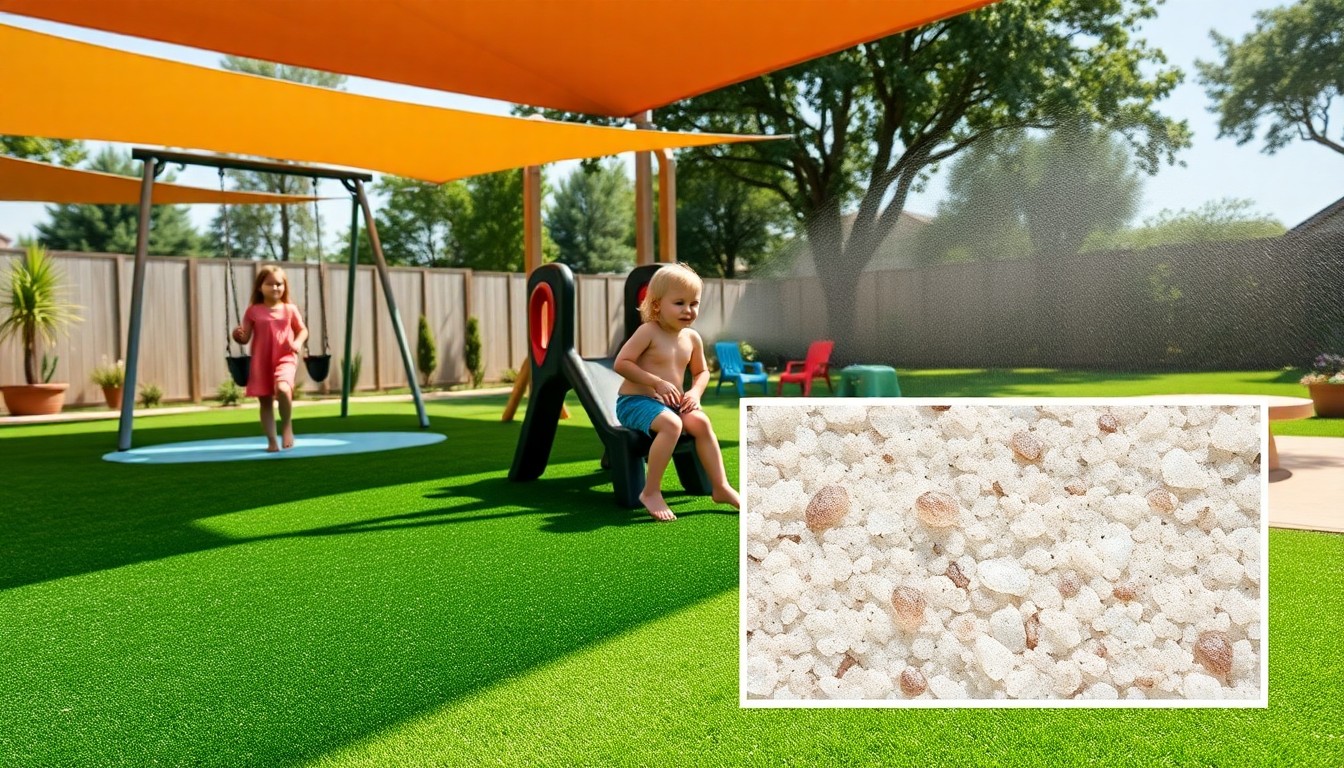
What is the best way to ensure artificial turf remains cool enough for play areas?
The most effective way to ensure artificial turf remains cool in DFW play areas is by selecting heat-mitigating turf infills, utilizing advanced cooling technology in the turf fibers, and implementing scheduled misting or rinsing routines during peak heat hours.
For homeowners committed to creating a safe and comfortable outdoor environment, especially for children, addressing turf temperature is a crucial final step in the adoption of synthetic grass.
Deep Dive: How to Maintain Optimal Turf Temperatures
While artificial turf offers unparalleled safety and durability for playgrounds, its synthetic nature means it can retain heat, especially under the intense Texas sun. Mitigating this heat is essential for comfortable use.
1. The Role of Cooling Infill:
Traditional sand or rubber infills can absorb and radiate heat. Modern solutions utilize specialized infills, often ceramic or acrylic-coated granules, that reflect sunlight instead of absorbing it. This thermal reflective technology significantly lowers the surface temperature of the turf.
2. Fiber Technology:
Certain high-quality turf products are engineered with heat-reducing fibers. These fibers may be structured with lighter colors or unique cell shapes designed to disperse light and heat more effectively than standard turf, resulting in a cooler surface.
3. Evaporative Cooling:
The simplest, most immediate way to cool down any turf is through basic evaporative cooling. A quick rinse with a garden hose or a permanent misting system before use can drop the surface temperature dramatically, creating a temporary, safe cooling effect as the water evaporates. This is particularly effective during the late afternoon.
Implementing these solutions transforms your playground turf from a resilient surface into a genuinely kid-safe, all-day play area, even during the hottest DFW summers. This ensures that the investment you made in your yard is fully utilized.
Quick Reference: Key Takeaways for Cool Turf * Cooling Infill: Opt for specialized, thermally reflective infill materials instead of standard rubber.
- Rinsing Routine: Apply a light rinse from a hose or misting system before playtime to initiate evaporative cooling.
- Quality Fibers: Choose turf engineered with heat-mitigating fibers for better natural heat dispersion.
- Shade: While not always feasible, incorporating shade structures (sails, trees) drastically reduces turf temperature.To fully maximize the lifespan and utility of your investment, understanding how to care for your system is paramount. Learn detailed steps on keeping your turf in top condition by reviewing our guide on maintaining cool temperatures in turf.
Explore Related Turf Resources
Related Turf Guides
- Accessible Drainage Solutions for Turf: The Key to Truly Senior-Friendly Outdoor Spaces
If you’re exploring senior-friendly turf, accessible drainage solutions for turf are just as important as the turf itself.
- Aesthetic Comparison: Turf vs. Grass (and What Actually Looks Better Long-Term)
If you’re weighing turf pros and cons, the **aesthetic differences between turf and grass** are probably at the top of your list.
- Annual Turf Care Calendar: Your Simple, Seasonal Guide to a Healthier Lawn
If you’re wondering, “What should I be doing for my lawn right now?” the answer lives inside an **annual turf care calendar**.
- Are luxury artificial turf options worth the investment for DFW homeowners?
Yes, upgrading to luxury artificial grass offers unmatched aesthetics, superior durability, and a premium feel that significantly elevates your home’s outdoor living experience and long-term value.
- Are you tired of staring at a dull, high-maintenance patch of grass?
**Yes, you can absolutely transform your yard into a stunning, functional space with a backyard landscaping makeover, and synthetic turf is often the key ingredient for DFW homeowners.**